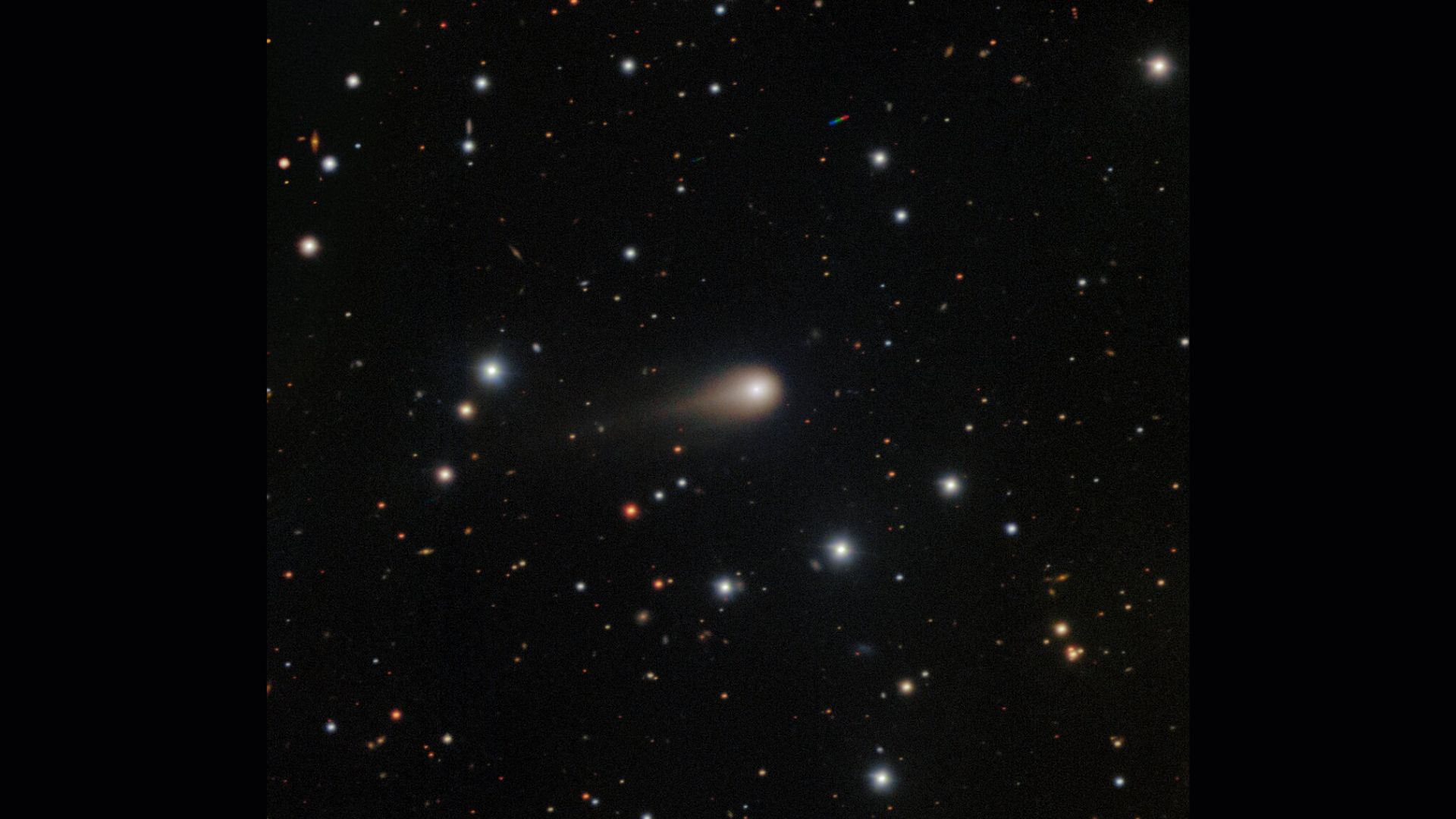
Comet 3I/ATLAS continues to command significant attention, captivating both the public and the scientific community. This celestial body holds a rare distinction as only the third confirmed interstellar visitor to journey through our solar system, and it has consistently defied expectations, repeatedly surprising astronomers monitoring its remarkable passage across our cosmic neighborhood.
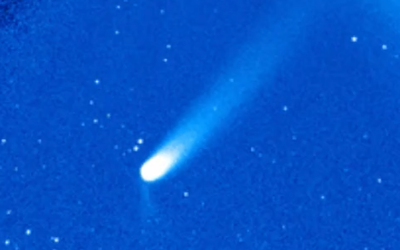
Comet 3I/ATLAS, initially discovered in July, recently completed its closest pass to the sun on October 30. During this critical perihelion, three sun-facing spacecraft successfully captured images of the comet, revealing unexpected characteristics.
The imagery documented a “rapid brightening” of 3I/ATLAS, an intensity that significantly surpasses what is typically observed in most comets at comparable distances from our star. Further analysis, detailed in a pre-print study published on arXiv, highlighted another notable shift: the comet’s dust now appears “distinctly bluer than the sun.” This finding presents a stark contrast to earlier observations, which had characterized the comet’s dust as red.
While these intriguing changes prompted various media outlets to sensationally report that the comet had “changed color” multiple times for “mysterious reasons,” scientific scrutiny continues to delve into the complex dynamics influencing 3I/ATLAS’s evolving appearance.
A recent study has debunked earlier notions regarding the gas coma surrounding a celestial object, asserting there is no evidence of it undergoing color shifts. Qicheng Zhang, a postdoctoral fellow at Arizona’s Lowell Observatory and a co-author of the new research, clarified this discrepancy.
“We don’t have any evidence for the gas coma changing colors,” Zhang stated in an email to Space.com, directly refuting previous speculation. Instead, the findings indicate that the gas coma remains a prominent feature, significantly contributing to the object’s luminosity. “Our result just showed that the gas coma is likely still around and contributing substantially to the overall brightness,” Zhang added, emphasizing its continued presence and impact.
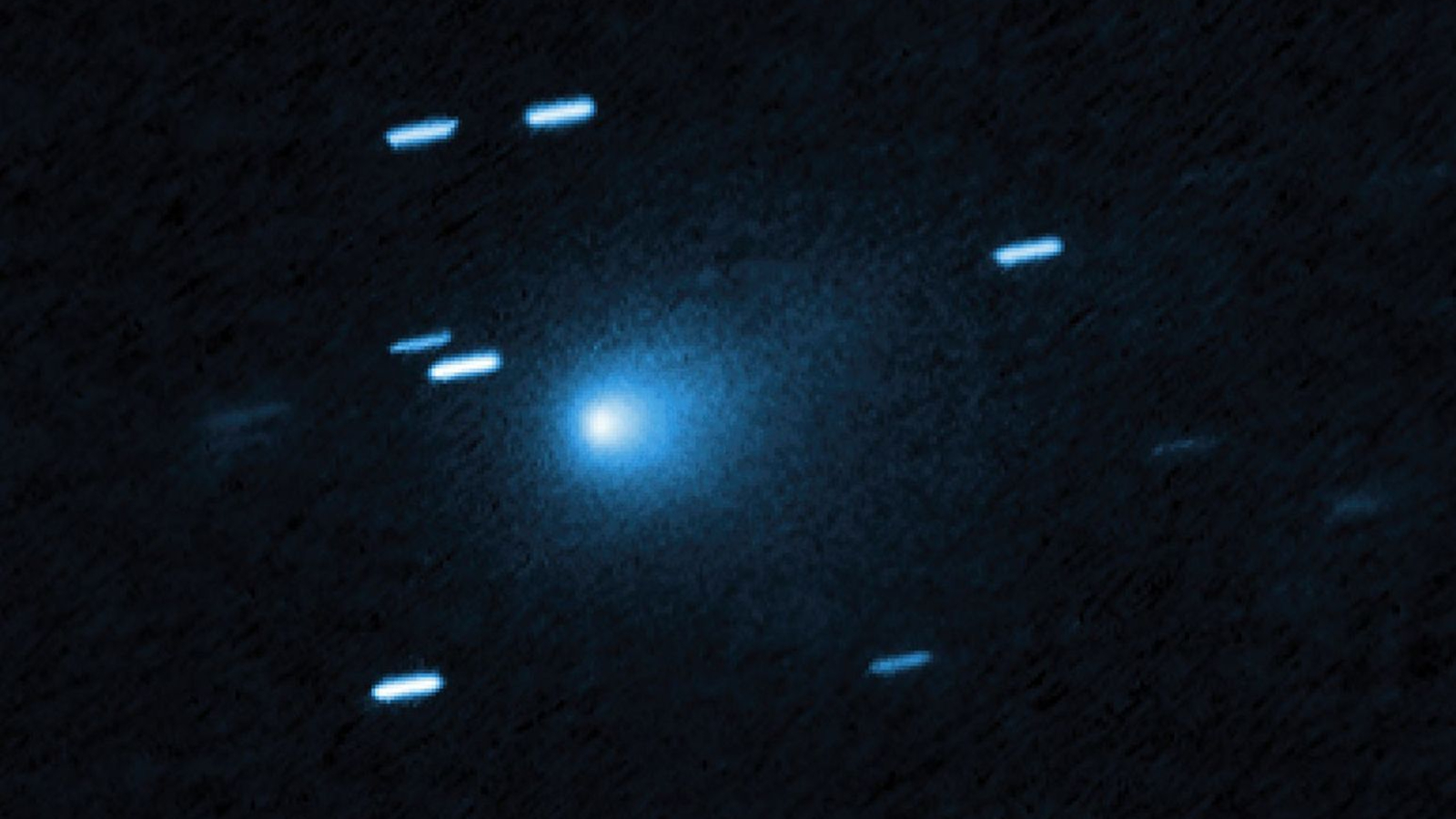
Often dramatically dubbed “dirty snowballs,” comets owe this evocative nickname to their fundamental composition. At their heart lies a solid, icy nucleus, a cosmic amalgam of frozen gases intertwined with particulate matter like rock and dust.
As these celestial travelers embark on their elliptical journey toward the sun, the increasing solar radiation triggers a remarkable transformation. The frigid gases within the nucleus bypass the liquid state, sublimating directly into a gaseous form. This process generates a vast, luminous shroud of gas known as a “coma,” which envelops the nucleus and gives the comet its characteristic hazy, diffuse appearance.
Furthermore, the relentless outward flow of particles from the sun—the solar wind—exerts pressure on these liberated gases. This force then propels the gases away from the nucleus, stretching them into the spectacular, elongated tail that is often the most iconic feature of a comet’s display.
Despite recent speculation, comet 3I/ATLAS has technically only displayed a single “color change” throughout its observed journey, according to expert Zhang. This lone alteration occurred earlier this year when the comet’s coma brightened considerably as it began ejecting gases, a natural reaction to warming in the sun’s heat. Significantly, this verifiable shift predates the wave of reports that later emerged, touting a more recent and supposedly “newsworthy” alteration in the interstellar visitor’s hue.
According to Zhang, the comet’s observed shift in appearance was a singular event, coinciding with the initial visibility and brightening of its gas coma. The celestial body has since maintained this luminous state, now shining with even greater intensity.

By early September, the comet’s distinctive blue-green gas coma was already becoming visible. Numerous photographs from amateur astronomers during this period provided compelling visual evidence, captured well before the celestial body’s increasing proximity to the sun began to obscure such clear observations.
The comet has become an unlikely focal point for a flurry of misinformation and intense speculation. These include elaborate conspiracy theories alleging the celestial object is actually an alien spacecraft, with some theorists further claiming the current U.S. government shutdown is being exploited to conceal evidence of its true, extraterrestrial nature.
This object’s profound fascination is inherent, not contingent on extreme circumstances. Rather, its serendipitous transit through our cosmic neighborhood presents an unparalleled opportunity to glean insights into the conditions of interstellar space.
The comet has drawn widespread attention, with its celestial portrait captured by a diverse array of observational tools. On Earth, numerous ground-based telescopes, including accessible consumer-grade models as small as six inches, have successfully imaged the distant object. Complementing these terrestrial views, an impressive list of space-based missions, such as the venerable Hubble Space Telescope, Europe’s ExoMars Trace Gas Orbiter, and China’s Tianwen 1 Mars probe, have also contributed to the growing visual record.
Despite being scheduled to capture imagery of a comet during its close encounter with the Red Planet around October 3, NASA’s Mars Reconnaissance Orbiter has not released any photographs from the flyby. The anticipated visuals remain unavailable due to the recent government shutdown, which significantly curtailed NASA’s operational capacity.
Comet 3I/ATLAS is poised to make its closest approach to Earth on December 19. During this celestial event, the comet will pass at a distance of approximately 167 million miles (270 million kilometers) from our planet.