
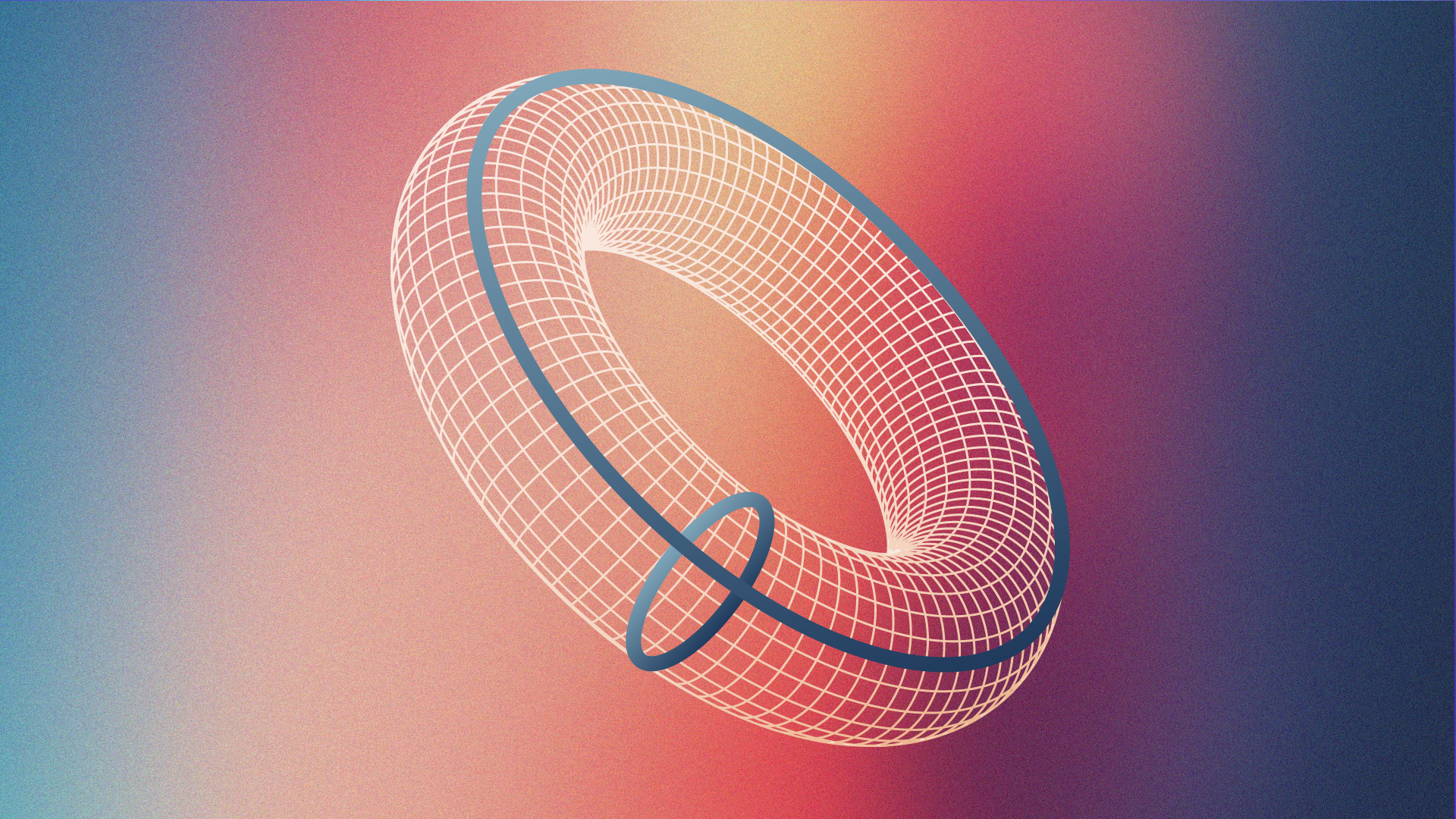
On a cold November day, in Russia, an individual leading a quiet life took a public action, uploading a paper to an open server.
Grisha Perelman’s groundbreaking paper, “The entropy formula for the Ricci flow and its geometric applications,” laid the essential groundwork for one of the most significant mathematical proofs in modern history.
This groundbreaking paper marked the initial breakthrough in a series of three publications, released over the subsequent year, that ultimately provided a definitive solution to the long-standing Poincaré conjecture. This profound mathematical hypothesis had remained unproven for nearly a century since its original proposition by Henri Poincaré.
Mathematician Henri Poincaré’s seminal hypothesis offered a unique criterion for identifying a spherical three-dimensional space. He proposed that if a closed loop drawn on any 3D object – from an ordinary housecat to the colossal Empire State Building – could be continuously contracted into a single point without tearing either the loop or the object itself, then that space was fundamentally equivalent to a sphere.
The proof of a particular conjecture was fundamental to topology, the mathematical study of shapes. While mathematician Stephen Smale achieved a significant breakthrough in 1961 by solving the problem in five dimensions—an accomplishment that earned him math’s prestigious Fields Medal—the three-dimensional case remained stubbornly intractable.
In the 1980s, Columbia University mathematician Richard Hamilton proposed a groundbreaking method for resolving a significant mathematical conjecture. His innovative approach leveraged Ricci flow, a sophisticated mathematical technique already instrumental in both Einstein’s theory of general relativity and the intricate field of string theory.
Writing for The New York Times in 2006, reporter Dennis Overbye offered a vivid analogy to explain the Ricci flow technique, likening its action to the gentle heat of a hair dryer smoothing wrinkles from shrink-wrap. This comparison underscored Ricci flow’s capacity to dissolve complex curvature and irregularities, ultimately simplifying intricate shapes into their more fundamental, underlying forms.
The Ricci flow technique initially showed promise in simplifying rounded geometries into perfect spheres. However, its application to more complex shapes consistently encountered a significant obstacle: the spontaneous emergence of “singularities,” defined as points of infinite density. While topologists developed a sophisticated “surgical” method to excise these anomalies, a critical problem persisted. Researchers faced the daunting prospect that these singularities could potentially reappear indefinitely, a challenge that ultimately brought their progress to a halt.
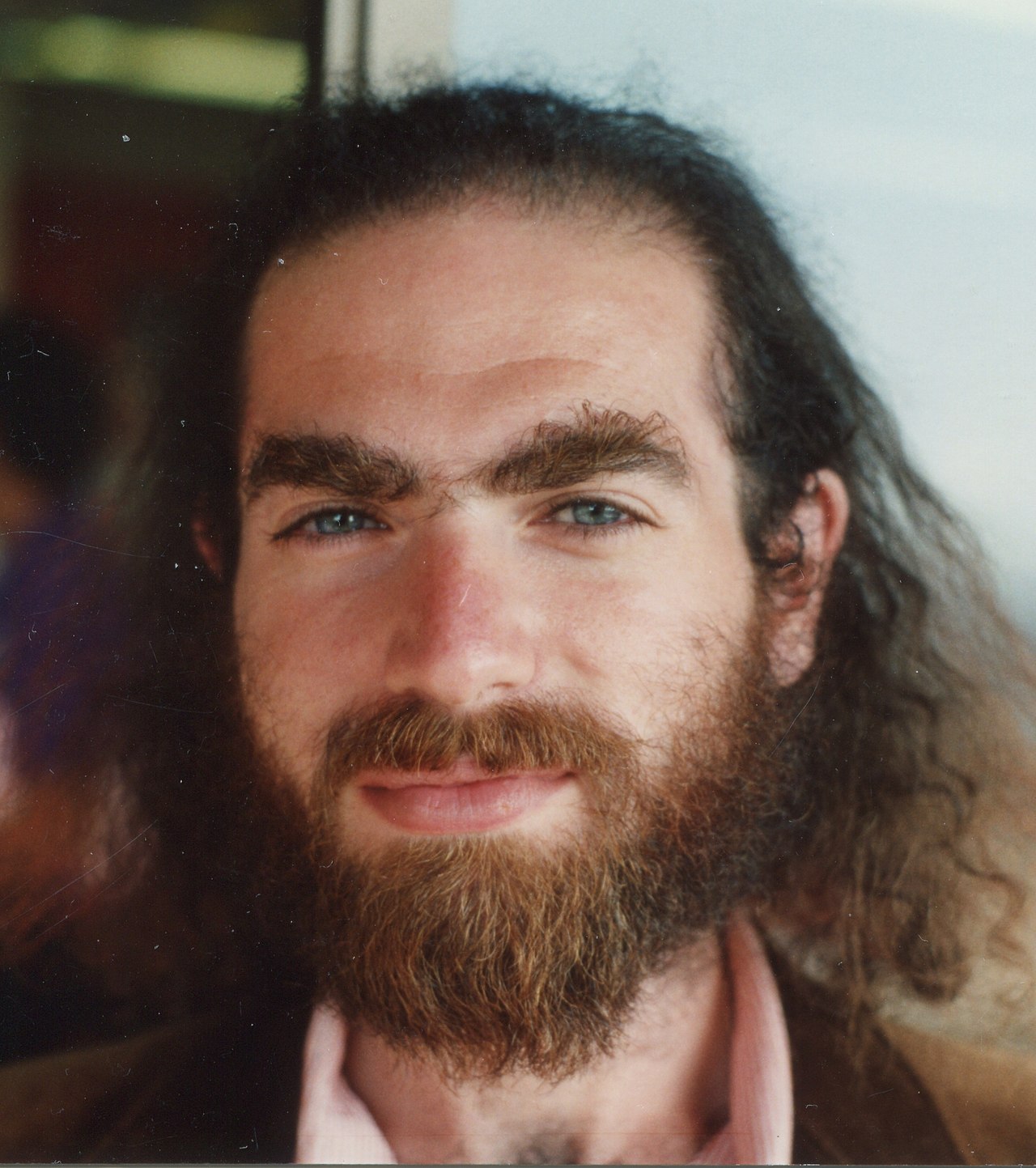
Mathematician Grigori Perelman, known to some as Grisha and whose first name is also spelled Grigory, achieved a monumental breakthrough by definitively solving the long-standing singularity problem. This pivotal accomplishment followed a decade Perelman had dedicated to postdoctoral research at various institutions across the United States.
Notably, in the mid-1990s, Perelman declined highly prestigious mathematical fellowships offered by institutions in both the U.S. and Europe. Instead, he chose to return to his native St. Petersburg, Russia, where he subsequently accepted a position at the renowned Steklov Institute of Mathematics.
Colleagues painted a portrait of a mathematician who was both friendly and profoundly shy, often characterized as “unworldly.” His distinctive appearance, marked by long hair and fingernails, reportedly prompted comparisons to Rasputin.
The mathematician often confided in peers about his love for the outdoors, specifically his enjoyment of hiking and foraging for mushrooms in the woods around St. Petersburg. Significantly, his colleagues consistently noted a profound indifference to material wealth or conventional success. These observations were relayed by UCLA mathematician Robert Greene to Overbye in 2006.
Following his return to Russia in the mid-to-late 1990s, mathematician Perelman largely vanished from the public sphere. His sudden disappearance led many professional colleagues to believe he had entirely abandoned the field of mathematics.
In 2002, Perelman released his initial paper, marking a pivotal moment. Over the subsequent year, he further elaborated on his work, publishing two additional papers and presenting a series of explanatory talks at various East Coast academic institutions. However, following this brief period in the spotlight, Perelman once again retreated from public view, returning to his characteristic reclusion.
Grigori Perelman’s groundbreaking research delivered a long-sought solution to the Poincaré Conjecture. His work revealed that intricate ‘singularities’ in three-dimensional shapes could be simplified into fundamental geometric forms, such as spheres or tubes. Perelman further demonstrated that by meticulously applying the ‘Ricci flow’ process, any 3D shape would ultimately resolve into a sphere. While this constituted a complete proof, the sheer brilliance, originality, and profound technical depth of his arguments required the global mathematical community several years of meticulous review and analysis. Ultimately, experts confirmed that this monumental topographical problem had, without doubt, been definitively resolved.
In 2006, mathematicians John Morgan and Gang Tian put an end to years of speculation, releasing a comprehensive 473-page paper that conclusively proved the elusive conjecture. Their exhaustive analysis confirmed that Grigori Perelman’s groundbreaking work, which significantly advanced Richard Hamilton’s earlier theories, had indeed provided the definitive solution to the long-standing mathematical mystery.
Mathematician Grigori Perelman famously declined both the prestigious Fields Medal and the Clay Millennium Prize, which came with a substantial $1 million award. His refusal was reportedly due to objections concerning how credit was attributed for his solution to the problem.
Since his 2005 resignation from the Steklov Institute, mathematician Grigori Perelman has cultivated an intensely private life, deliberately avoiding public scrutiny. While his continued engagement with mathematics from his St. Petersburg apartment remains unconfirmed, neighbors reported in the early 2010s that he was primarily occupied with caring for his elderly mother at the residence.
In 2010, when approached by a reporter for an interview, he swiftly declined, offering a terse explanation: “You are disturbing me. I am picking mushrooms.”