After a hiatus of more than five years, humanity has successfully launched a new mission bound for Mars. However, the ambitious voyage to the Red Planet is expected to be a lengthy one, with its arrival still many months in the future.
NASA embarked on a new interplanetary mission Thursday, November 13, sending its twin ESCAPADE probes hurtling towards Mars.
This pivotal launch, powered by Blue Origin’s formidable New Glenn rocket on only its second-ever flight, marks the first departure for the Red Planet in over three years. The last such journey occurred on July 30, 2020, when NASA’s groundbreaking Perseverance rover and its pioneering Ingenuity helicopter began their historic voyage atop an Atlas V rocket.
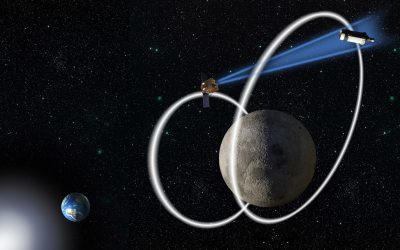
Instead of a journey to Mars, the New Glenn rocket propelled the ESCAPADE mission to a distinct deep-space destination: the Sun-Earth Lagrange Point 2 (L2). This crucial, gravitationally stable vantage point is situated approximately 930,000 miles (1.5 million kilometers) from our planet.
The next optimal window for efficient interplanetary travel between Earth and Mars, an alignment occurring just once every 26 months, is not anticipated until late 2026. Consequently, the ESCAPADE probes will spend 12 months positioned at the L2 Lagrange point, where they will actively study regional space weather phenomena. Their mission to Mars will then proceed in November 2026, when they perform a return trajectory towards Earth to execute a crucial “gravity assist” maneuver, utilizing our planet’s gravitational pull to accelerate them on their final journey to the Red Planet.
The ESCAPADE mission is employing an unconventional and indirect orbital trajectory, a novel approach that mission team members believe could significantly enhance future exploration efforts on Mars.
NASA’s ESCAPADE mission is poised to revolutionize space travel by enabling launches to Mars even when planetary alignments are not optimal. Jeffrey Parker of Advanced Space LLC, a key partner in the ambitious $80 million project, confirmed that ESCAPADE is “paving the way” for such capabilities. Parker shared this vision at a conference held earlier this year, with further details emerging from a University of California, Berkeley explainer published on November 5.

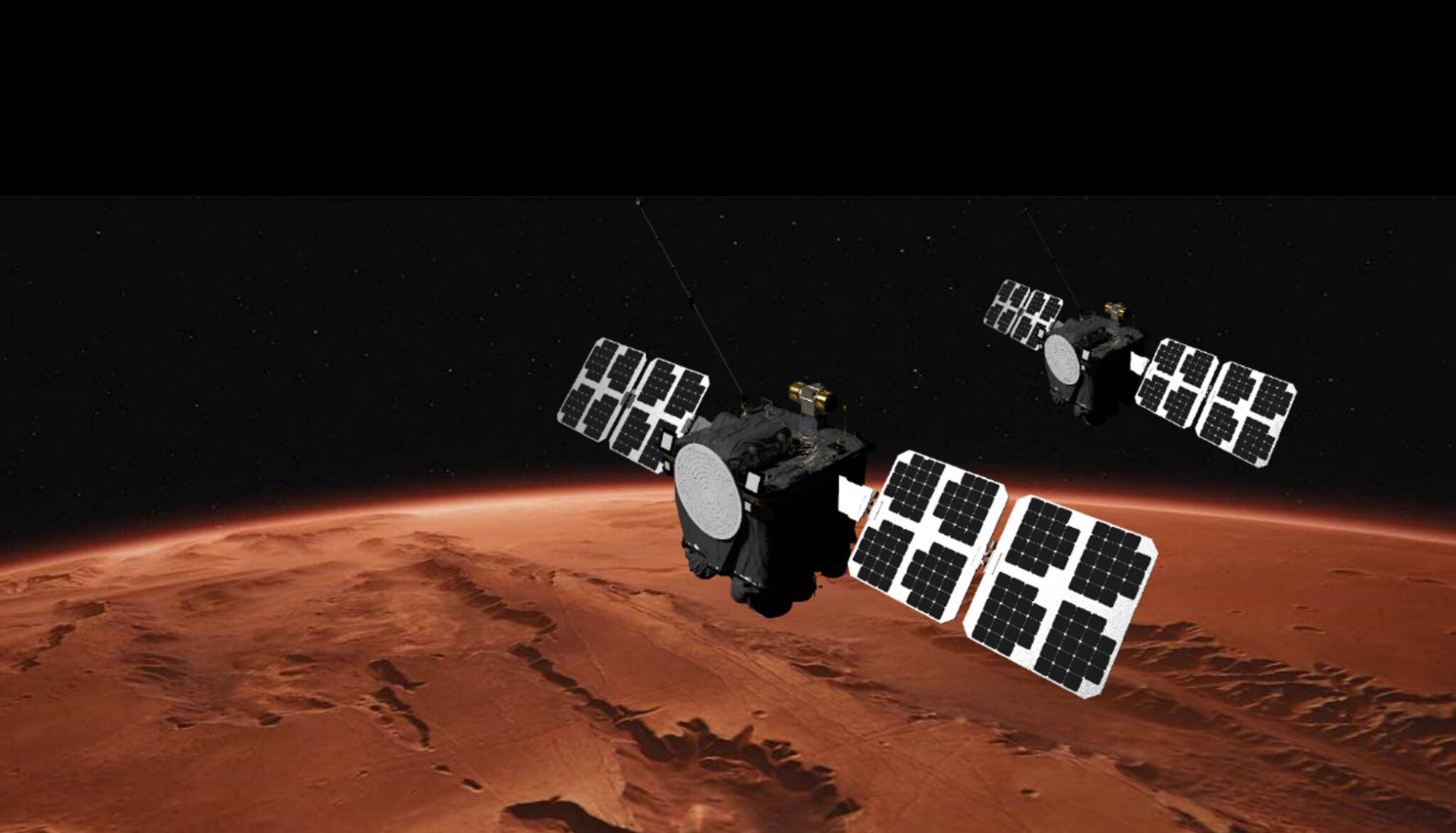
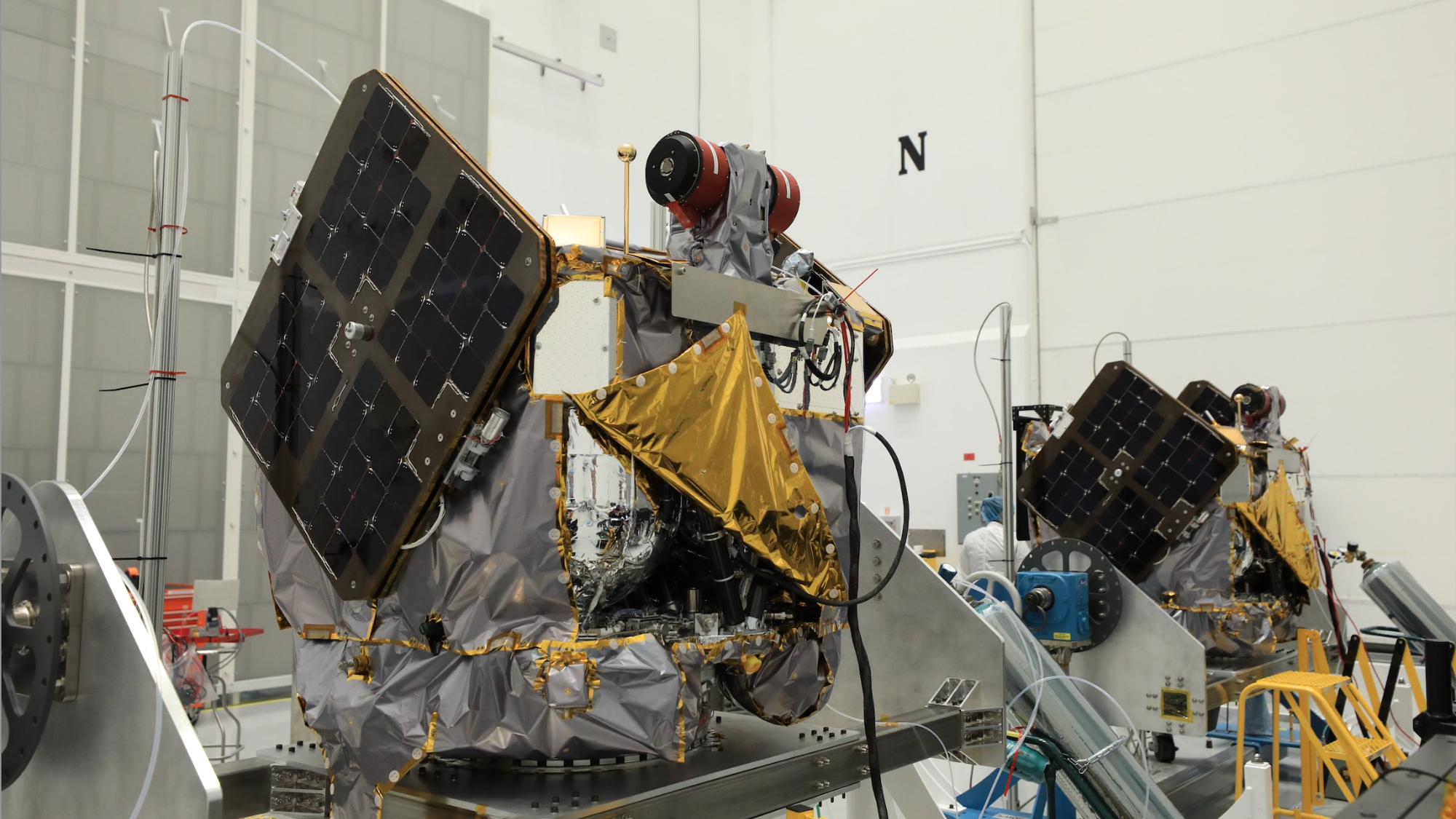
UC Berkeley is set to play a pivotal role in NASA’s ESCAPADE mission, as the university will manage and operate the twin “Escape and Plasma Acceleration and Dynamics Explorer” probes. In a fitting tribute to their involvement, the two spacecraft have been christened Blue and Gold, directly reflecting the university’s official colors.
The ambitious journey for Rocket Lab’s twin probes, “Blue” and “Gold,” from their L2 staging point to Mars is projected to span approximately 10 months. Crafted by the California-based aerospace company, these scientific instruments are slated to achieve Martian orbit by September 2027.
Upon arrival, the probes will embark on a meticulous seven-month process of lowering and synchronizing their trajectories around the Red Planet. The ultimate objective, as detailed by Robert Lillis, principal investigator for ESCAPADE at UC Berkeley’s Space Sciences Laboratory, is to position them in “essentially the same orbit, following each other like a pair of pearls on a string.”
This scientific advancement is crucial for understanding rapid changes within the system, explained Lillis. Previously, missions such as NASA’s MAVEN and Europe’s Mars Express were hampered by a significant delay; they had to wait approximately four to five hours—until the next orbital pass—to reassess conditions in a specific area. This lengthy wait meant missing vital, immediate fluctuations.
However, with two spacecraft now able to traverse these regions in quick succession, scientists gain an unprecedented capability. They can monitor how these areas evolve on very short timescales, from as little as two minutes up to 30 minutes, providing a much more dynamic and accurate picture of the system’s variability.
Both Blue and Gold are outfitted with an identical suite of scientific instruments. This shared payload includes a dual-spectrum camera system capable of capturing both visible-light and infrared images, a magnetometer for measuring magnetic fields, an electrostatic analyzer, and a Langmuir probe specifically designed to assess the properties of plasma.
Over the next 11 months, specialized instruments will meticulously map Mars’ upper atmosphere and magnetic fields. This ambitious undertaking, as detailed by UC Berkeley, is set to provide humanity’s first “stereo view” of the Red Planet’s unique near-space environment.
The resulting discoveries are expected to illuminate precisely how and when Mars shed its atmosphere. Furthermore, the mission will furnish vital intelligence on prevailing planetary conditions, offering critical data for the safety and planning of future human landings and potential long-term settlements on the Martian surface.
Patience will be paramount for the mission team, as the much-anticipated data is set to trickle in over an extended period. Nevertheless, this long wait is familiar territory for space scientists, who are well-versed in the protracted timelines inherent to their ambitious cosmic endeavors.