This article, which originally appeared in The Conversation, has been syndicated to Space.com’s “Expert Voices: Op-Ed & Insights” section.
While the universe’s ultimate fate remains a subject of ongoing scientific inquiry, current evidence overwhelmingly points to its enduring role as humanity’s cosmic home for an immensely long future.
The universe, an all-encompassing entity of space, time, matter, and energy, burst into existence approximately 14 billion years ago. This monumental beginning was marked by the rapid expansion known as the Big Bang, an event that set the stage for a continuous and dynamic cosmic evolution.
In its earliest stages, the nascent universe was characterized by a diffuse gas of fundamental particles—protons, neutrons, and electrons—the very building blocks from which atoms would later form. Over vast stretches of cosmic time, this primordial gas gradually collapsed under gravity, eventually coalescing to forge the countless stars and galaxies that populate the cosmos today.
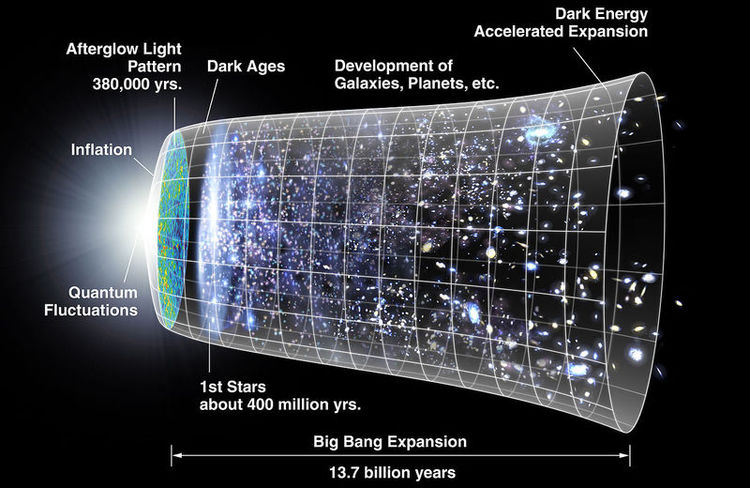
Our understanding of the universe’s future is fundamentally shaped by diligent observations of its current state. Astrophysicists, for instance, meticulously scrutinize distant galaxies, allowing them to chart the evolution of stars and galactic structures across vast cosmic timescales. These critical insights form the bedrock for developing theories that forecast the universe’s ultimate trajectory.
Forecasting the universe’s ultimate destiny often relies on a scientific method known as extrapolation, which involves projecting current cosmic observations into the distant future. However, this predictive approach is inherently precarious, as unforeseen events or discoveries could dramatically alter the anticipated cosmic trajectory.
Interpolation, a robust statistical technique, provides a significantly safer and more reliable method for estimating values that lie *within* a known range of data. This approach offers greater accuracy compared to predicting information beyond established boundaries.
To illustrate, consider a simple analogy: if you possess photographs of yourself at ages five and seven, an observer could quite confidently infer your likely appearance at age six. This act of deriving an intermediate data point from surrounding, known information is the core principle of interpolation.
While current photographs may allow for short-term speculation on a child’s appearance a year or two into the future, accurately predicting physical changes far down the line remains impossible. Unforeseen developments, such as the sudden need for corrective eyewear or significant growth spurts, consistently defy long-range forecasts.
Scientists can accurately forecast the universe’s probable appearance for the next several billion years by extrapolating the evolutionary patterns of stars and galaxies. However, beyond this predictable timeframe, the cosmic landscape is poised for potentially radical and enigmatic transformations. Experts suggest the universe, along with its fundamental contents, could once again undergo profound changes, mirroring the significant shifts it has experienced throughout its ancient history.
Good news for those under the sun: our medium-sized yellow star is projected to continue its luminous journey for billions of years to come. Scientists estimate the Sun is currently approximately halfway through its grand 10-billion-year lifespan.
A star’s ultimate longevity is directly linked to its size. Massive, intensely hot blue stars burn through their fuel at an accelerated pace, resulting in relatively brief existences. Conversely, smaller, cooler red stars are known for their remarkable endurance, shining brightly for significantly extended periods.

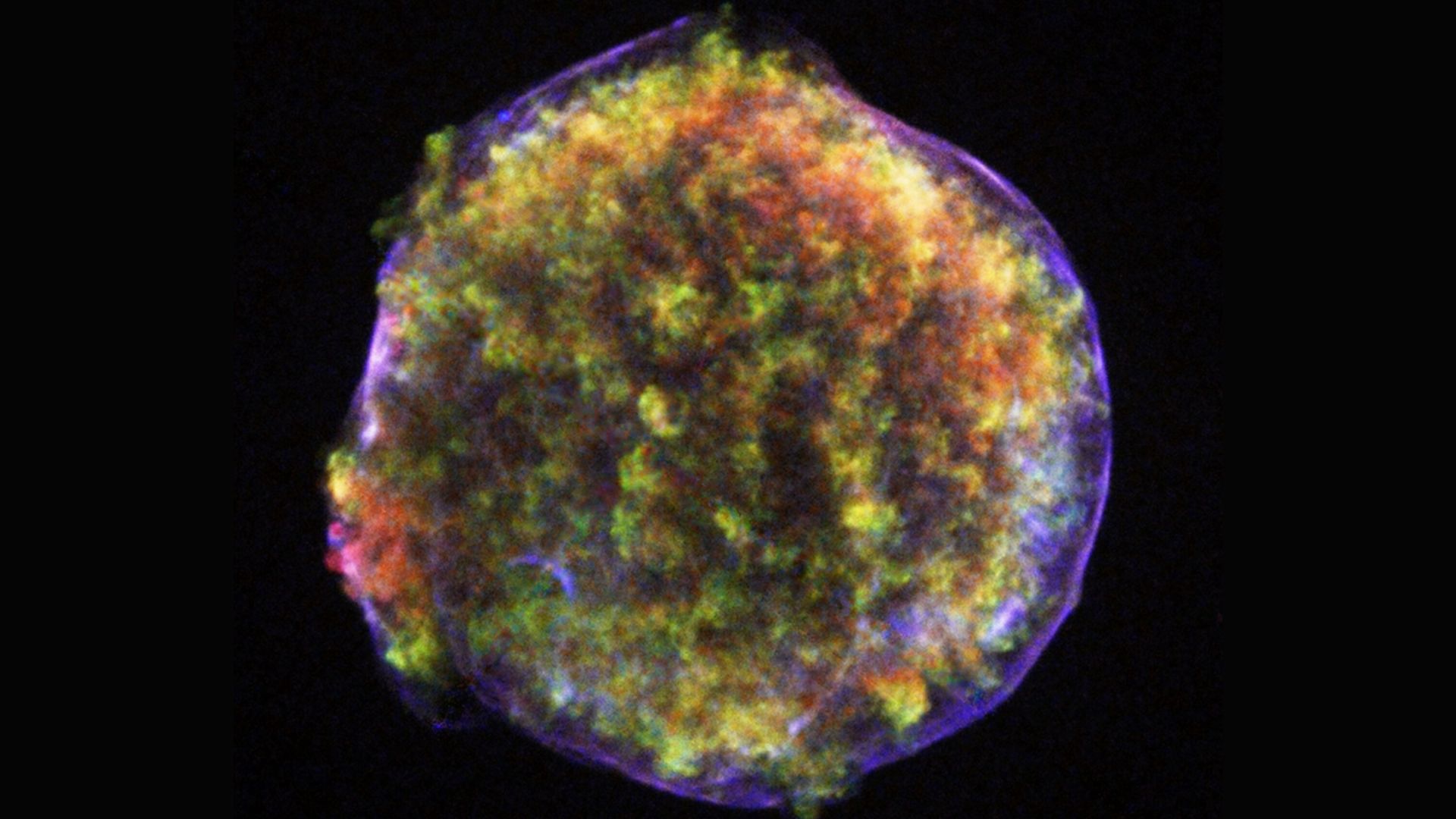
The cosmic landscape currently presents a duality: some galaxies continue to be prolific stellar nurseries, actively forging new stars, while others have already depleted their star-forming gas reserves, effectively ceasing production. In these quiescent galaxies, the vibrant, short-lived blue stars are the first to disappear, concluding their existence in spectacular supernovae within a mere few million years. Billions of years further into the future, yellow stars, much like our own Sun, will shed their outer layers to form nebulae, leaving behind their stellar cores. Eventually, only the long-lived, cooler red stars will endure. This universal trajectory ultimately suggests a future where all galaxies will halt star formation, leading to a gradual reddening and dimming of the starlight across the entire universe.
Even the most enduring celestial bodies, red stars, are ultimately destined to dim and vanish into darkness. This cosmic expiration, however, lies an astounding trillions of years in the future—a duration hundreds of times longer than the universe has existed. Until that unimaginably distant epoch, countless stars will continue to illuminate the cosmos, bathing it in light and warmth.
Galaxies, the immense cosmic structures housing billions of stars, grow and evolve through a dynamic process of accumulation. Much like a sandcastle expanding with each added bucket, these galactic behemoths increase in size and mass by merging with and absorbing smaller galaxies in their vicinity. This fundamental mechanism of cosmic evolution, characterized by such galactic mergers, is not a phenomenon confined to the past but an ongoing process astronomers anticipate will continue to shape the universe’s grand architecture far into the future.
In the dynamic environments of galaxy clusters, hundreds of galaxies are perpetually drawn inward towards a shared gravitational center. This relentless celestial movement frequently culminates in spectacular, often destructive, galactic collisions.
During these immense cosmic mergers, what were once graceful, well-ordered spiral galaxies—distinct for their characteristic disk shapes—undergo a profound and chaotic transformation. Their intricate structures are violently ripped apart, dissolving into amorphous, formless clouds of stars, fundamentally altering their appearance from organized disks to disordered blobs.
Over the vast timescales of cosmic evolution, the universe is expected to undergo a significant transformation in its galactic makeup. This shift is driven by the fundamental process of galactic mergers: as spiral galaxies inevitably collide and combine, they coalesce and evolve into elliptical galaxies. Consequently, future observations will reveal a universe with an increasingly dominant population of elliptical galaxies, while the number of spiral galaxies steadily diminishes.
In a cosmic event predicted to unfold over billions of years, our Milky Way galaxy is on a collision course with its larger neighboring spiral, Andromeda.
While the scale of this galactic merger is immense, individual stars face no danger; thanks to the vast distances separating them, they are expected to simply sail past one another, entirely unscathed. This future celestial rendezvous promises an unparalleled and breathtaking spectacle for any observers witnessing the grand cosmic embrace.
From its dramatic genesis in the Big Bang, the universe embarked on an outward expansion that scientists anticipate will likely persist into the future. This cosmic growth, however, is constantly counteracted by the immense gravitational pull of all its constituents – including luminous stars, sprawling galaxies, vast clouds of gas, and the enigmatic dark matter. This collective inward tug acts as a cosmic brake, steadily decelerating the expansion. Current scientific theories offer varying projections for the universe’s ultimate fate: either its outward journey will continue indefinitely, albeit at an ever-slowing pace, or it could eventually slow to a complete standstill.
Recent scientific observations suggest an enigmatic repulsive force is actively driving the universe’s expansion at an accelerating rate. Scientists have designated this mysterious outward push as “dark energy,” though its fundamental characteristics remain largely unknown.
The implications are profound. Much like raisins in a baking cookie, galaxies are predicted to accelerate away from each other at increasingly rapid speeds. Should this cosmic acceleration continue indefinitely, a potential future looms where distant galaxies might eventually become too far away to observe from our vantage point in the Milky Way.
The cosmos, as we currently understand its ultimate fate, is headed towards an era of profound transformation and isolation. According to leading scientific predictions, the vibrant process of star formation is set to grind to a halt, extinguishing the birth of new stellar bodies.
Future galaxies will, therefore, no longer sparkle with the brilliance of nascent stars. Instead, these colossal structures will be dominated by aging, crimson, and increasingly faint stars, slowly surrendering their light as they cool into an everlasting darkness.
Concurrently, a grand cosmic consolidation is anticipated. The gravitational dance between galaxies will intensify, leading each local group and cluster to merge. This process will culminate in the formation of single, colossal elliptical galaxies – monolithic structures forged from countless stellar systems.
Adding to this transformative vision, the universe’s accelerating expansion will act as a cosmic curtain, drawing distant galaxies out of view. Eventually, all but the galaxies within our immediate cosmic neighborhood will recede beyond an observable horizon, rendering them forever inaccessible and leaving our future mega-galaxy in splendid, yet solitary, isolation.
Current cosmological models often depict a universe eventually fading into a “dark eternity” stretching over trillions of years. However, this isn’t necessarily the final chapter. Future scientific advancements and new data could dramatically revise this narrative, potentially unveiling a subsequent stage in cosmic evolution that is both profoundly different and unexpectedly beautiful. Indeed, depending on one’s theoretical framework, the universe might never truly “end.” Even if the fabric of existence transforms beyond recognition, imagining a distant future where the universe is utterly gone remains a formidable challenge.
While the contemplation of the universe’s vastness can sometimes evoke a feeling of wistful melancholy, a more optimistic perspective reveals humanity’s unique position at a truly exhilarating moment in cosmic history. We stand, effectively, at the dawn of the universe’s story, immersed in an era brimming with spectacular stars and galaxies ripe for observation and study.
More significantly, the cosmos possesses the capacity to nurture human society and its insatiable curiosity for billions of years into the future. This immense timeline assures ample opportunity for continuous exploration and the relentless quest for deeper understanding.