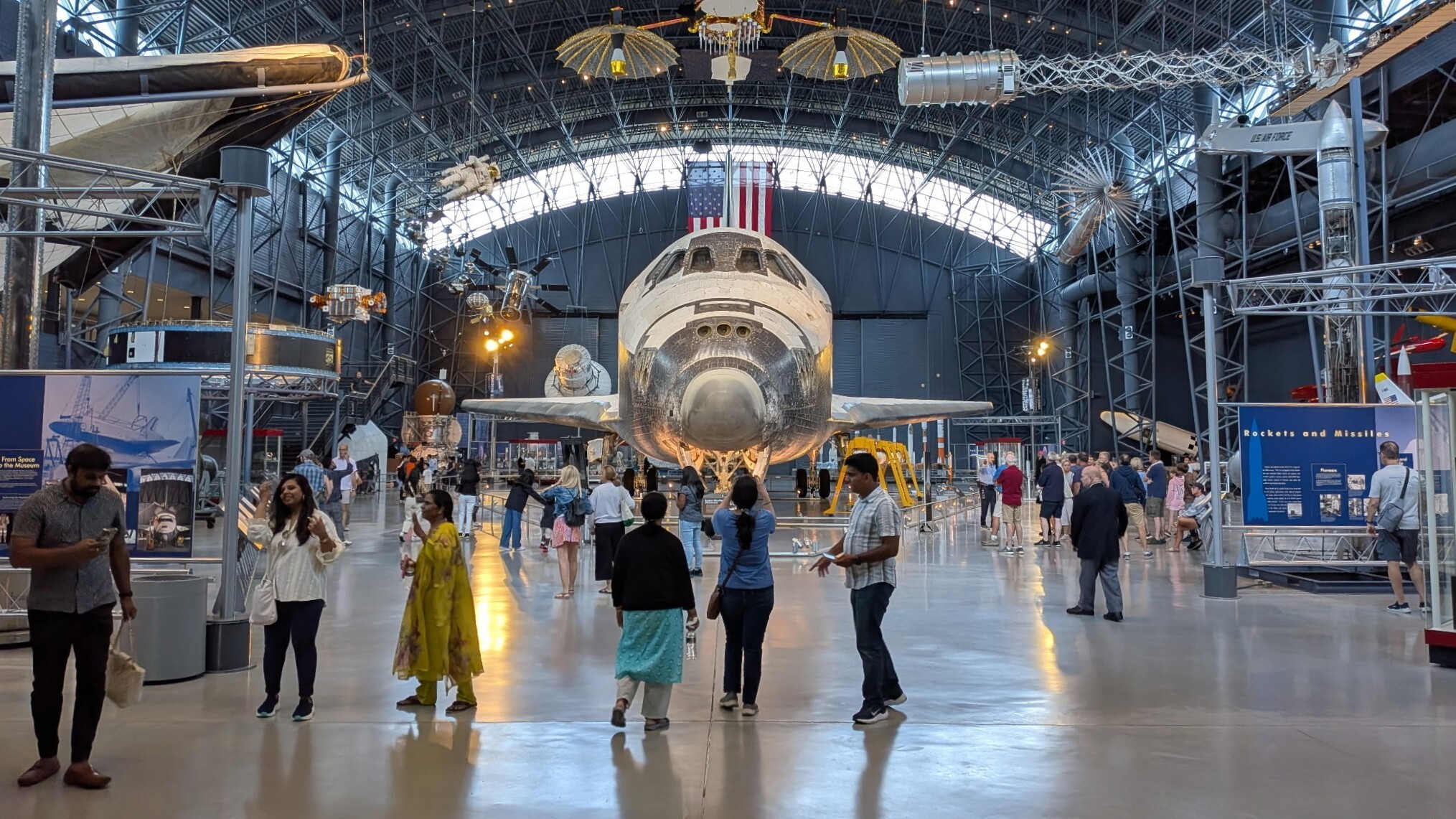
Reports indicate a powerful new patron has reportedly emerged, lending significant weight to the contentious initiative to relocate the space shuttle Discovery to Houston.
Jared Isaacman, President Donald Trump’s choice to lead the National Aeronautics and Space Administration (NASA), has pledged his backing for Discovery’s relocation. This commitment was revealed by U.S. Senator John Cornyn (R-Texas).
Senator John Cornyn, who spearheaded the “Discovery plan” in collaboration with fellow Texas Republican Senator Ted Cruz, issued the announcement through an emailed statement on Monday afternoon, December 1.
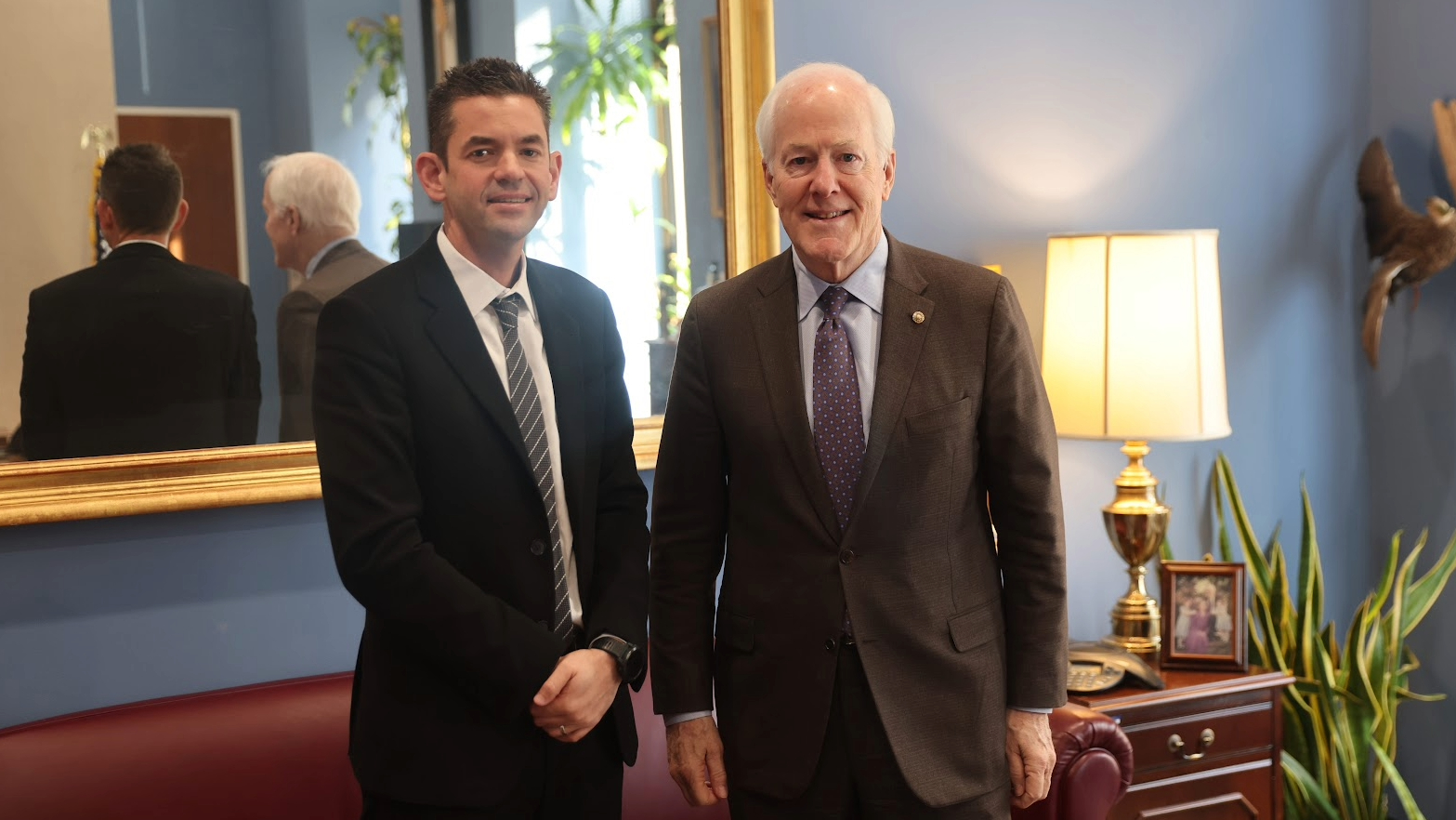
On Monday, Senator Cornyn convened a meeting with Jared Isaacman, the prominent billionaire entrepreneur. Isaacman is widely recognized as the founder of the payment-processing giant Shift4, and has also distinguished himself as a private astronaut, personally funding and commanding two Earth-orbiting missions in collaboration with Elon Musk’s SpaceX.
During their discussions, the officials emphasized NASA’s critical role in reinforcing America’s competitive advantage in space exploration against international rivals, particularly China. A key element of this strategy involves re-establishing a human presence on the Moon to acquire vital minerals and resources deemed crucial for national security. The meeting also highlighted the ongoing commitment to strengthen NASA’s Lyndon B. Johnson Space Center (JSC) in Houston, Texas, solidifying its position as the nation’s premier hub for human spaceflight innovation and excellence.
It has also been confirmed that Mr. Isaacman pledged his commitment to a provision championed by Senator Cornyn, now codified into the “One Big Beautiful Bill Act.” This legislative mandate ensures the Space Shuttle Discovery will be transported in one piece from its current location in Virginia to its designated home in Space City, Texas.

Space Shuttle Discovery holds the distinction of being NASA’s most active spacecraft, completing a remarkable 39 missions between its inaugural flight in 1984 and its final mission in 2011. That same year marked the conclusion of the entire Space Shuttle Program, as NASA pivoted its strategy towards outsourcing crewed orbital transportation to commercial space companies.
The United States has entrusted its four surviving space shuttles to museums nationwide, transforming these iconic orbiters into permanent national treasures. This strategic placement serves a vital dual purpose: to safeguard America’s unparalleled spaceflight heritage and to profoundly inspire young people, encouraging them to pursue careers in space science and exploration.
Following their storied careers in space exploration, NASA’s space shuttle fleet has been permanently grounded, with each remaining orbiter finding a new mission as a museum centerpiece across the United States.
The prototype *Enterprise*, which never journeyed beyond Earth’s atmosphere, is now a key attraction at the Intrepid Sea, Air and Space Museum in New York City. Veteran orbiters have also taken their final positions: *Atlantis* now welcomes visitors at the Kennedy Space Center Visitor Complex in Florida, close to its launchpads. On the West Coast, *Endeavour* inspires future generations at the California Science Center in Los Angeles. Meanwhile, the distinguished *Discovery* is a centerpiece at the Smithsonian Air and Space Museum’s Steven F. Udvar-Hazy Center in Virginia.
The legacy of the space shuttle program, however, is also marked by profound loss. *Challenger* and *Columbia* were tragically destroyed in separate failed missions, claiming the lives of 14 astronauts.

Despite its foundational role as the historic hub of NASA’s human spaceflight program, Houston’s Johnson Space Center (JSC) was notably unsuccessful in its bid to acquire a retired space shuttle for public display. Texas Senators John Cornyn and Ted Cruz swiftly condemned this decision as unacceptable. In April, they responded by introducing the “Bring the Space Shuttle Home Act,” legislation specifically mandating NASA to relocate the Space Shuttle Discovery from its current display at the Smithsonian Institution to Houston, affectionately known as “Space City.”
Although an original bill stalled in committee, two senators subsequently ensured its inclusion as a provision within the expansive, 1,000-page “One Big Beautiful Bill.” President Donald Trump signed this omnibus legislation into law on July 4. While the provision’s language is intentionally vague to conform with “reconciliation” bill rules, it unequivocally refers to Discovery and JSC.
The proposed legislation further earmarks a significant $85 million, specifically designated to finance the shuttle’s forthcoming relocation and the construction of its dedicated new exhibition facility.
The proposed plan has ignited considerable debate and drawn significant controversy. A central point of contention stems from the Smithsonian Institution, which asserts its established ownership of “Discovery.” The Institution firmly argues that, under its proprietorship, the U.S. government cannot simply commandeer or unilaterally seize the asset.
Smithsonian officials are voicing strong opposition to relocating the Space Shuttle Discovery, citing major logistical and financial hurdles. They contend that moving the massive 122-foot-long orbiter, with its 78-foot wingspan, could demand partial disassembly, a process that would severely diminish its historical integrity. This concern likely prompted Senator Cornyn’s assurance that Discovery would be moved “in one piece.” Compounding the issue, the museum estimates the transport costs to be between $120 million and $150 million, a sum significantly higher than the bill’s provisions.
Isaacman is positioned to significantly influence Discovery’s proposed corporate transition, with a pivotal nomination hearing scheduled for Wednesday, December 3rd, before the U.S. Senate’s Committee on Commerce, Science, and Transportation.
This upcoming confirmation hearing marks familiar territory for Isaacman, who was first nominated by President Trump for the leading role at NASA in January. However, that initial nomination was abruptly withdrawn on May 31, mere days before his anticipated confirmation. President Trump officially renominated Isaacman for the position in early November.