A sudden altitude loss and subsequent emergency landing of a packed passenger jet in late October **is potentially attributable to** a stream of high-energy particles originating from a distant supernova explosion.
**Aircraft Manufacturer Links Mid-Air Incident to Solar Radiation, Grounds Thousands of Jets**
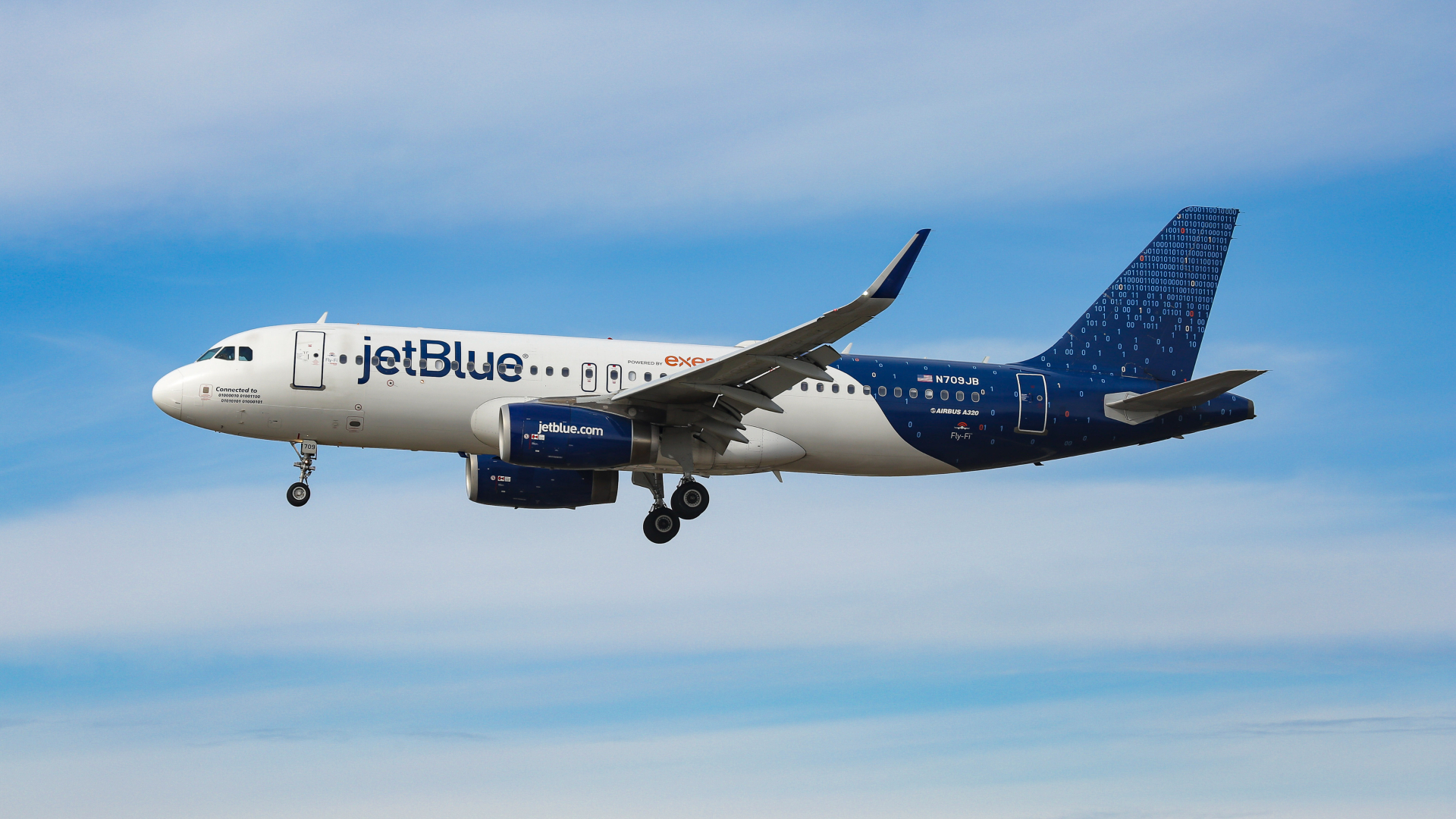
Airbus has attributed a recent mid-air incident involving a JetBlue Airbus A320 to “intense solar radiation,” citing potential corruption of data vital to flight controls. In response, the manufacturer has grounded 6,000 A320 aircraft worldwide to roll out software updates designed to rectify this newly identified vulnerability.
The incident unfolded on October 30 aboard a JetBlue Airbus A320, which was en route from Cancun, Mexico, to Newark, New Jersey. While cruising at altitude over Florida, the aircraft experienced an unexplained and sudden drop. Although pilots swiftly regained control, the abrupt descent resulted in injuries to at least 15 passengers, compelling the crew to make an emergency landing at Tampa International Airport.
Airbus’s statement, released earlier this week, suggests that solar radiation may have compromised critical data necessary for the proper functioning of the aircraft’s flight control systems. The grounding and subsequent software updates aim to prevent similar occurrences.
However, a leading expert has cast doubt on solar radiation as the culprit. Clive Dyer, a space weather and radiation specialist at the University of Surrey in the U.K., informed Space.com that solar radiation levels on October 30 were too low to impact aircraft electronics.
Dyer, whose extensive research spans decades in this specific field, offered an alternative theory: the affected jet’s onboard computer might have suffered a strike from a cosmic ray. These incredibly high-energy particles are remnants of distant star explosions, often traveling millions of years across the cosmos before reaching Earth.
High-energy cosmic rays pose a significant threat to modern microelectronics, capable of altering a circuit’s fundamental state, according to expert Dyer. These particles can trigger basic “bit flips,” inverting digital values from a 0 to a 1 or vice-versa, which can corrupt critical data and lead to system malfunctions. Beyond these data integrity issues, Dyer cautioned that cosmic rays also possess the destructive potential to cause permanent hardware failures by inducing electrical currents strong enough to burn out electronic devices.
Cosmic rays predominantly emerge from the cataclysmic supernova explosions that mark the violent end of massive stars. These stellar infernos propel torrents of protons across the cosmos, accelerating them to nearly the speed of light.
Upon reaching Earth, these high-energy rays ceaselessly assault our planet’s atmosphere. Their collisions with air molecules create a downpour of exotic secondary particles, including muons, energetic neutrons, and positrons. This cascade of particles poses a unique challenge to modern technology: should one strike an electronic circuit within critical systems, such as an aircraft sensor or an onboard computer, it can trigger what scientists term a “single-event upset.”
Solar flares, intense eruptions from the sun, unleash high-energy particles that dwarf their counterparts from cosmic ray showers. These solar-originated particles are often dozens, and in extreme cases thousands, of times more energetic and consequently, far more damaging.
As the sun’s activity intensifies, there is a heightened risk of single-event upsets (SEUs) disrupting aircraft avionics, potentially leading to a rise in related incidents.
Just under two weeks following the JetBlue incident, a powerful solar flare unleashed potentially hazardous levels of solar radiation that lingered for several days at typical flight altitudes. This persistent atmospheric radiation provides a clear rationale for the recent Airbus software update. However, aviation expert Dyer has clarified that, despite the concurrent radiation event, solar activity was not deemed responsible for the specific JetBlue accident.
Manufacturers, particularly those producing safety-critical units, bear the responsibility for engineering robust electronics, according to Dyer. He noted a concerning trend of complacency within the industry, which he attributes to a lack of significant solar weather events over the past two decades.
For Dyer, the intricate effects of cosmic radiation on spacecraft and aircraft electronics have formed the bedrock of a lifelong professional pursuit. His extensive expertise began in the 1980s, where he contributed to groundbreaking research on single-event upsets within spacecraft systems. This practical experience later saw him deploying radiation monitors aboard the iconic Concorde. Dyer maintains that while infrequent, single-event upsets in aircraft electronics, triggered by cosmic rays, are a documented reality, not an unprecedented event.
According to researcher Dyer, a particle strike is the likely culprit behind the harrowing 2008 Qantas Flight 72 incident. During that event, an Airbus A330 cruising high above the Pacific Ocean unexpectedly pitched downwards twice, triggering sudden, brief periods of near weightlessness. Unprepared passengers were violently thrown into the cabin ceiling and aisles, resulting in a significant number of serious injuries.
Dyer, who served as an advisor to the investigation at the time, confirmed that despite initial findings linking the incident to faults within the aircraft’s electronic sensors, the inquiry ultimately concluded without establishing a definitive cause.
Dyer revealed that the underlying cause of a critical ‘bit flip’ error in the device was never definitively identified. He expressed notable surprise that this fundamental technical issue remained unresolved.
**With the sun entering a period of heightened activity, the likelihood of powerful solar flares triggering serious incidents is dramatically escalating.**
According to Dyer, the sun is capable of unleashing dramatic surges in particle radiation. These events can elevate radiation levels to a staggering thousand times greater than ambient cosmic rays, potentially posing a significant threat and disruption to numerous aircraft operations.
Airbus is implementing a crucial software update, a development that comes as the aviation industry continues to monitor a recent JetBlue incident. While the specifics of that event remain under investigation, experts have largely dismissed solar weather as a likely cause. As of the time of this report, Airbus has not responded to Space.com’s request for comment on the matter.