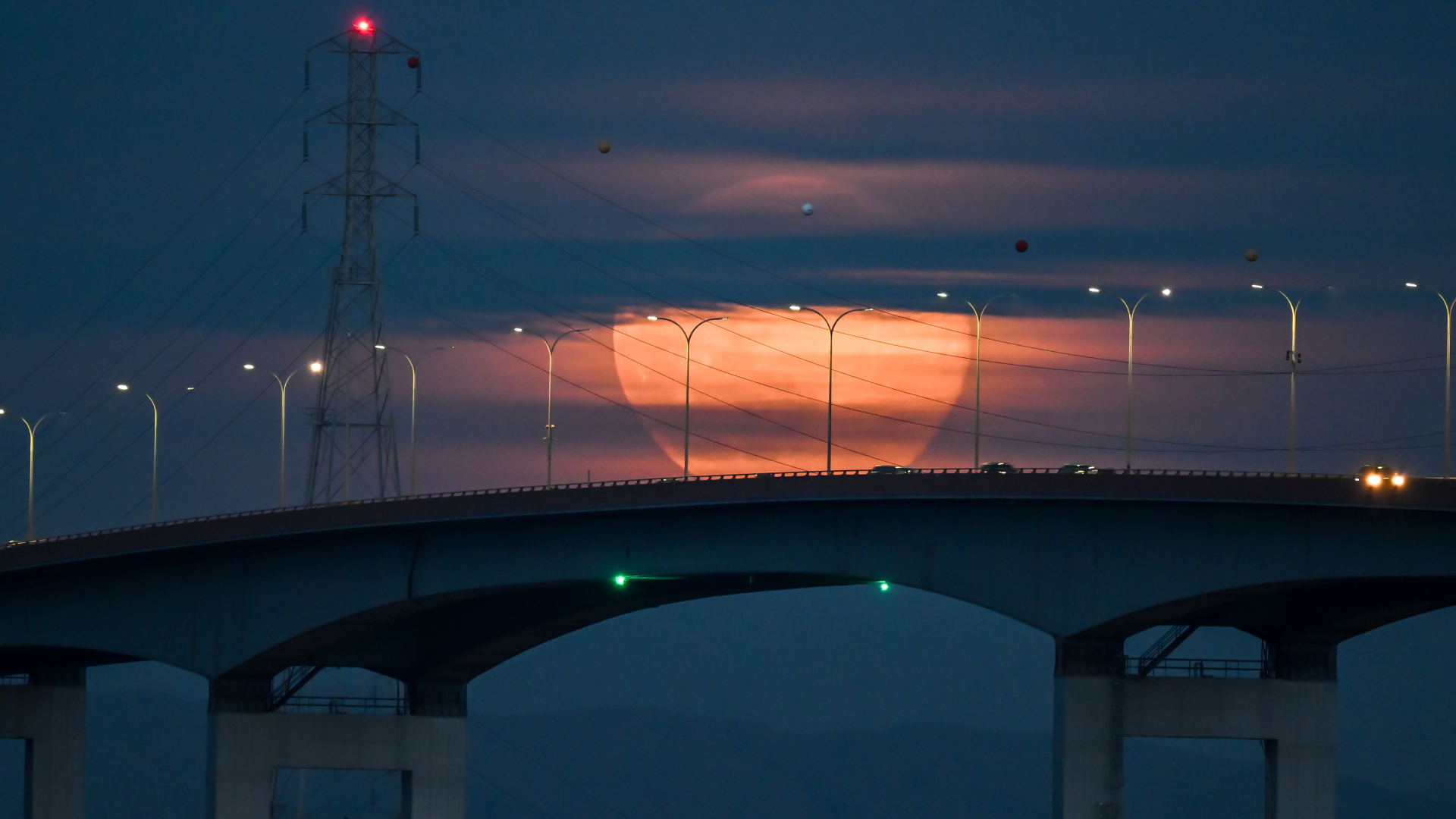
Tonight, December 4, 2025, marks the ascent of the final full moon of the year, a celestial event eagerly anticipated by stargazers. Dubbed the “Cold Supermoon,” this spectacle is poised to command attention as it rises prominently above the eastern horizon at sunset, promising an exceptionally large and luminous display.
On December 4, sky-watchers can anticipate the arrival of December’s full moon, reaching its precise peak illumination at 8:13 p.m. EST (2313 UTC). At this moment, the lunar disk will appear fully radiant as it stands directly opposite the sun in Earth’s sky, casting a bright glow above the eastern horizon.
This celestial event is popularly known as the “Cold Moon,” a nod to the characteristic drop in temperatures common this time of year. It also carries the evocative name “Long Night Moon,” reflecting the progressively lengthening nights and shrinking daylight hours as the Northern Hemisphere descends further into the winter season.
Sky-gazers are in for a treat this month as a magnificent “supermoon” prepares to illuminate the night sky. This celestial event unfolds when the full moon coincides with our natural satellite’s closest approach to Earth, a point in its 27-day elliptical orbit known as perigee. Specifically, the Moon will pass within 90% of this optimal distance.
This exceptional proximity has a stunning visual impact: a supermoon can appear up to 14% larger and shine as much as 30% brighter to the naked eye compared to a “micromoon,” which signifies the year’s most distant and smallest full moon.
Skywatchers across the United States are set to witness a truly spectacular lunar event on December 4. As the moon emerges over the eastern horizon at sunset, its brilliant, reflected light will dominate the night sky, effectively outshining the nearby stars of the constellation Taurus and the celebrated Pleiades open star cluster. This promises a breathtaking and unobstructed view of the lunar disk.
When the moon graces the horizon, it frequently casts a captivating yellow-orange glow. This striking coloration is attributed to Rayleigh scattering, an atmospheric phenomenon where Earth’s atmosphere selectively scatters the shorter, bluer wavelengths of sunlight reflecting from the moon’s surface, allowing more of the warmer hues to reach our eyes.
Concurrently, the lunar disk may appear remarkably larger than its actual size – a common optical illusion known as the “moon illusion.” This perceptual trick causes our brains to interpret the moon as expanded when viewed against terrestrial objects on the horizon, a stark contrast to its appearance when it floats high overhead without comparative visual cues.
As December progresses, sky-gazers will observe the month’s full moon occupying an unusually elevated position. Appearing higher in the night sky than in recent months, this phenomenon acts as a celestial counterbalance to the sun’s progressively lower and shallower arc across the daytime sky, leading up to the winter solstice on December 21.
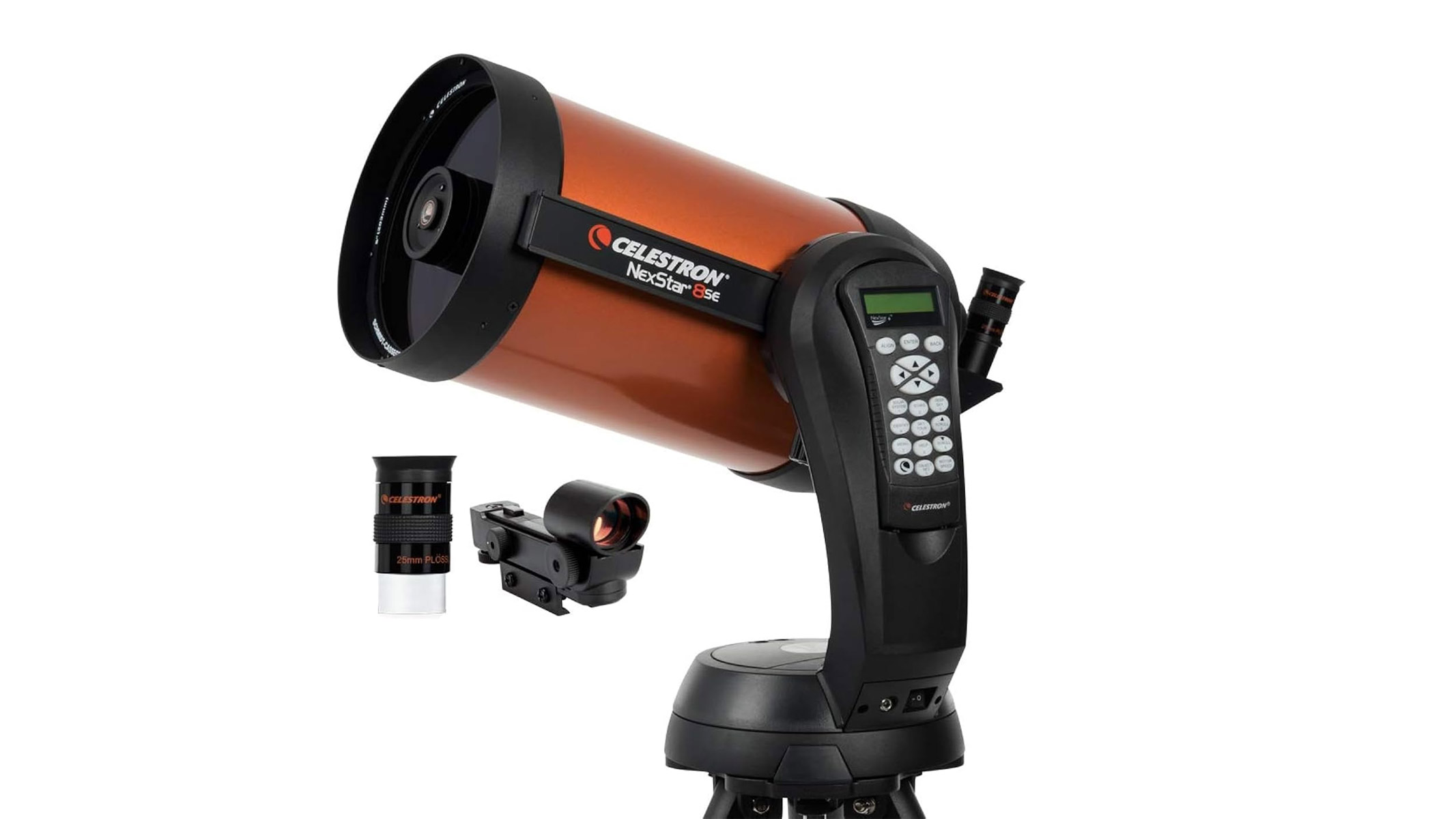
A casual glance at the moon with the naked eye reveals its most striking features: the expansive, dark basaltic plains known as lunar maria, or ‘seas.’ These colossal formations originated billions of years ago when immense floods of lava inundated vast impact basins, solidifying to resurface significant portions of the moon’s ancient landscape. While the unaided eye offers a captivating glimpse, even a modest backyard telescope dramatically enhances the view, bringing into sharp focus the intricate details of colossal impact craters and towering mountain ranges etched across Earth’s natural satellite.
For those seeking to delve deeper into the cosmos, our comprehensive guide offers expert recommendations for optimal binoculars and telescopes, perfect for enhancing your exploration of the moon and the vast night sky. Additionally, we feature top-tier cameras and lenses, essential for capturing and immortalizing every breathtaking celestial spectacle.
Space.com is eager to showcase reader photographs of the full “Cold Moon.” We invite anyone who captured images of this recent celestial event to submit them for potential publication and to share their perspective with our global audience. Please send your photos, along with your name, location, and any accompanying comments, to spacephotos@space.com.