A colossal sunspot cluster, comparable in scale to the one responsible for the largest solar storm in recorded history, has emerged on the sun’s Earth-facing side. This formidable complex of solar activity is now squarely aimed at our planet.
While its impressive size and direct alignment might raise concerns, experts are cautioning against alarm. Over the coming week, there is a possibility of enhanced aurora displays and minor technological disturbances. However, despite the sunspot’s magnitude, scientists believe it is unlikely to unleash an event on the devastating scale of the 1859 ‘Carrington Event’.
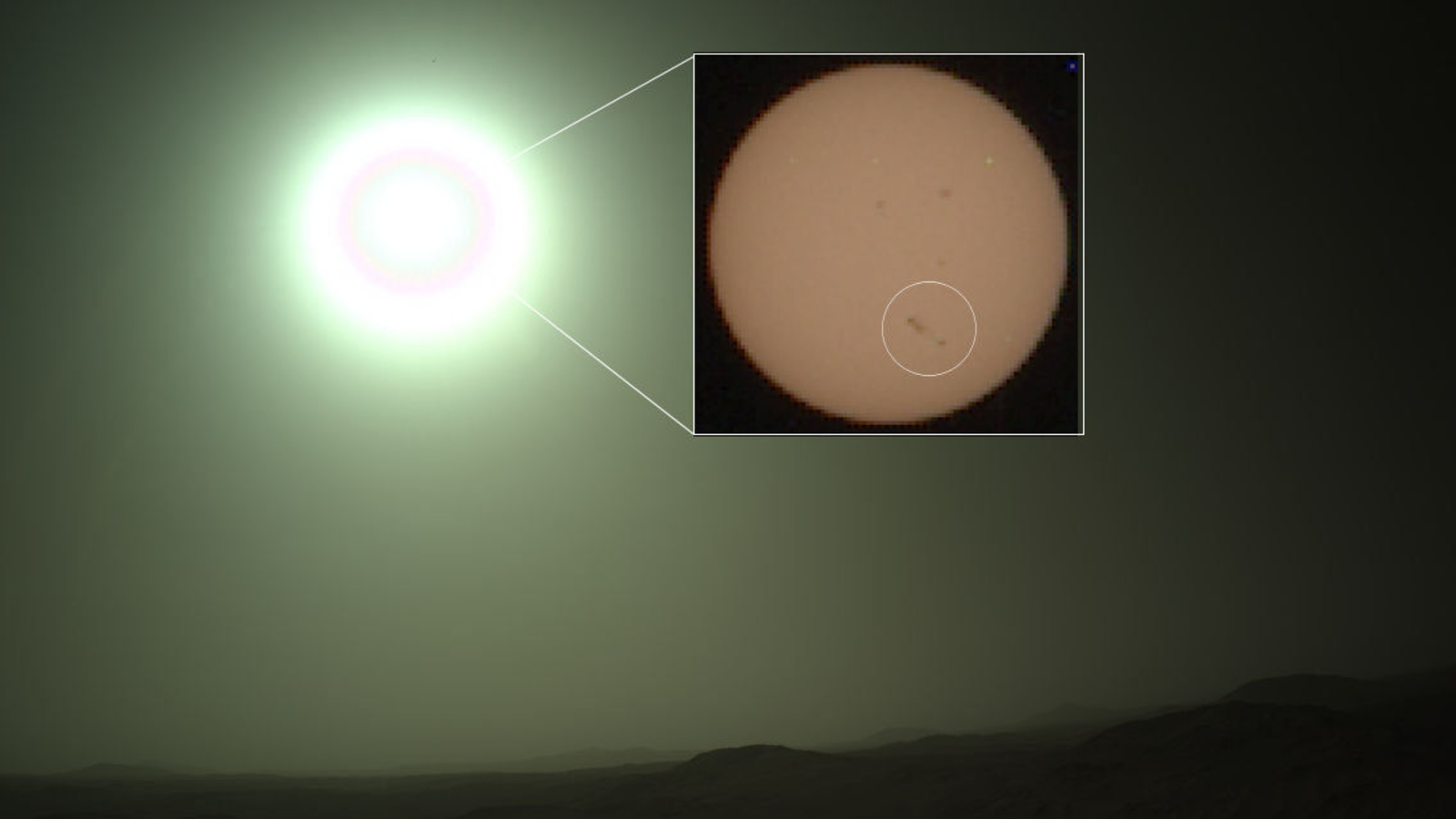
A large, magnetically intertwined sunspot complex, officially designated AR 4294-4296, rotated into view on the sun’s Earth-facing side on November 28. This substantial solar feature is comprised of two distinct sunspot groups, AR 4294 and AR 4296, which are bound together by powerful magnetic fields. While it made its terrestrial debut on that date, these dark patches were initially spotted approximately a week earlier by NASA’s Perseverance Mars rover, which had been observing the sun’s far side from its vantage point on Mars.
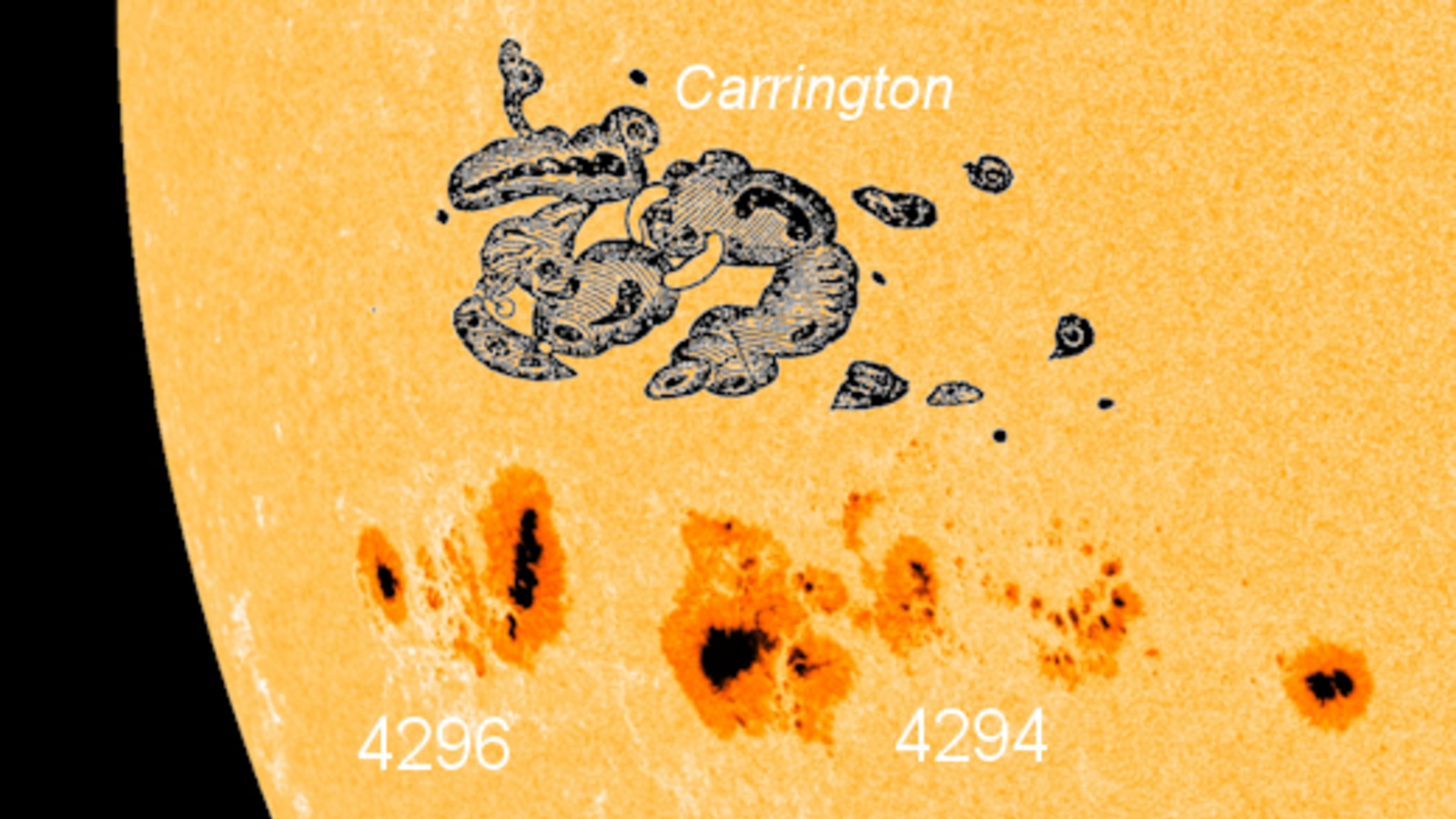
A colossal sunspot complex, designated AR 4294-4296, has emerged, drawing striking comparisons to the monumental sunspot observed by British astronomer Richard Carrington in September 1859. That historic solar phenomenon famously preceded the “Carrington Event,” recognized as the most intense solar storm ever recorded by humans.
An image, initially released by Spaceweather.com on December 2, vividly illustrates this comparison, juxtaposing the contemporary sunspot complex with Carrington’s own 19th-century sketch of its enormous predecessor. While a visual assessment might initially suggest AR 4294-4296 is larger, detailed analysis reveals that its dark active regions cover approximately 90% of the solar surface area encompassed by the original Carrington sunspot.
Sunspots are dynamic regions on the Sun’s surface, notorious for unleashing powerful bursts of radiation known as solar flares. These explosive events occur when the sunspots’ intricate, invisible magnetic field lines become highly contorted and ultimately snap, releasing immense energy into space.
Such dramatic solar outbursts can have immediate repercussions for Earth. They are capable of triggering temporary radio blackouts across our planet and often propel vast, rapidly moving clouds of plasma, called coronal mass ejections (CMEs), directly towards us.
When these CMEs collide with Earth’s magnetic field, they instigate geomagnetic storms. These solar-driven disturbances pose a potential threat to critical electronic infrastructure, yet they also produce the stunning and vibrant auroras that illuminate the night skies at higher latitudes.
A formidable new sunspot group, described by Spaceweather.com as “one of the biggest…of the past 10 years,” has emerged on the sun, carrying the potential to unleash “supercharged” X-class flares. These X-class events represent the most powerful category of solar explosions on the National Oceanic and Atmospheric Administration’s classification system. Should an eruption occur, releasing a Coronal Mass Ejection (CME), the resulting solar storm “will be geoeffective,” according to Spaceweather.com representatives, signaling a direct impact on Earth.
In 1859, the Earth was struck by the Carrington Event, an X45-magnitude solar flare that remains the most powerful on record. To put its sheer force into perspective, this monumental solar eruption was more than five times stronger than the X7 blast observed in October 2024, which currently stands as the most intense solar flare of the last decade. Interestingly, geological findings suggest that even more colossal solar outbursts ravaged our planet during eras long predating the emergence of humanity.
Recent simulations have unveiled a stark warning: should Earth be struck by a blast of comparable power today, the resulting radiation would immediately disable every satellite in orbit. The repercussions wouldn’t be limited to space; on the ground, such an event could wreak widespread havoc, potentially damaging vital sections of the electrical grid. Experts estimate the total financial toll from such a disaster would easily exceed $1 trillion.
The striking resemblance in size between the newly observed sunspot region AR 4294-4296 and the colossal solar feature responsible for the historic Carrington Event has naturally raised concerns about the potential for an impending, massive solar storm. However, the direct correlation between sunspot scale and the immediate likelihood of such a powerful event is more complex than a simple “yes” or “no.”
Massive sunspots are indeed capable of unleashing highly powerful solar flares. A prime example occurred in May 2024, when a colossal sunspot – measuring more than 15 times the width of Earth – was responsible for birthing a significant geomagnetic “superstorm.” However, experts emphasize that while size is a crucial factor, it is not the sole determinant of a sunspot’s eruptive potential.
The maximum explosive potential of a sunspot is intricately tied to the unique configuration of its magnetic field and the regularity of its eruptions. This crucial interplay reveals that some colossal sunspots, despite their size, can in fact be completely harmless.
Solar regions AR 4294-4296 are exhibiting highly entangled magnetic fields, a condition that significantly increases the potential for solar flares. This complex has already unleashed a powerful, potentially X-class flare while it was still on the sun’s farside, according to reports from Spaceweather.com. Despite this activity, experts currently indicate there is no clear evidence of an imminent superstorm on the scale of the historic Carrington Event.
Scientists are intently monitoring the magnetic field of a recently observed colossal sunspot region, vigilant for any signs of imminent solar activity.
Should this immense feature rotate past Earth without incident, its prominent dark spots are deemed robust enough to endure multiple solar rotations. This suggests a potential return engagement, with the spots possibly reappearing closer to the Christmas season.
In recent years, the sun has exhibited a notable surge in activity. This heightened solar behavior is directly attributed to its current position within the solar maximum, the most intense phase of its roughly 11-year solar cycle.
Recent solar activity has ignited a series of powerful X-class flares, prominently featuring two intense, back-to-back explosions that culminated in a severe G4 geomagnetic storm between November 11th and 12th. This period of heightened solar events has already positioned 2024 as a record-setting year, registering the highest number of X-class flares in a single year since modern record-keeping commenced in 1996.
Powerful solar flares frequently incite geomagnetic storms on Earth. This phenomenon was dramatically illustrated by the extreme disturbance in May 2024, which stands as the most potent event of its kind in 21 years. This historic solar activity not only triggered the most powerful geomagnetic storm in over two decades but also painted the skies with some of the most widespread auroras seen in centuries.