
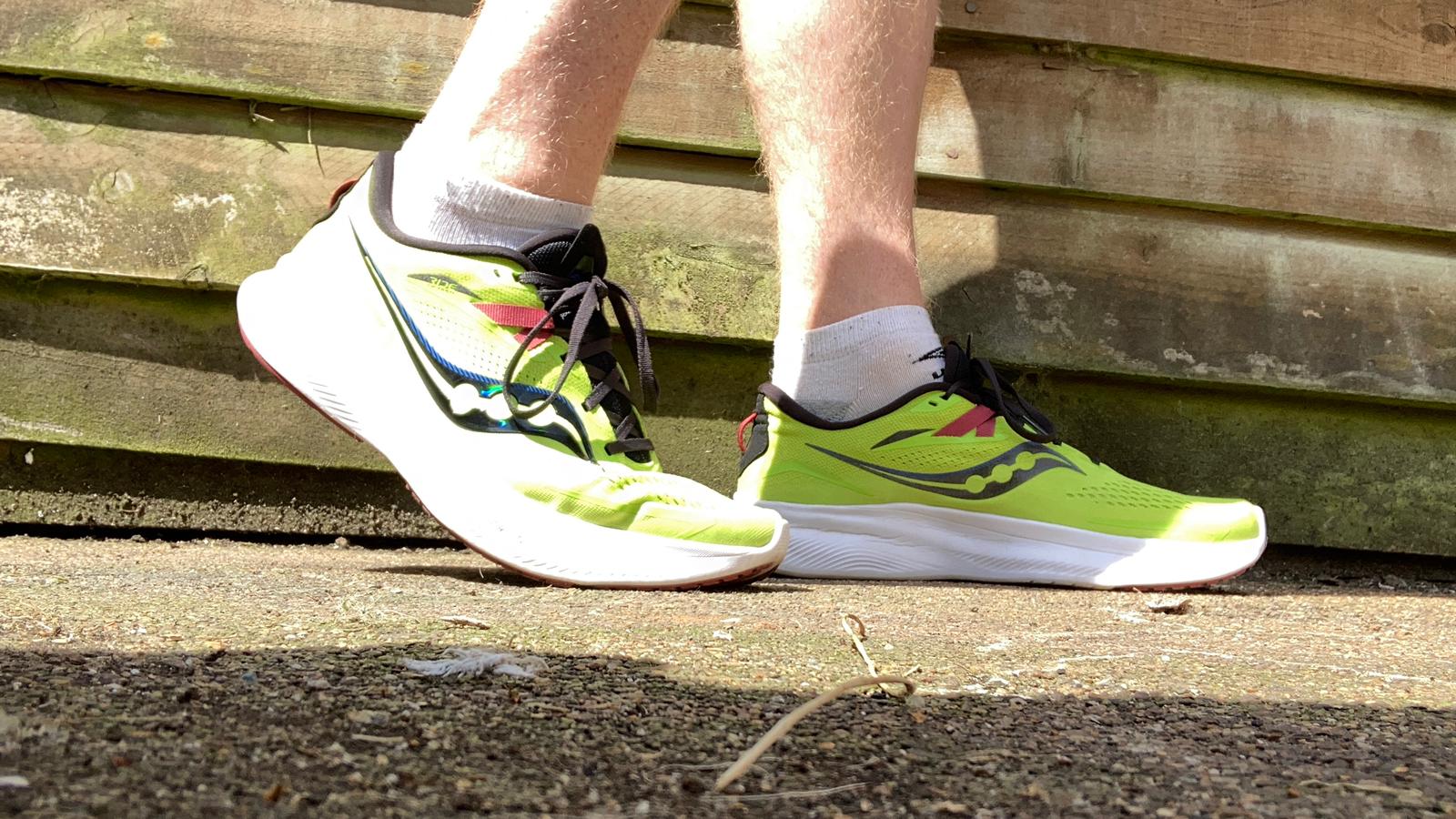
With the holiday season approaching and spring marathon training cycles kicking into gear, many runners are undoubtedly eyeing new footwear. While the market is ripe with options, it’s crucial to resist the temptation of selecting shoes based purely on aesthetics.
Every individual possesses a unique running gait – their distinctive biomechanical pattern on the move. Therefore, paramount to optimizing performance and preventing injury is choosing a running shoe specifically engineered to complement your personal style and needs.
Understanding your foot’s natural mechanics during impact is essential for choosing the right athletic footwear and preventing discomfort. Many individuals experience what is termed overpronation, a gait pattern where the foot rolls excessively outward upon striking the ground. This exaggerated movement often requires specialized support within shoes to avert potential pain and injury.
Conversely, others may underpronate, meaning their foot rolls inward during impact. A third category comprises ‘neutral’ runners, who benefit from ample cushioning without the necessity of additional structural support.
Ultimately, the paramount consideration is to identify your specific foot strike and select footwear that precisely matches your individual biomechanical requirements.
Even the most suitable footwear can become a significant liability over time. As shoes degrade with sustained use, their structural integrity and supportive capabilities diminish, thereby substantially increasing the wearer’s susceptibility to injury. A critical indicator for immediate replacement is when the soles are visibly compromised, with their essential tread patterns having eroded to the point of being barely discernible or entirely absent.
Musculoskeletal podiatrist Anne-Marie O’Connor has issued specific guidance for individuals with supination, as reported by Live Science. O’Connor warns that shoes deemed “too flexible or soft” can prematurely wear down the outer sole and significantly heighten the danger of injuries for supinators.
To mitigate this risk and promote more complete foot contact, she advises opting for footwear with a lower offset or “drop.” Furthermore, O’Connor identifies the robust, thicker midsole characteristic of maximalist trainers as particularly well-suited for supinators.
For an accurate assessment of your running gait, expert guidance is paramount. Seek out a specialized running shop, an experienced physiotherapist, or a dedicated running specialist. Only after this professional evaluation should you then explore online marketplaces to select the most suitable footwear for your unique stride.
Beyond securing the ideal running footwear, athletes can significantly benefit from integrating a high-performance fitness tracker to meticulously log their training sessions. Crucially, for post-run recovery, exploring the market’s leading foam rollers offers an effective solution for alleviating common aches and pains.
For a rapid overview of our top-rated running shoes, consult the concise list provided below. Alternatively, continue scrolling for in-depth, comprehensive reviews of each recommended model.
To access the initial content, proceed to the top of the page.
Live Science is dedicated to providing trustworthy and thoroughly vetted recommendations. Our process involves expert reviewers who invest countless hours in rigorously testing and comparing a wide array of products and services. This meticulous evaluation ensures readers receive reliable insights, empowering them to make informed decisions and choose the best options for their needs. Further details regarding our comprehensive testing methodology are available for review.
The Saucony Ride 16 distinguishes itself as an excellent neutral running shoe, celebrated for its versatility across diverse training scenarios. It proves adept for everything from extended, easy-paced runs and daily jogs to occasional, more spirited short-distance efforts. In a contemporary running shoe market frequently characterized by advanced carbon plates and intricate high-tech features, the Ride 16 offers a refreshing return to fundamental design. Saucony’s commitment to core principles has been executed with remarkable precision, a testament to its quality that garnered a substantial 4.5-star rating in our comprehensive review.
This shoe is engineered with a substantial PWRRUN foam stack integrated into the heel and a noticeably flared midsole around the forefoot. This design intelligently introduces an element of stability, providing a more grounded feel to what is fundamentally a neutral running shoe. While its plush cushioning ensures sustained comfort for extended distances, it maintains enough underlying firmness to deliver a responsive feel, enabling runners to pick up the pace when desired.
For athletes tackling high-intensity training sessions, such as intervals or speed work, the demand for exceptionally responsive footwear is paramount. These demanding efforts necessitate shoes engineered to deliver immediate energy return and a snappy, propulsive feel.
Despite being a previous-generation model, having been succeeded by more recent iterations such as the Saucony Ride 18, the Ride 16 now stands out as a notably accessible and affordable choice for runners. Typically priced below $75, this reliable trainer frequently sees significant discounts across major retailers and prominent online platforms like Amazon. While it may no longer be the newest offering in the market, the Ride 16 retains its reputation as a robust and essential staple within Saucony’s highly regarded running shoe collection.
**Option 1 (Concise & Direct):**
“Return to the page’s summit.”
**Option 2 (Emphasizing Navigation):**
“Navigate to the content’s apex.”
**Option 3 (Focus on Efficiency):**
“Access the page header directly.”
Previous iterations of the FuelCell Rebel series carved out a distinct niche, earning a cult following among runners who prized them as exceptionally speedy training companions. The fifth generation, however, introduces a thoughtful evolution. While it slightly moderates the aggressive, fast feel that defined its predecessors, it does so by significantly enhancing cushioning and overall comfort. This strategic refinement culminates in a highly versatile trainer, perfectly suited to be an everyday workhorse while retaining the dynamic capability to excel during demanding, high-intensity sessions.
Beneath the foot, the FuelCell midsole provides a dynamic blend of steadfast support and energetic reactivity. Complementing this performance, the shoe’s upper meticulously cradles the foot in an embrace of remarkable lightness and supreme comfort. A notable enhancement is the tongue, which has been thoughtfully redesigned from previous iterations, now boasting a particularly well-executed construction.
While New Balance footwear is frequently noted for running slightly small, the brand’s Rebel v5 model bucks this trend. Boasting a generously proportioned toe box, this design feature means most runners can anticipate a true-to-size fit.
While it might not boast the carbon-plated architecture of modern “super shoes” often favored for competitive racing, the Rebel surprisingly doesn’t compromise on pace. Its most compelling attribute, however, is its remarkable versatility, significantly outperforming the capabilities of a typical cushioned daily trainer. This makes the Rebel an exceptionally adaptable performer, capable of handling virtually any running scenario, all while presenting a distinctly stylish aesthetic.
To revisit the content’s inception, navigate accordingly.
Brooks has long solidified its position as a favored brand among amateur runners, a reputation forged through its specialized footwear design legacy dating back to 1974. The enduring appeal of the Glycerin model, now impressively in its 21st iteration, serves as a strong testament to its consistent quality and user satisfaction.
Engineered for the long haul, the Glycerin delivers a distinctly stable and profoundly comfortable ride. Its generous stack of foam cushioning provides a noticeable bounce underfoot, prioritizing a plush, protective feel over aggressive responsiveness. Ultimately, this particular model excels at keeping runners’ feet blister-free and enveloped in luxurious comfort, mile after mile.
Our comprehensive review of the Brooks Glycerin 21 highlighted its standout performance in cushioning and ventilation. While our tester lauded the shoe’s responsive bounce and exceptional breathability, it was noted that this airy design inherently sacrifices any meaningful water resistance.
While categorized as a neutral running shoe, the Glycerin 21 skillfully integrates a subtle layer of support, derived directly from its responsive underfoot foam. The shoe’s upper material provides a degree of inherent stretch, meticulously balanced to ensure a consistently secure and snug fit without compromising lockdown. Furthermore, a key upgrade comes with the newly redesigned sole, which our reviewer noted delivers significantly enhanced underfoot traction, outperforming previous Brooks models in grip.
For reader convenience and comprehensive review, we invite you to **return to the document’s apex.**
In a notable departure from many athletic footwear offerings, the adidas Ultraboost 22 distinguishes itself by being meticulously designed and engineered exclusively for women.
For years, many running shoe manufacturers have offered gender-specific models, but female versions often amounted to little more than scaled-down, narrower adaptations of their male counterparts. However, a groundbreaking study, spearheaded by a female design team and utilizing an unprecedented dataset of over one million foot scans, has now confirmed fundamental anatomical distinctions between male and female feet. The research specifically identified that women, on average, exhibit a thinner heel and a comparatively shorter instep.
Our independent review of the Adidas Ultraboost 22 revealed that the latest iteration in the popular series offers a distinctly secure and contoured fit. Testers consistently noted its snug, form-fitting feel, which comfortably embraced the foot without ever becoming restrictive.
Engineered for unwavering performance, these shoes feature a Continental rubber outsole that delivers superior grip, drawing parallels to premium tire technology and ensuring confident traction on even the most challenging, slippery paths. Cushioning reaches new heights with Adidas’s signature Boost foam, providing an incredibly soft yet remarkably propulsive feel underfoot. A generous 22mm of heel cushioning effectively absorbs impact, while the carefully calibrated 10mm drop promotes a smooth and natural heel-to-toe transition throughout your run.
For those expecting a nimble, ultra-responsive running shoe, the adidas Ultraboost 24 makes no such claim. Its core strength lies in delivering a supremely soft and comfortable ride, a characteristic it nails with impressive consistency.
However, testers noted a distinct lack of significant energy return, meaning it won’t provide the springy propulsion favored for speedwork. Instead, the Ultraboost 24 truly shines as an ideal choice for logging long distances and enjoying leisurely, easy-paced runs, a demanding yet comfortable task it executes brilliantly.
**Ascend to the Article’s Opening.**
The New Balance 1080, a perennially popular choice among runners, sees its latest evolution adopt a philosophy of subtle refinement rather than radical change. While retaining its core appeal, the updated model introduces carefully considered modifications. These primarily consist of a redesigned upper and a marginally firmer midsole. This deliberate adjustment in midsole density specifically addresses feedback from runners who perceived the v13 as slightly too soft, offering a more responsive yet still comfortable experience.
The New Balance Fresh Foam X 1080v14 has garnered significant acclaim, emerging as a remarkably versatile option for daily runs. Our comprehensive review highlighted its strengths as a “great all-rounder,” with only two minor observations: potential buyers should consider sizing up, as the fit tends to be slightly snug, and while it excels in regular training, it is not engineered as a high-octane shoe for competitive racing.
While this footwear delivers a notably bouncy and responsive ride, it deliberately eschews the aggressive, propulsion-focused sensation characteristic of modern race-day shoes, which are often distinguished by integrated carbon plates. Instead, its design philosophy makes it an ideal workhorse for endurance runners undertaking extensive mileage in marathon training, or for individuals simply preferring a robust, well-engineered shoe capable of handling adverse weather conditions and even light trail segments with ease.
There’s a reason these shoes are now in their fourteenth iteration. They will last you hundreds of miles, are suitable for beginners through to experienced runners, and they look great too.
Back to the top ⤴
Looking for running shoes that can help you conquer strenuous marathons and gruelling 10k runs in the summer heat? Then the Asics Megablast is a perfect option for you. Thanks to its lightweight, breathable design, it will keep your feet cool and dry, while its bouncy midsole helps propel you forward when the first signs of fatigue start to set in. These running shoes are also very versatile — they can be used for anything from gentle recovery runs to moderate-intensity speedwork, without compromising on comfort and running performance. They grip the surface well, too.
We tested the Asics Megablast across a range of paces and training styles, and at no point have we experienced any blisters, skin irritation, “shoe fatigue” or discomfort. That said, these running shoes may not suit everyone. For example, people with wide feet may not like its relatively narrow toe box, while some users may not be too keen on its relatively rigid upper.
Not to mention, these running shoes are relatively expensive for what they have to offer. A pair of Asics Megablast will set you back a rather steep $224, which is almost twice as much as nearly every other model mentioned in this guide.
Still, we think these running shoes are worth the money. They perform well on long runs, while still delivering great performance in many other circumstances. The cherry on top? The Asics Megablast look great.
Back to the top ⤴
Thanks to the giant stack of bouncy ZoomX foam in its midsole, the Nike Invincible 3 delivers an increasible comfortable and enjoyable ride. It’s extremely soft which might protects your legs throughout the longest runs, while having enough spring that you don’t feel like you’re sinking into the midsole foam too much.
However, it’s not a very versatile shoe. It’s too soft and bulky for faster running, and the lack of stability makes it unsuitable for some over longer runs even though it is very comfortable. It’s a great shoe for easy daily training but not for faster runs or those who need support.
During our Nike Invincible 3 review, we noted that had the new heel design on this model can feel quite loose. Some runners have found that it can start to rub during runs. It’s super soft midsole also makes it not particularly stable, though stability on this third version has been improved a little with a wider base and a redesigned heel clip to cradle the foot better. However it certainly still offers less structure and support than other cushioned options, even in the neutral shoe space. It’s also on the expensive side.
Back to the top ⤴
As with all popular shoes, the Gel Cumulus 25 has been tweaked and updated from previous versions. It’s never been quite as popular as the more cushioned Gel Nimbus but it is a little cheaper, and still offers great value for money.
Some runners will actually really appreciate the less maximal cushioning, finding them more responsive. And during our Asics Gel-Cumulus 25 review, we were impressed by its shock-absorbing cushioning.
The lightness of this model outdoes the previous version by approximately 0.3oz/ 10g per shoe but has less in the way of outsole rubber. The mesh upper remains the same mix of mesh and canvas and does the job of keeping the upper foot cool on hot days and more intense training sessions.
The Gel-Cumulus 24 has a different outsole to its predecessor. There is less overall outsole rubber but this is placed strategically at the heel sides and toe areas.
If you are searching for a lightweight running shoe that still has enough cushioning to feel plush, and to keep you injury-free and comfortable, look no further than the Asics Gel Cumulus 25.
Back to the top ⤴
The Hoka Mach X uses some of the top foams and technology at Hoka’s disposal, including a Pebax plate to drive your foot forward on take off. That combines to make it a versatile option for more up tempo paces and workouts. Because the plate is Pebax rather than the top of the range carbon option favoured by the top race shoes, it is a more affordable and stable alternative. Overall we gave it a strong 4 stars in our Hoka Mach X review.
In the midsole Hoka has used two foams—a soft PEBA-based top layer adds bounce while the firmer EVA bottom layer creates stability and increases durability. Sandwiched between the foams is the plate, which adds pop without being as stiff and propulsive as a carbon plate. That does, however, make it more comfortable for many.
However, it’s certainly true that other plated trainers offer more speed than the Hoka Mach X – for example the Saucony Endorphin Speed 3 and Adidas Boston 12. However, many runners find it is more comfortable than those shoes for runs at relaxed paces, especially for newer runners perhaps trying out a plated shoe for the first time. Like all plated shoes, however, it can seem clunky at slower paces.
Back to the top ⤴
The chunky cushioning of Hoka’s shoes is beloved of many runners, particularly those who spend a long time on their feet. That might be ultramarathoners, who those whose jobs involve a lot of time on foot. And the Bondi 8 offers this comfort to the extreme.
During our Hoka Bondi 8 review our reviewer found the shoes to be extremely comfortable straight out of the box, with no rubbing or chafing at all.
Our reviewer also liked the locked-in feel given by the partially gusseted tongue and the excellent lace system. However the weight of the shoe and the wide footbed does lend itself more towards slower runs and walking more than picking up the pace.
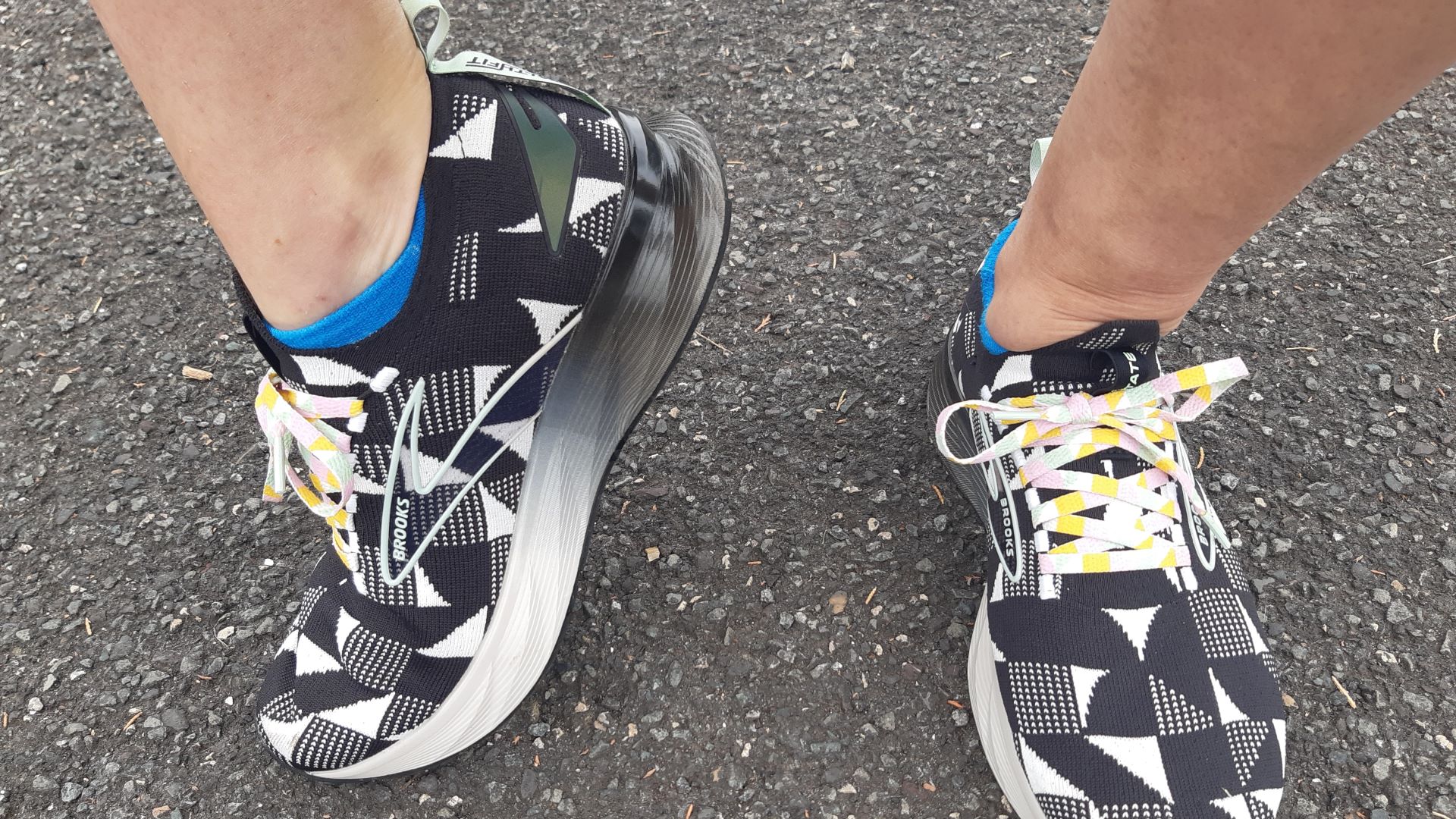
As the name suggests Brooks Levitate Stealthfit 6 are light and bouncy but also offer a snug fit thanks to their sleek design. Not everyone will be a fan of their wraparound upper and stripped back support but for runners looking for simplicity they are an effective, responsive shoe, great for speed work as well as long easy runs.
During our Brooks Levitate Stealthfit 6 review, we found that these shoes tick a lot of boxes. Unique design, solid support and a reliable all rounder for speed work and endurance miles. The responsive midsole has plenty of bounce and the wraparound upper keeps your feet and ankles firmly in place.
Those with wider feet or in need or greater arch support may not warm to this neutral shoe but for those looking for a versatile everyday training shoe which fits like a sock, this is a winner. One thing is for sure and that’s that wearing this shoes will certainly be a conversation starter, as no one will miss their eye catching design.
Runners who prefer a highly cushioned shoe may find them uncomfortable and lacking bounce on longer runs but those who prefer an almost old school, sleek minimalist design will love them.
Back to the top ⤴
Back to the top ⤴
It’s easy to think a running shoe is just a running shoe but there are differences between the styles and brands on the market. Most people have heard of the main brands such as Hoka, Adidas, Nike and New Balance but each of these brings different things to the running shoe market. For example, Saucony caters for performance whereas Adidas offer more versatile options. Brands like Brooks offer a blend of options for amateur runners but are particularly good at comfort and support while Hoka focuses on the latest technology, with them offering a Pebax plate on the Hoka Mach X, for example. It’s important to consider this when looking for the right running shoe for you. Consider the types of runs you do and take some time to look at what the brands offer and if it’ll suit your needs.
Another thing to consider is the technology used in the soles. For example, many running shoes now have carbon plates in the outsole which increase running efficiency and can see you get better times. Others, like our best overall, Saucony Ride 16, keep things simple using PWRRUN foam at the heel and a flared midsole. This gives stability to those who are prone to supination. You want to look for good comfort and support from the sole of the shoe and focus on maximalist trainers. Maximalist trainers will offer you a thicker midsole that can help to reduce impact while also offering a lower offset to ensure fuller foot contact. However, many shoes that are labelled as “neutral” can also be suitable for those with mild pronation issues, due to the support they offer and the maximal cushioning that is now very popular. This is something to bear in mind when looking for a running shoe to adequately support your foot.
All models in this guide were thoroughly tested by our in-house fitness experts: experienced runners, exercise professionals and health coaches who love sharing their passion for top-class activewear. We can say with confidence which running shoes are the best in their respective classes.
We got our feet into each pair listed and put them through their paces, following the same testing protocol to ensure a thorough and objective assessment. After wearing the running shoes over the course of a few weeks, we score them across the following criteria:
1) Design and features. We assess the build, cushioning, design, upper and outsole of the running shoe in question, and we put on trial any innovations and key features boasted by the brand. We want to know if it is made of durable materials, how many sizes and colorways it comes in, and which runners it would suit the most (supinated? with narrow or wide feet? beginner or advanced?) and who may need to avoid it.
2) Comfort. We assess if it is comfortable to wear (on and off the running trail), how easy it is to put on and whether it pulls through intense workout sessions without causing discomfort. How cushioned are they?
3) Performance. The shoes were tasked with keeping our testing team comfortable and supported through easy kilometers, distance runs, speedwork, sprint intervals, fast-paced 5Ks and more. The Brooks Glycerin 19 even saw one of our testers through a marathon.
Verdict. Should you buy or is it better to give it a miss? After testing, we give the running shoes an overall rating out of five and we summarize each model’s strengths and weaknesses.
December 18, 2025: We added the Asics Megablast as the best option for long runs.
November 17, 2025: We added the New Balance FuelCell Rebel v5 as the best option for speedwork.
March 19, 2025: We added the ‘How to choose’ section.
February 14, 2025: We updated the ‘How we test’ section to better reflect our testing protocol.
January 29, 2025: We added the ‘Running shoe comparison’ section.