While 2025 offered some notable celestial events, the year was largely subdued for those eagerly anticipating the most dramatic of solar phenomena. Observers in the northeastern United States and Canada were treated to a captivating sunrise solar eclipse in March, and New Zealand experienced its own solar event in September. Yet, conspicuously absent from the 2025 astronomical calendar was the ultimate spectacle: a total solar eclipse – that rare, breathtaking alignment widely considered a must-see, once-in-a-lifetime experience.
A remarkable period for skywatchers is on the horizon, as Earth is poised to end its “eclipse drought” with an extraordinary astronomical display. From 2026 through 2028, our planet will be treated to a rare “double eclipse cascade,” featuring an impressive six solar eclipses in just three years.
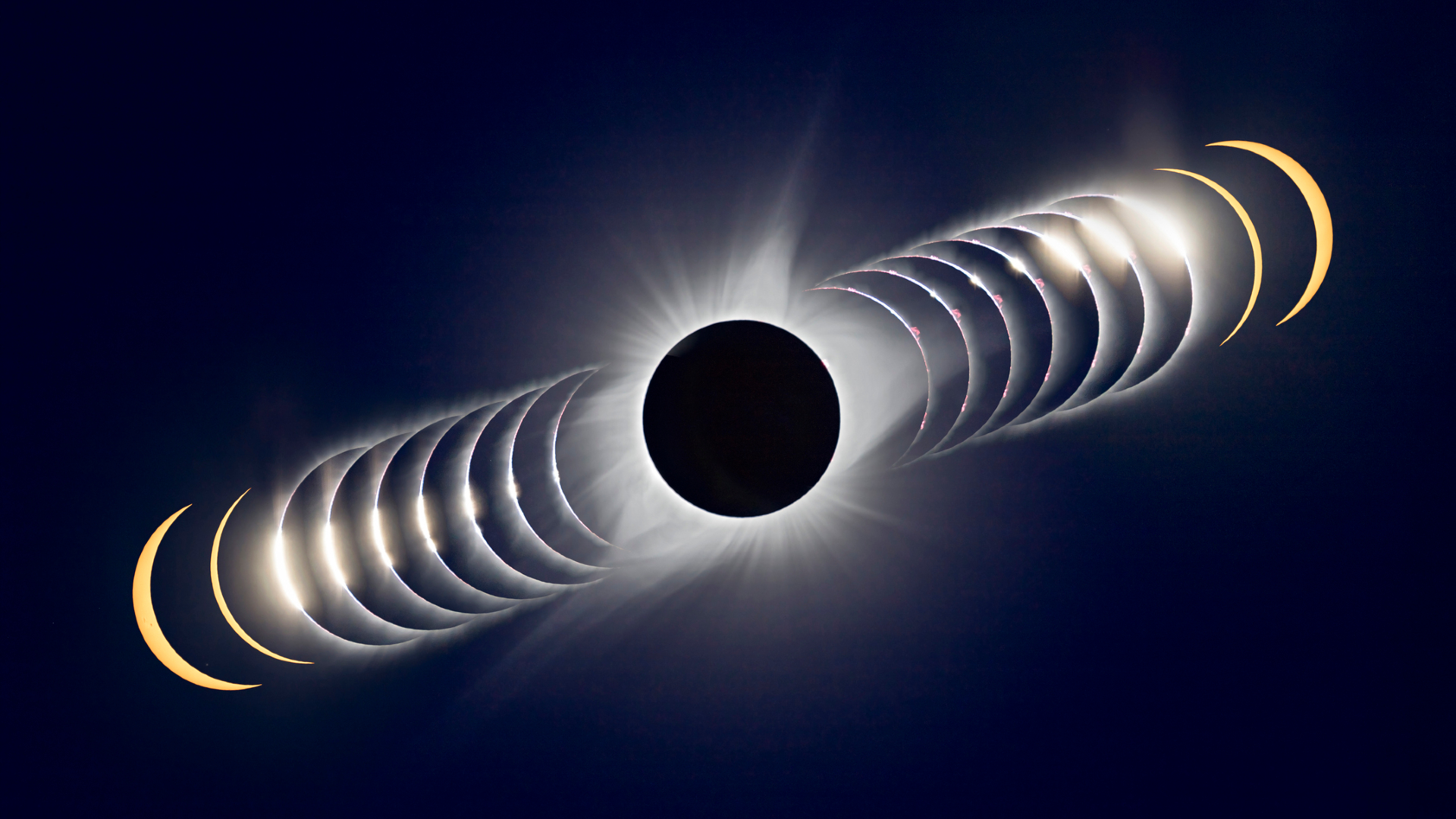
This celestial flurry includes three dramatic total solar eclipses, expected in August 2026, August 2027, and July 2028. Complementing these will be three annular solar eclipses, where the moon covers most but not all of the sun, creating a “ring of fire” effect. These are scheduled for February 2026, February 2027, and January 2028.
This intense pattern of solar eclipses is a rare occurrence, mirroring a similar sequence last observed between 2008 and 2010.
A remarkable “golden age” for solar eclipse enthusiasts is set to dawn in 2026, promising a succession of unparalleled opportunities for those drawn to witness one of nature’s most awe-inspiring celestial spectacles. For devoted “umbraphiles” eager for their next encounter with totality, and for anyone who regrettably missed the breathtaking 2024 total solar eclipse across North America, the immediate future offers abundant chances for profound immersion and a powerful sense of redemption within the moon’s fleeting shadow. This period will mark a unique, albeit concise, window for chasing the sun’s temporary disappearance.
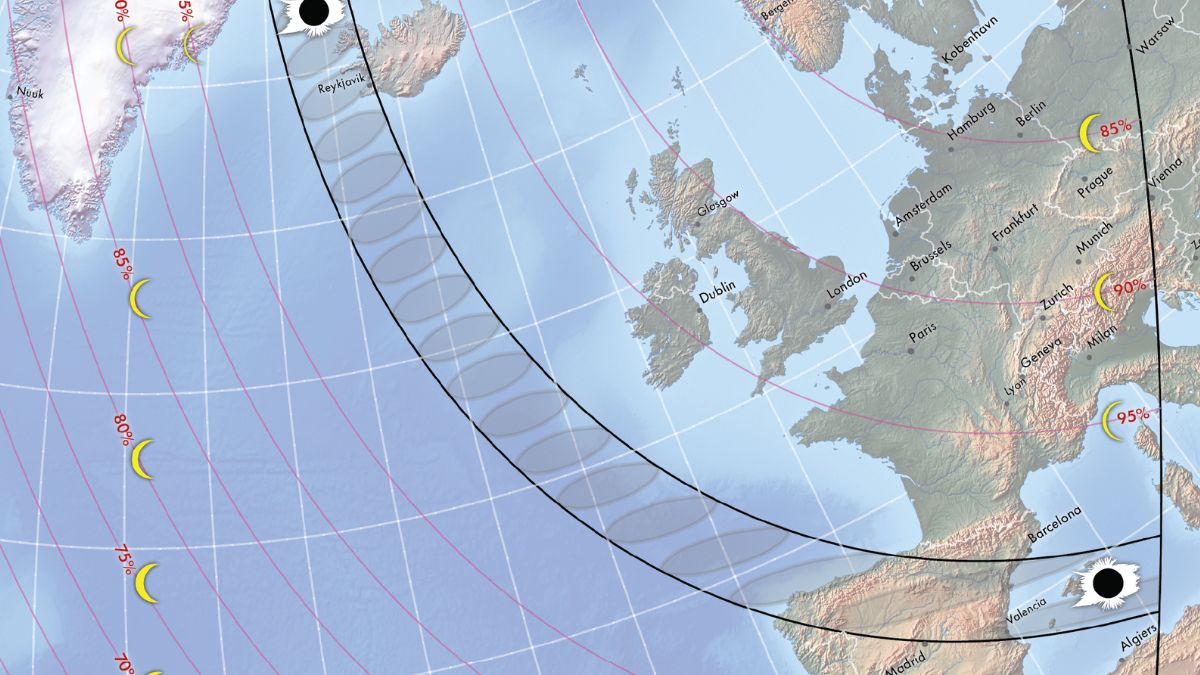
Anticipation is building for a rare celestial event: a total solar eclipse scheduled for August 12, 2026. This highly anticipated astronomical phenomenon will mark the first time Europe has witnessed a total eclipse since 2015. For residents of mainland Europe, the wait has been significantly longer, with the last such spectacle gracing its skies nearly three decades ago, in 1999.
The highly anticipated August 2026 total solar eclipse is poised to deliver a dramatic celestial spectacle across a unique geographical sweep. Beginning its journey in the remote expanses of Siberia, the eclipse’s path of totality will then traverse the rugged landscapes of eastern Greenland and western Iceland.
Subsequently, the shadow will sweep across northern Spain, making its final exit just east of the Balearic Islands in the Mediterranean Sea. Prime viewing locations within this narrow corridor include Greenland’s Scoresby Sund, Iceland’s iconic Reykjanes and Snæfellsnes peninsulas, and the historic Spanish cities of Leon, Burgos, and Valladolid.
Observers in these regions will be treated to the breathtaking sight of the sun’s ghostly corona, momentarily unveiled as the moon fully obscures our star. While the maximum duration of totality will stretch just over two minutes, a particularly striking feature of this event will be the sun’s low elevation, especially as it crosses Spain. This unique celestial alignment promises exceptional and dramatic photographic opportunities, offering a distinctive perspective on this rare phenomenon.
Here are a few options, maintaining the core meaning while elevating the language for a journalistic tone:
1. **The truly pivotal development is now imminent.**
2. **Subsequently, the paramount event is poised to unfold.**
3. **The much-anticipated, monumental phase is now set to begin.**
4. **All eyes now turn to the most significant occurrence.**
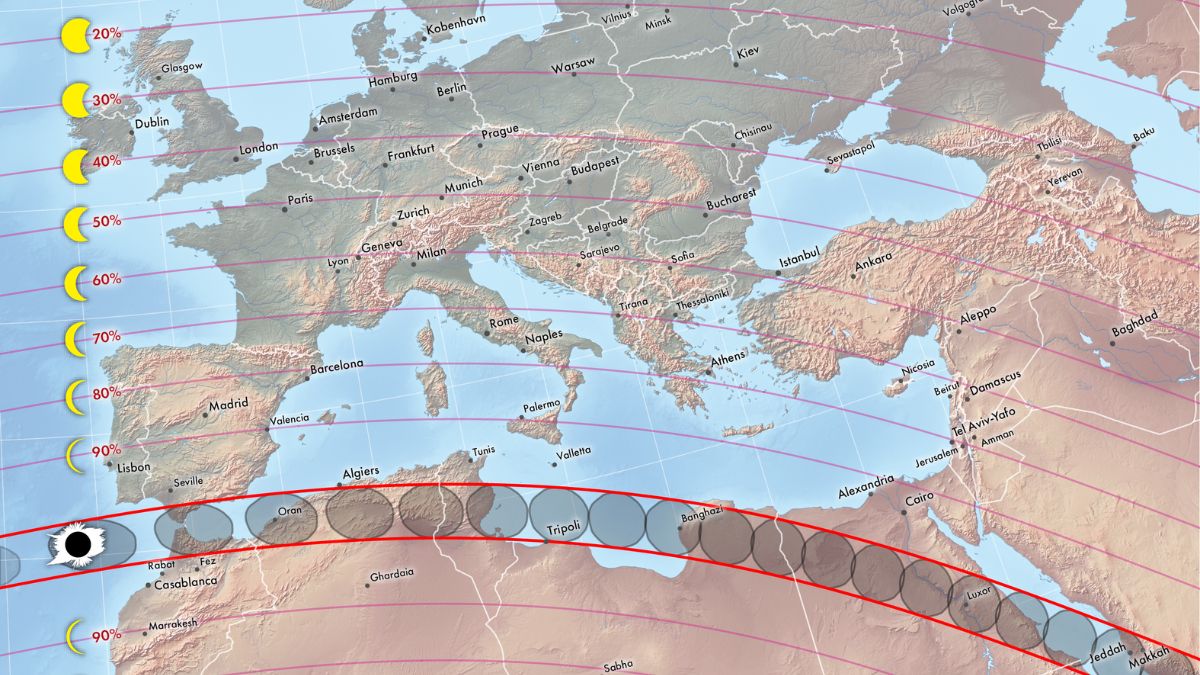
An extraordinary celestial event, already dubbed “the eclipse of the century,” is poised to captivate sky-gazers on August 2, 2027. This total solar eclipse will boast a remarkable duration of up to 6 minutes and 22 seconds, as the moon’s shadow slowly traverses a vast swathe of land spanning Southern Spain, North Africa, and the Middle East.
Among the prime viewing locations are iconic historical and cultural landmarks, including Egypt’s temple- and monument-rich Luxor. Here, observers are promised an unparalleled opportunity to witness the sun’s ethereal corona, which should be gloriously visible under clear skies. However, potential dust storms in the region could pose a challenge to visibility.
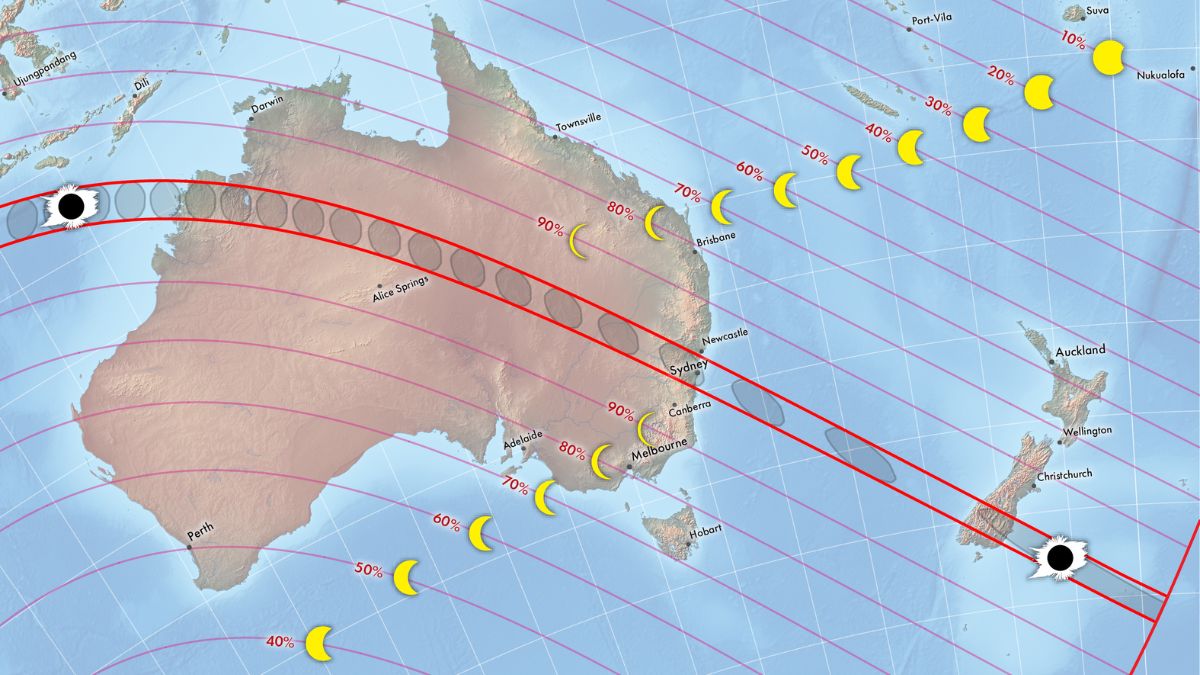
Mark your calendars for July 22, 2028, as a spectacular total solar eclipse is set to traverse the Australian Outback and New Zealand less than a year from now. This celestial event will offer a rare spectacle for Sydney, Australia’s most populous city, as it experiences totality for the first time since 1857. Meanwhile, remote regions of Western Australia are poised for an extended viewing, with clear skies anticipated to provide over five minutes of unobstructed totality.
Here are a few paraphrased options, each with a slightly different emphasis:
**Option 1 (Focus on rarity and opportunity):**
> While witnessing a single total solar eclipse is often a once-in-a-lifetime event for most, an extraordinary celestial spectacle is unfolding for the truly devoted. From August 2026 through July 2028, avid eclipse enthusiasts will have the unparalleled opportunity to chase three distinct total solar eclipses, spanning three different continents.
**Option 2 (More concise and direct):**
> For the majority, a total solar eclipse is a rare and memorable event. However, an exceptional celestial trifecta awaits dedicated followers of these cosmic displays. Between August 2026 and July 2028, skywatchers can anticipate witnessing three total solar eclipses, each visible from a different continent.
**Option 3 (Emphasizing the “chaser” aspect):**
> The next few years present a remarkable boon for dedicated eclipse chasers, offering a chance to witness a phenomenon most only dream of seeing once. Prepare for a celestial triple crown: from August 2026 to July 2028, three total solar eclipses will grace the skies, each visible from a unique continent, beckoning the most passionate observers to embark on their cosmic journey.
**Option 4 (Slightly more evocative):**
> While the average person might be fortunate to witness just one total solar eclipse in their lifetime, an unprecedented period of celestial drama is on the horizon. Between August 2026 and July 2028, dedicated followers of the sun’s shadow will be treated to an extraordinary sequence of three total solar eclipses, each unfolding across a different continent.
Each option aims to rephrase the original text using different vocabulary and sentence structure while conveying the same core information about the frequency and geographical spread of these upcoming eclipses.
This trio of celestial events presents a variety of unique travel experiences. In 2026, adventurers can witness eclipses from the decks of cruise ships navigating the Arctic and Mediterranean. The following year, 2027, offers an opportunity to capture the eclipsed sun silhouetted against the backdrop of ancient temples. For 2028, the focus shifts to combining the wonders of stargazing with expansive road trips through the Australian Outback. Notably, all three eclipses are scheduled during the Northern Hemisphere’s summer, a period often favored for its more accommodating travel conditions.
Here are a few paraphrased options, each with a slightly different emphasis, while maintaining a journalistic tone:
**Option 1 (Focus on predictability):**
> While witnessing three total solar eclipses in under two years might seem like an extraordinary cosmic anomaly, it’s a celestial event that repeats with remarkable regularity. This phenomenon is dictated by the Saros cycle, a predictable astronomical pattern occurring every 18 years, 11 days, and 8 hours. This cycle ensures that the alignment of the Sun, Moon, and Earth closely mirrors that of the previous eclipse, leading to a similar celestial spectacle.
**Option 2 (Focus on the underlying mechanism):**
> The occurrence of three total solar eclipses within a two-year span, though uncommon, is not an unprecedented cosmic alignment. The Saros cycle, an ancient astronomical reckoning of 18 years, 11 days, and 8 hours, governs the recurrence of these events. This cyclical period brings the Earth, Moon, and Sun into an almost identical geometric configuration, setting the stage for a series of similar eclipses.
**Option 3 (More concise and direct):**
> Despite its rarity, a sequence of three total solar eclipses within a two-year timeframe is not a singular occurrence. The Saros cycle, a predictable astronomical period of 18 years, 11 days, and 8 hours, is responsible for this repetition. After each Saros cycle, the celestial geometry of the Earth, Moon, and Sun aligns almost identically, resulting in a comparable eclipse event.
**Option 4 (Slightly more evocative):**
> A rare celestial dance, featuring three total solar eclipses within a two-year window, is a captivating yet recurring cosmic event. This predictable pattern is orchestrated by the Saros cycle, a period of 18 years, 11 days, and 8 hours that governs the alignment of our Sun, Moon, and Earth. Once this cycle concludes, the celestial bodies realign in a configuration so similar that a near-identical eclipse event unfolds.
Get ready for a celestial spectacle: from 2026 to 2028, a rare alignment of three consecutive Saros cycles will present a total solar eclipse each year. This astronomical trio isn’t entirely unprecedented; similar patterns occurred from 1990 to 1992 and again from 2008 to 2010. However, many of these past events were unfortunately obscured by clouds or took place in hard-to-reach locations. The next chance to witness such a remarkable sequence will be between 2044 and 2046, with two of these eclipses poised to grace North American skies.

Get ready for a celestial event that’s truly exceptional – a trifecta of eclipses poised to offer unparalleled viewing opportunities. This series promises to be the most accessible and visually stunning in generations, marking a rare and significant astronomical occasion.
To fully appreciate the distinct allure of each of the three upcoming total solar eclipses, meticulous planning is not just recommended, it’s essential.
The current era is proving to be a remarkable period for celestial events, extending beyond just total solar eclipses. This extraordinary timeframe also features a remarkable sequence of three annular solar eclipses, also known as “ring of fire” eclipses, occurring in successive years and within a span of just 708 days. While perhaps not as visually dramatic as their total counterparts, annular eclipses are nonetheless a significant and unique astronomical spectacle.
Mark your calendars for celestial spectacles! While February 17, 2026, kicks off with a more secluded event – an annular solar eclipse visible solely from a remote Antarctic locale – the following years promise far grander displays.
Get ready for a captivating journey in 2027 as a classic solar eclipse traces a path across the Atlantic and onto the African continent. Then, prepare for an eclipse enthusiast’s ultimate adventure in 2028: the Galápagos Islands and Spain will be treated to a mesmerizing “ring of fire” phenomenon. For Spain, this 2028 event marks a remarkable trifecta, with three major solar eclipses gracing the skies within a mere 532-day span, an unprecedented windfall for European eclipse chasers.
Here are a few paraphrased options for “Upcoming annular solar eclipse:”, playing with different angles and levels of detail, while maintaining a journalistic tone:
**Option 1 (Concise and Direct):**
> A rare annular solar eclipse is on the horizon, offering a unique celestial spectacle.
**Option 2 (Slightly More Descriptive):**
> Skywatchers are gearing up for an impending annular solar eclipse, a striking cosmic event where the Moon will appear smaller than the Sun, creating a “ring of fire” effect.
**Option 3 (Emphasizing Anticipation):**
> Anticipation is building for an upcoming annular solar eclipse, an astronomical phenomenon that promises a breathtaking view as the Moon partially obscures the Sun.
**Option 4 (Focus on the “Annular” Aspect):**
> Prepare for an annular solar eclipse, a captivating event characterized by the Moon’s inability to completely cover the Sun, resulting in a visible solar halo.
**Option 5 (More Formal/Informative):**
> An annular solar eclipse is scheduled to occur in the near future, presenting an opportunity to witness the Moon align with the Sun in a specific manner.
**Key changes and why they work:**
* **”On the horizon,” “impending,” “upcoming,” “scheduled to occur in the near future”:** These phrases convey the sense of “upcoming” without being repetitive.
* **”Rare,” “unique celestial spectacle,” “striking cosmic event,” “captivating event,” “breathtaking view,” “astronomical phenomenon”:** These add engagement and highlight the significance of the event.
* **Explaining the “annular” nature:** Options 2 and 4 provide a brief, engaging explanation of what an annular eclipse is, making it more accessible.
* **Varying sentence structure:** This prevents monotony.
* **Journalistic Tone:** The language is objective, informative, and avoids overly casual or sensationalized phrasing.
Choose the option that best fits the context and desired tone of your content.