
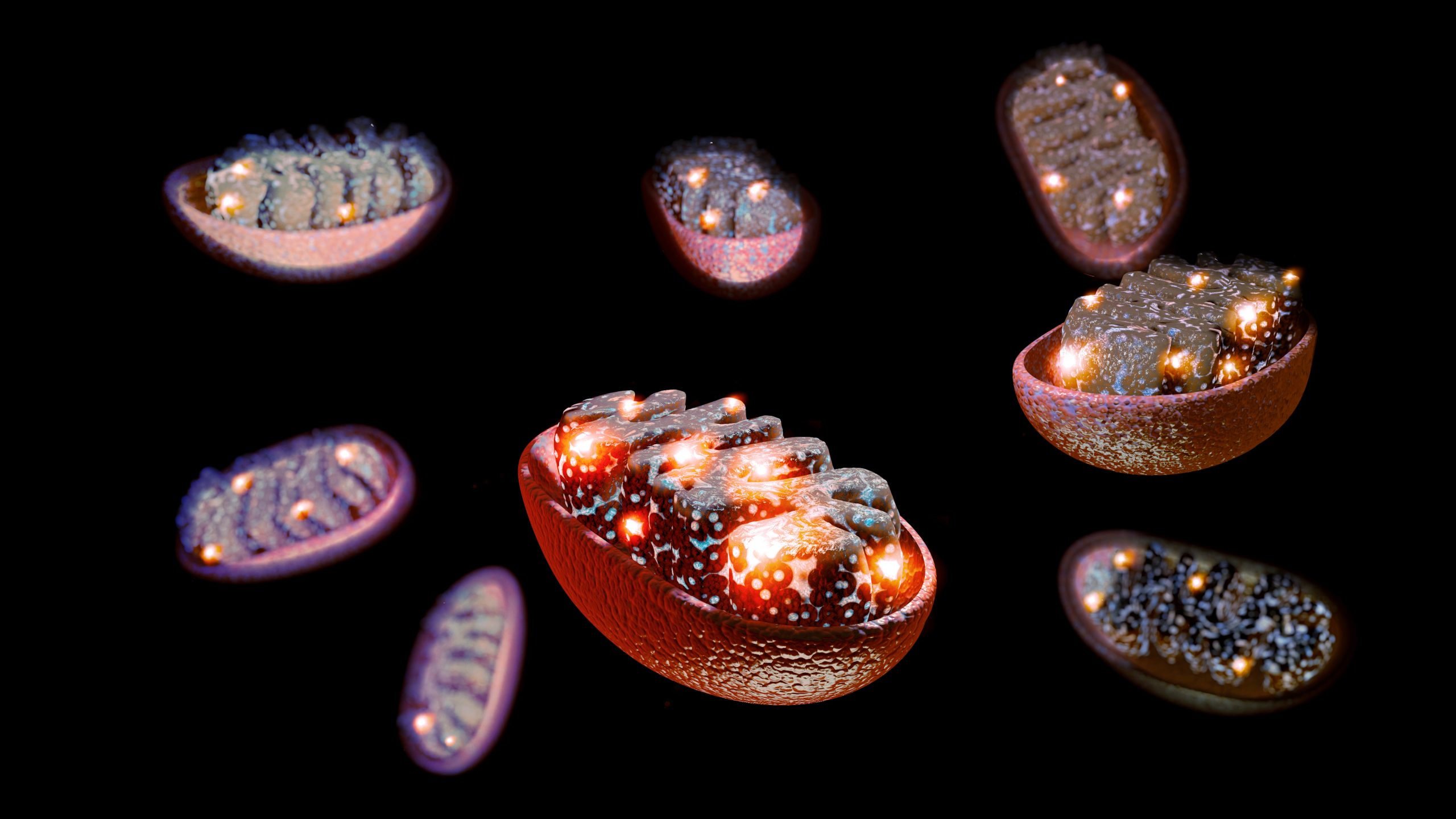
A recent study suggests that replenishing nerve cells with mitochondria could be a promising new strategy for treating chronic nerve pain.
New research has uncovered a vital, previously unrecognized function of mitochondria, the energy-generating components within our cells. Studies involving mouse cells, live mice, and human tissues have demonstrated that specialized support cells in the nervous system are capable of transporting these “powerhouses” to nerve fibers that detect sensations like pressure, temperature, and pain. Disruptions to this essential transport mechanism can lead to a depletion of the nerves’ energy supply, ultimately causing them to fail.
A crucial distinction exists between how healthy and dysfunctional nerves operate, according to senior study author Ru-Rong Ji. While healthy nerves typically transmit signals to the brain *only* in response to a specific stimulus, Ji explained that dysfunctional nerves “fire sometimes spontaneously, even without stimulation.” Ji serves as the director of the Duke University School of Medicine’s Center for Translational Pain Medicine and is a professor of anesthesiology and neurobiology.
Speaking to Live Science, Ji explained that this process would not only fuel chronic pain but also precipitate neurodegeneration. He elaborated that the intense, sustained electrical activity – where neurons “fire like crazy” – inevitably overworks these cells, ultimately leading to their deterioration.
A significant new study, published this Wednesday (Jan. 7) in the esteemed journal *Nature*, has unveiled innovative strategies to combat the degradation of nerve cells. Notably, one promising approach highlighted by researchers involves the direct transplantation of mitochondria into affected neurons.
**Scientists have focused their attention on satellite glial cells, specialized cells that form a protective embrace around the nerve cell bodies residing in clusters close to the spinal cord.** These nerve cell bodies serve as the origin point for long, slender fibers that branch out to innervate the entire body. Among these intricate neural networks, the sciatic nerve stands out as the longest, with its fiber bundles extending over three feet from the spine to their targets.
Nerve fibers, with their remarkable length, present a significant hurdle for proper function. Ji explains that for a nerve to operate effectively, mitochondria – the powerhouses of the cell – must be produced at the nerve’s origin and then transported to the very tip of each long fiber. This journey demands a considerable amount of energy. Consequently, a crucial question arises: how do nerves sustain this energetically demanding transport system?
Here are a few paraphrased options, each with a slightly different emphasis:
**Option 1 (Focus on the Shift in Understanding):**
> The long-held scientific belief that cells were solely responsible for producing their own mitochondria has been challenged by recent discoveries. Evidence now suggests that cells can actively exchange these vital powerhouses. This transfer isn’t limited to identical cell types; it can also happen between distinct cell populations, such as between stem cells and immune cells. To enable this remarkable exchange, cells form microscopic conduits known as tunneling nanotubes, providing a direct pathway for mitochondria to migrate, much like a projectile traveling through a straw.
**Option 2 (More Active and Dynamic Tone):**
> Forget the idea of cells being isolated factories for their own mitochondria. A surprising revelation in cell biology indicates that these crucial organelles are in fact mobile commodities, readily exchanged between cells. This fascinating phenomenon can occur among similar cell types or even across vastly different ones, with examples like stem cells and immune cells participating in these transfers. The cellular mechanism for this mitochondrial trafficking involves the creation of ultra-fine channels, dubbed tunneling nanotubes, which act as miniature highways for the organelles to navigate from one cell to another, reminiscent of a simple tube-based transfer.
**Option 3 (Concise and Direct):**
> Contrary to previous scientific understanding, cells are not solely responsible for generating their own mitochondria. New research demonstrates that cells can indeed swap these energy-producing organelles. This exchange can happen between cells of the same kind or between different cell types, including interactions between stem cells and immune cells. The process relies on specialized structures called tunneling nanotubes, which act as tiny passages allowing mitochondria to move from one cell to another, akin to objects sliding through a straw.
**Key changes made in these paraphrases:**
* **Word Choice:** Replaced words like “make,” “swap,” and “travel through” with more varied and descriptive terms like “producing,” “exchange,” “transfer,” “migrate,” “trafficking,” and “navigate.”
* **Sentence Structure:** Varied sentence beginnings and lengths to improve flow and engagement.
* **Figurative Language:** Retained the “straw” analogy but rephrased it slightly to keep it fresh (“projectile traveling through a straw,” “miniature highways for the organelles to navigate,” “objects sliding through a straw”).
* **Tone:** Maintained a clear, informative, and journalistic tone, highlighting the novelty of the findings.
* **Emphasis:** Each option subtly shifts the focus to emphasize different aspects of the discovery.
**Satellite glial cells, the unsung support cells of the nervous system, have been found to possess a remarkable ability: they can transfer mitochondria, the powerhouses of the cell, directly to the nerve cells they surround.** This groundbreaking discovery by Ji and his research team sheds new light on the intricate communication and support mechanisms within neural tissue.
“Our research reveals that these cells are actively extending tunneling nanotubes, which they then use to transfer mitochondria to other cells. This particular mechanism is a novel discovery within this study,” stated Ji.
Researchers studying the intricate communication between glial and nerve cells have captured compelling visual evidence of how these essential components interact. Through a series of experiments utilizing both mouse cells and human tissue samples, scientists observed the formation of microscopic channels connecting glial cells to neurons.
These channels, often described as tiny tubes, exhibited distinctive “bulges” that appeared as materials were transported along their length. By attaching a fluorescent marker to mitochondria, the energy-producing powerhouses within cells, the researchers were able to precisely track the movement of these vital organelles. Their findings revealed instances where mitochondria, originating from the glial cells, were successfully transferred into the nerve cells, shedding new light on the dynamic exchange that sustains neural function.
Here are a few paraphrased options, each with a slightly different emphasis, while maintaining the core meaning:
**Option 1 (Focus on discovery and mechanism):**
> Researchers have uncovered that the cellular conduits, observed during mitochondrial transfers, were temporary structures, dissolving shortly after their purpose was served. Crucially, the protein MYO10 emerged as a key architect, facilitating the extension of these tubes from glial cells. However, the study also revealed alternative pathways for mitochondrial transmission, with these vital organelles occasionally being transferred independently of the tubes, either encapsulated within small vesicles shed by the glia or through direct connections that formed between the membranes of the cell providing and the cell receiving.
**Option 2 (More concise and direct):**
> The observed nanotubes, crucial for cell-to-cell material transfer, proved to be ephemeral, dismantling soon after a mitochondrial exchange concluded. Experiments pinpointed the protein MYO10 as instrumental in their formation, enabling glia to project these structures. Yet, mitochondria were also observed to transfer without the nanotubes, either via small, bubble-like structures released by the glia or through specialized membrane channels established between donor and recipient cells.
**Option 3 (Emphasizing versatility of transfer):**
> Following a completed mitochondrial transfer, the newly formed nanotubes were found to be transient, quickly breaking down. The construction of these temporary tubes was significantly aided by a protein known as MYO10, which helped extend them from glial cells. The research also highlighted the remarkable adaptability of mitochondrial transport, as these organelles could be transferred without the aid of nanotubes, either by being enclosed in minute vesicles secreted by the glia or through direct membrane-to-membrane channels that facilitated the exchange.
**Researchers discovered that interfering with specific methods of mitochondria transport in healthy laboratory mice led to heightened pain sensitivity. This disruption caused nerve damage, resulting in erratic nerve firing.**
Researchers investigating nerve damage in mice, specifically conditions like chemotherapy-induced neuropathy and diabetic nerve pain, observed a disruption in the transfer of mitochondria from glial cells. This impaired mitochondrial exchange was found to contribute to the development of nerve pain in these laboratory animals. However, the study demonstrated that introducing healthy glial cells into the affected mice effectively alleviated their pain by supplying a much-needed influx of functional mitochondria.
Here are a few paraphrased options, each with a slightly different emphasis, while maintaining a journalistic tone:
**Option 1 (Focus on the finding and implication):**
> In a significant discovery, researchers have observed that the smallest nerve fibers are disproportionately affected by damage stemming from conditions like diabetes and chemotherapy. The study’s experiments revealed a notable disparity in how these nerve fibers receive essential cellular components: larger fibers appear to be prioritized by glial cells, which supply mitochondria, while smaller fibers receive a significantly lower volume. This suggests a “preferential treatment” by glia towards larger nerve fibers, according to the study’s authors.
**Option 2 (More direct and concise):**
> The vulnerability of small nerve fibers to damage from diabetes and chemotherapy has been highlighted by a recent study. Researchers found that glial cells, crucial for nerve health, appear to favor larger nerve fibers when donating mitochondria. This selective supply means smaller fibers, the most susceptible to this type of damage, receive fewer mitochondria in comparison.
**Option 3 (Emphasizing the “preference”):**
> A new study suggests that glial cells exhibit a distinct “preference” in how they support nerve fibers, a finding that could explain why small nerve fibers are particularly susceptible to damage from diabetes and chemotherapy. The research demonstrated that while larger nerve fibers receive a substantial influx of mitochondria from glia, the smaller fibers receive considerably less. This differential distribution of mitochondria points to a potential mechanism behind nerve fiber vulnerability.
**Option 4 (Slightly more explanatory):**
> Evidence from a recent study indicates that the smallest nerve fibers, often the first casualties of nerve damage caused by diabetes and chemotherapy, are less well-supported by glial cells. Through experimental observation, the research team discovered that larger nerve fibers receive a more generous supply of mitochondria from glia compared to their smaller counterparts. This selective distribution of vital energy-producing organelles suggests glia may have a bias towards bolstering the integrity of larger nerve fibers.
These options aim to:
* **Be unique:** They use different sentence structures and vocabulary.
* **Be engaging:** They use stronger verbs and more active phrasing.
* **Be original:** They rephrase the original idea without simply substituting words.
* **Maintain core meaning:** They convey the key points about nerve fiber vulnerability, glia, and mitochondria.
* **Use a clear, journalistic tone:** The language is factual, objective, and easy to understand.
Here are a few paraphrased options, each with a slightly different emphasis, while maintaining a journalistic tone:
**Option 1 (Focus on the mystery and implication):**
> The precise reason remains a mystery, according to Ji. However, this uncertainty may shed light on why smaller nerve fibers appear more susceptible to damage under such circumstances, potentially leading to symptoms like numbness and a burning or tingling sensation in the extremities.
**Option 2 (More direct and concise):**
> “We’re still trying to figure out why,” Ji stated, acknowledging the ongoing enigma. Nevertheless, this developing understanding could begin to clarify why smaller fibers are more prone to damage in these environments, which in turn may trigger sensations of numbness, pain, or burning in the hands and feet.
**Option 3 (Emphasizing the link to symptoms):**
> The underlying cause is currently unknown, Ji noted, but this puzzle might soon offer an explanation for the heightened vulnerability of small fibers to damage. Such damage is believed to be the trigger for distressing symptoms such as numbness, tingling, or a burning feeling in the hands and feet.
**Option 4 (Slightly more formal):**
> Ji acknowledged that the reason for this phenomenon is “still a puzzle.” However, this evolving knowledge may offer an explanation for the increased susceptibility of small fibers to damage in these particular conditions, potentially precipitating symptoms of paresthesia, including numbness and burning or tingling sensations in the hands and feet.
Choose the option that best fits the overall flow and style of your writing.
Researchers emphasize the need for continued, in-depth studies to fully elucidate the precise mechanisms governing how mitochondria are transferred from glial cells to neurons. Understanding this critical cellular exchange, both in healthy states and during disease, is deemed fundamental.
The research team believes this foundational work holds significant promise for developing future therapeutic strategies, particularly for debilitating nerve pain. Theoretically, such treatments could involve interventions aimed at boosting the activity of satellite glial cells, thereby enhancing their production and subsequent transfer of vital mitochondria to nerve cells.
Alternatively, experts propose a direct therapeutic strategy: mitochondria could be meticulously harvested from laboratory-cultured cells, purified, and then precisely injected into nerve tissues as a novel form of treatment.
Historically, glia cells were largely dismissed as mere structural “glue” for the nervous system, believed only to provide physical support by binding neurons together. However, scientific understanding has dramatically evolved. Researchers have since uncovered that glia play active roles in complex functions, such as memory, which were once considered the exclusive domain of neurons. Now, a new study suggests an even more profound integration, indicating that glia may actually be physically “plugged into” neuronal networks, according to Ji.
The remarkable ability to transport mitochondria, described as a significantly large organelle, through these cellular tubes suggests a vast potential for the movement of countless other substances, a leading expert observed. This insight dramatically reconfigures our understanding of neural communication, revealing an unexpectedly deep and intricate connectivity between neurons and glial cells that was previously unimagined.