**Aurora Watch: Northern Lights Remain Highly Likely Tonight Despite Calming Conditions**
**(Wednesday, January 21, 11 a.m. ET)** – The celestial spectacle of the Northern Lights remains a high probability across the northern United States this evening, even as geomagnetic conditions begin to show signs of settling.
The latest projections from the National Oceanic and Atmospheric Administration (NOAA) indicate that despite a moderation in space weather, sky-watchers in the nation’s northern tier should remain vigilant for potential aurora borealis displays.
While activity is trending downwards, the possibility of robust G3-level geomagnetic storms is still on the table for tonight. Residents in the affected areas are therefore advised to thoroughly check the skies after sunset for a chance to witness this stunning natural phenomenon.
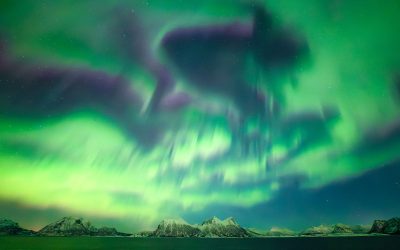
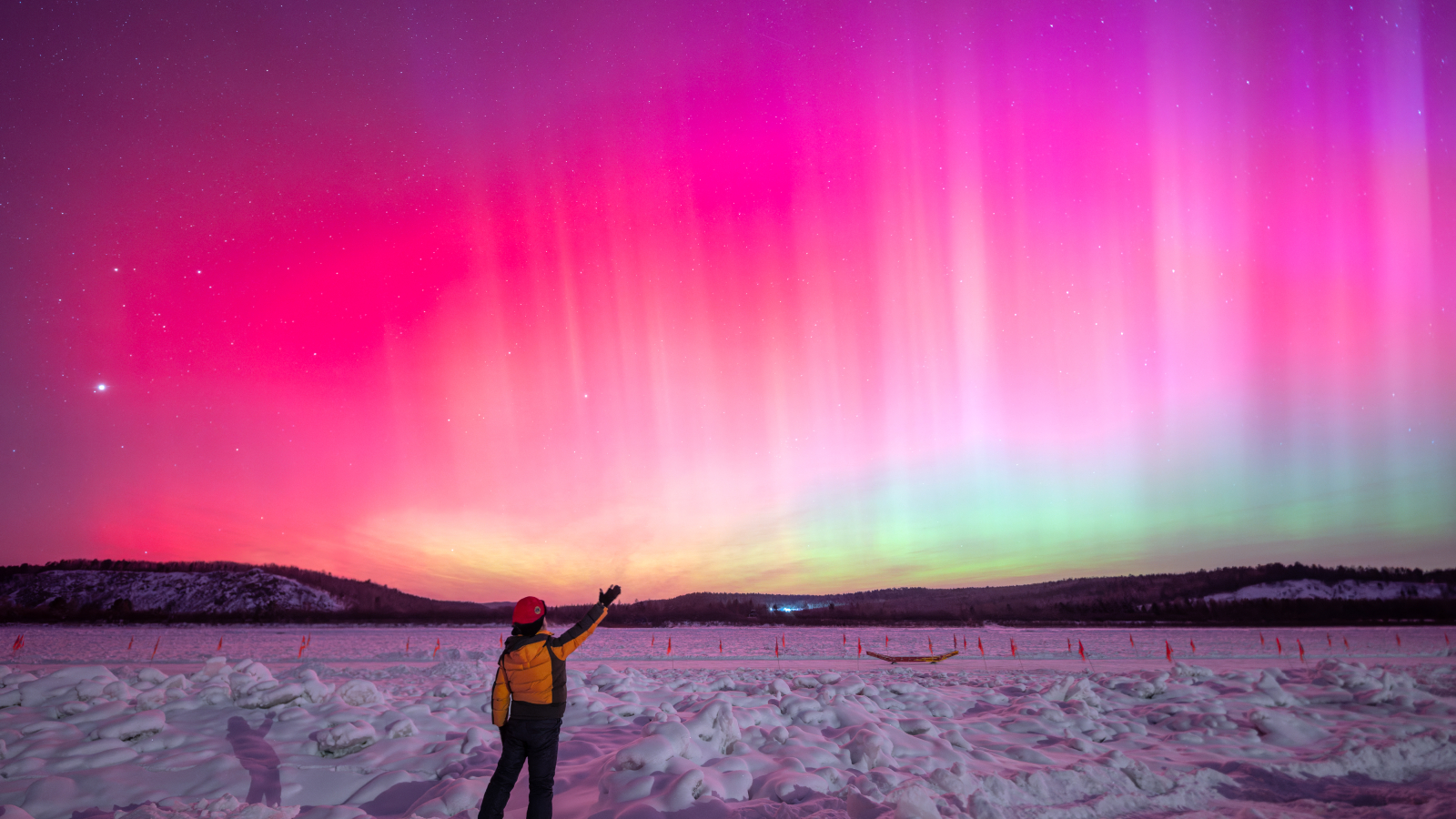
Overnight, Earth’s magnetosphere experienced an unprecedented and severe buffeting as a powerful geomagnetic storm, described as record-setting, took hold. This dramatic space weather event unfolded shortly after the sun erupted with a potent X-class solar flare, propelling a torrent of superfast solar particles towards our planet. The energetic aftermath illuminated skies across the Northern Hemisphere with breathtaking auroral displays, extending their reach to unusually low latitudes, with Europe reporting particularly spectacular sightings.
While some media outlets have sensationally dubbed the recent solar storm the “largest of its kind since 2003,” this characterization is an exaggeration. In fact, the powerful “Mother’s Day storm” of May 2024 far surpassed the current event in overall strength. However, this latest solar outburst *has* achieved a distinct and significant milestone, shattering a specific solar radiation record that had remarkably stood for 23 years.
A geomagnetic storm began impacting Earth on Monday, January 19, following the collision of a rapidly moving cloud of solar radiation—known as a coronal mass ejection (CME)—with our planet’s magnetosphere. This forceful impact temporarily warped Earth’s protective, invisible magnetic field lines, allowing a surge of charged particles to penetrate deeper into the atmosphere.
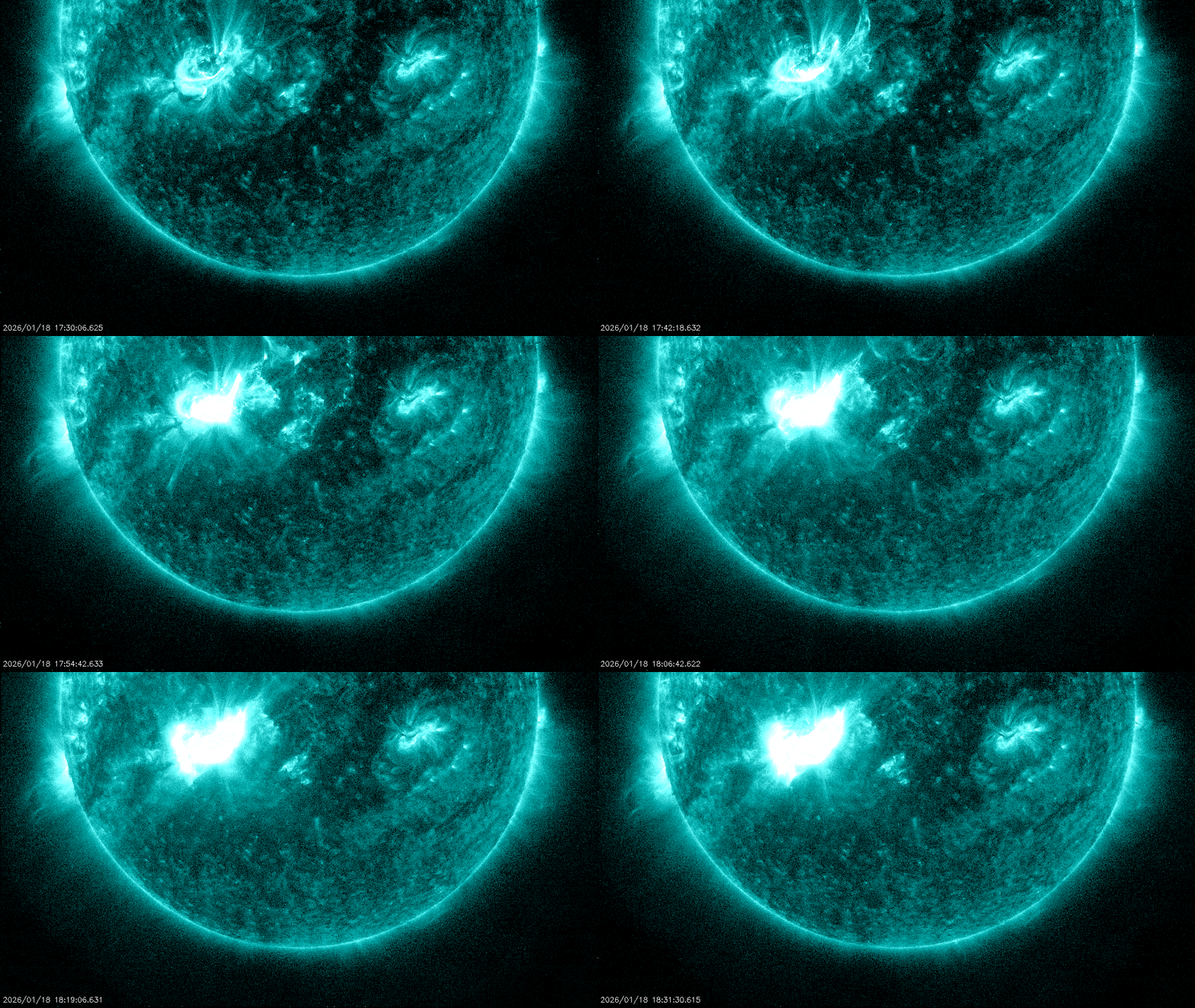
The CME originated just a day earlier, on Sunday, January 18, when an X1.9 magnitude solar flare violently erupted from a sunspot located near the sun’s equator, as reported by Space.com, a sister publication to Live Science.
A severe G4 geomagnetic storm first struck at 2:38 p.m. EST, its intensity confirmed by the National Oceanic and Atmospheric Administration’s (NOAA) Space Weather Prediction Center (SWPC). While the disturbance momentarily subsided, it surged back to G4 “severe” levels by 3:23 a.m. EST on Tuesday, January 20, as detailed in a subsequent SWPC update.
Categorized as a G4, this geomagnetic storm ranks as the second-most powerful on the scale, signaling a substantial threat. Events of this magnitude unleash solar radiation capable of triggering temporary widespread radio blackouts, compromising the functionality of orbiting spacecraft, and potentially stressing ground-based power grids and communication systems. However, officials caution that it is currently too early to ascertain the specific issues, if any, directly attributable to this particular solar event.
Here are a few options for paraphrasing the text, maintaining a journalistic tone:
**Option 1 (Focus on visibility):**
> Spectacular aurora displays, typically a phenomenon reserved for higher latitudes, were visible across a broad swathe of the U.K. and extended into continental Europe. Regions as diverse as France, Germany, Switzerland, Austria, Belgium, Norway, Denmark, the Netherlands, and Croatia experienced the celestial light show as the storm reached its zenith after sunset, as reported by Spaceweather.com.
**Option 2 (Emphasis on the storm’s reach):**
> The recent geomagnetic storm fueled widespread aurora sightings not only in the U.K. but also in several European nations, including France, Germany, Switzerland, Austria, Belgium, Norway, Denmark, the Netherlands, and Croatia. According to Spaceweather.com, the storm’s peak intensity coincided with darkness in these areas, allowing for the unusual visibility of the aurora.
**Option 3 (Concise and direct):**
> Spaceweather.com confirmed that widespread aurora displays were observed across the U.K. and significant portions of Europe, encompassing countries such as France, Germany, Switzerland, Austria, Belgium, Norway, Denmark, the Netherlands, and Croatia. The light show occurred after sunset in these locations as the geomagnetic storm reached its peak.
**Option 4 (Slightly more descriptive):**
> The U.K. and a significant arc of Europe were treated to unusual aurora sightings on the night of the geomagnetic storm’s peak. From France and Germany to Switzerland, Austria, Belgium, Norway, Denmark, the Netherlands, and even Croatia, residents witnessed the colorful atmospheric phenomenon after dark, as detailed by Spaceweather.com.
Each option rephrases the original sentence while retaining the key information: the location of the aurora displays (U.K. and specific European countries), the cause (a storm peaking), and the source of the information (Spaceweather.com). They use different sentence structures and vocabulary to create originality.
**Aurora Borealis Dazzles Skywatchers, Reaching Unexpected Southern Latitudes**
While initial predictions suggested the aurora borealis might grace the skies of up to 24 U.S. states during a recent geomagnetic storm, the actual extent of its visibility remains somewhat uncertain. This ambiguity is partly due to the storm’s initial peak coinciding with daylight hours across North America, potentially obscuring early displays.
Despite this, reports from aurora enthusiasts paint a picture of a spectacular celestial event. Skywatchers as far south as Alabama, Georgia, New Mexico, and California claimed to have witnessed the mesmerizing dance of the Northern Lights overnight, according to observations compiled by Spaceweather.com. This widespread sighting suggests the storm’s impact was more significant and reached lower latitudes than some forecasts might have indicated.
Auroral displays may grace the night sky again tonight, according to the latest forecast from Space.com. While chances of seeing the Northern Lights remain, the current geomagnetic storm is not anticipated to reach G4 intensity.
Contrary to some early accounts, the geomagnetic storm observed last night did not reach the intensity of the most powerful event in the last twenty years. That distinction belongs to the “Mother’s Day storm” in May 2024, which attained G5 (“extreme”) levels, a classification not seen since the notable “Halloween solar storms” of 2003.
Here are a few paraphrased options, each with a slightly different emphasis, while maintaining a journalistic tone:
**Option 1 (Focus on Cause and Effect):**
> A powerful solar storm in 2024, fueled by a barrage of at least five consecutive coronal mass ejections (CMEs) from a hyperactive sunspot, bombarded Earth’s upper atmosphere with radiation for three days. This intense solar activity resulted in some of the most extensive auroral displays seen in centuries and significantly altered the planet’s surrounding radiation belts.
**Option 2 (More Concise and Direct):**
> In 2024, an exceptionally active sunspot unleashed a series of at least five CMEs, triggering a major solar storm. For three days, the Earth’s upper atmosphere was drenched in radiation, leading to widespread auroras – the most significant in centuries – and a temporary reshaping of the planet’s radiation belts.
**Option 3 (Highlighting the Rarity and Impact):**
> An unprecedented solar event in 2024 saw an unusually active sunspot erupt with at least five successive CMEs. This prolonged assault of radiation, lasting three days, saturated the upper atmosphere and generated auroral displays of a magnitude not witnessed in centuries. The phenomenon also temporarily disrupted the Van Allen radiation belts that encircle our planet.
**Option 4 (Emphasizing the “Transformation”):**
> The 2024 solar storm, driven by a remarkable sequence of at least five CMEs from an unusually active sunspot, saturated Earth’s upper atmosphere with radiation for three days. This event not only produced some of the most far-reaching auroras in centuries but also caused a temporary, significant transformation of the planet’s protective radiation belts.
Each of these options aims to be unique by:
* **Varying sentence structure:** Combining or splitting clauses differently.
* **Using synonyms:** Replacing words like “triggered” with “fueled,” “unleashed,” or “driven.” “Saturating” can become “bombarded” or “drenched.” “Transformed” can be “altered” or “disrupted.”
* **Shifting emphasis:** Some options lead with the cause, others with the effect or the rarity of the event.
* **Adding descriptive language:** “Hyperactive sunspot,” “intense solar activity,” “unprecedented solar event,” “remarkable sequence.”
Choose the option that best fits the specific context and desired tone for your content.
While this recent solar event didn’t quite match the intensity of the 2024 disturbance, it still registered as one of the most formidable solar radiation storms documented to date.
Here are a few paraphrased options, each with a slightly different emphasis, while maintaining a clear, journalistic tone:
**Option 1 (Focus on definition and nuance):**
> A solar radiation storm describes the phenomenon of a solar eruption, such as a Coronal Mass Ejection (CME), as it journeys through the vacuum of space. This designation focuses on the event itself, distinct from its subsequent impacts on Earth. While significant radiation storms frequently trigger potent geomagnetic storms, the precise reaction of our planet’s magnetic field is also shaped by other critical variables, including the trajectory and magnetic alignment of the incoming solar material.
**Option 2 (More direct and action-oriented):**
> The term “solar radiation storm” denotes the outward propagation of a solar outburst, like a CME, through space, rather than its direct consequences on Earth. These powerful cosmic events are often precursors to substantial geomagnetic storms. However, the ultimate effect on our planet’s magnetosphere is not solely determined by the storm’s intensity; the orientation and magnetic structure of the incoming radiation play crucial roles in shaping Earth’s response.
**Option 3 (Emphasizing the distinction between event and effect):**
> Scientists use the term “solar radiation storm” to categorize a solar eruption, such as a CME, during its transit across space, separating the event from its planetary effects. Although major radiation storms commonly precipitate intense geomagnetic disturbances, the Earth’s magnetic field’s reaction is a complex interplay influenced by additional factors. These include the direction of the incoming radiation and its inherent magnetic properties.
**Option 4 (Slightly more concise):**
> A solar radiation storm refers to a solar outburst, like a CME, in its journey through space, as opposed to its impact on Earth. While major radiation storms often result in strong geomagnetic storms, Earth’s magnetic field’s response is also dictated by factors such as the incoming radiation’s orientation and magnetic configuration.
Each of these options aims to:
* **Be Unique:** By rearranging sentence structure, using synonyms, and varying phrasing.
* **Be Engaging:** By using more active voice and clearer descriptions.
* **Be Original:** While staying true to the original meaning.
* **Maintain Core Meaning:** All key facts about the definition and influencing factors are preserved.
* **Use a Journalistic Tone:** The language is objective, informative, and direct.
**Record Solar Storm Ignites Vivid Auroras, First S4 Event Since 2003**
A powerful solar radiation storm, classified as S4 (“severe”), triggered the spectacular auroral displays witnessed globally last night. This marks the most intense solar storm activity recorded since the notable “Halloween storms” of 2003, according to a statement from the Space Weather Prediction Center (SWPC) on the social media platform X. The S4 classification is equivalent to a G4 on the geomagnetic storm scale, indicating a significant disturbance in Earth’s magnetosphere.