
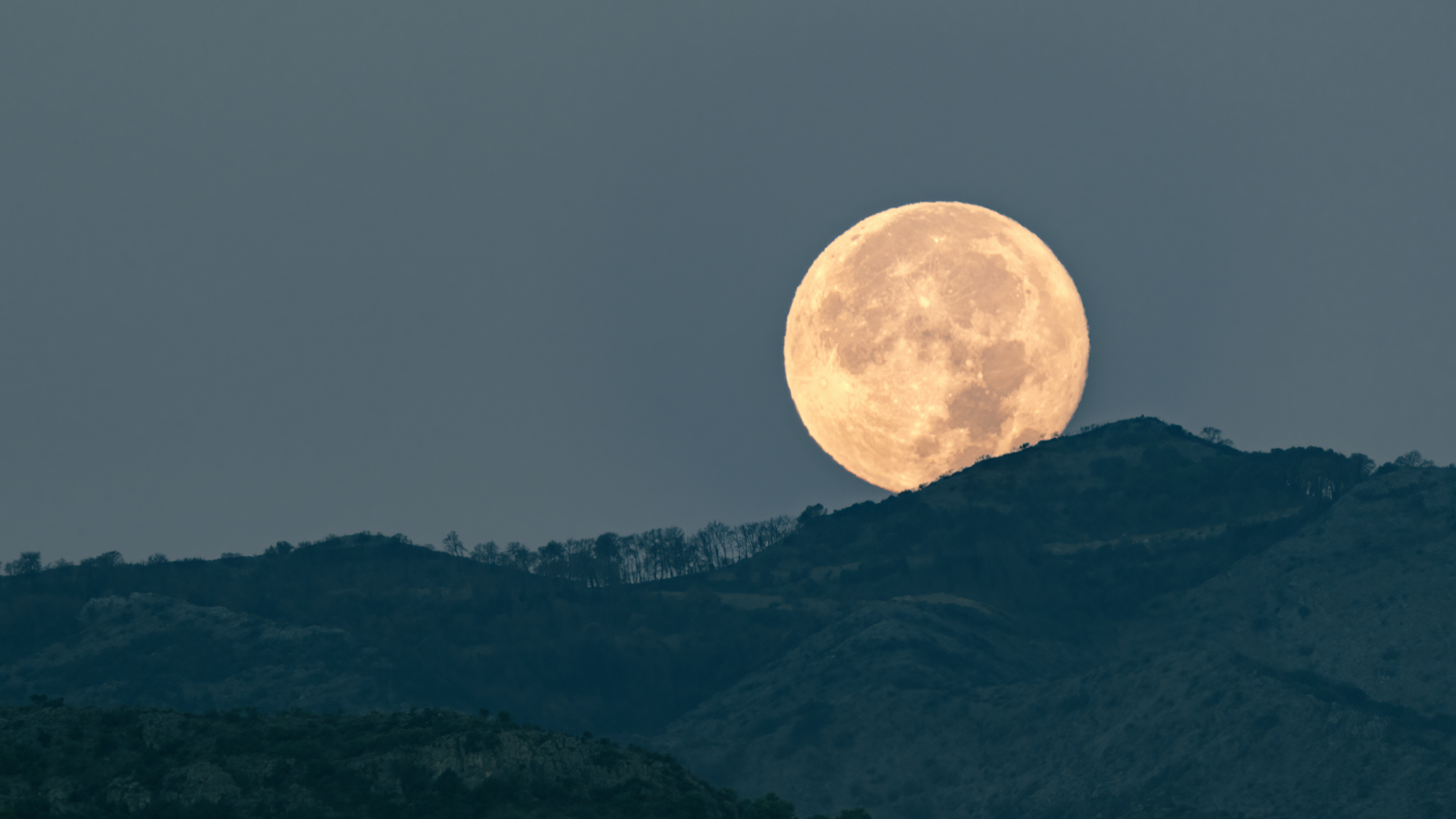
When a full moon hovers just above the horizon, it often appears astonishingly vast, a sight that invariably captivates observers. Yet, this dramatic visual is, in fact, an intriguing optical illusion. Paradoxically, at this low-lying position, the moon is actually at its furthest point from Earth. By all astronomical logic, it *should* appear marginally smaller than when it ascends to its zenith, where it is closer to our vantage point.
When the Moon is observed low on the horizon, it is actually an entire Earth radius farther away from our vantage point than when it’s directly overhead. This astronomical insight was provided by Susanna Kohler, an astronomer and spokesperson for the American Astronomical Society, in an explanation to Live Science.
It’s a common celestial marvel that often prompts double-takes: the moon frequently appears significantly larger when it’s low on the horizon. But what scientific explanation lies behind this striking visual phenomenon?
The enigmatic “moon illusion,” a perplexing phenomenon that has captivated and confounded observers for millennia, continues to defy complete scientific understanding. As Kohler notes, “we don’t fully understand how it works” even in the modern era.
Early explanations, including theories put forth by ancient philosophers like Aristotle, posited that the illusion was caused by the magnifying properties of mist or the refraction of light within Earth’s atmosphere. However, the advent of modern photography has decisively debunked these long-held hypotheses. Far from enlarging the lunar disk, photographic evidence demonstrates that atmospheric refraction actually distorts the moon’s appearance, causing it to look compressed or “squished” rather than magnified.
Instead, the moon illusion is likely **a fundamental product of the brain’s internal mechanisms**, specifically manifesting as we **synthesize our perceptions of size**. This insight comes from Bart Borghuis, a neuroscientist at the University of Louisville. Borghuis brings significant background to the topic, having previously authored an undergraduate literature thesis on the subject, and currently focuses his research on the intricate field of visual processing.
The perplexing phenomenon of the moon appearing larger when it’s low on the horizon has captivated and puzzled scientists for centuries, leading to a host of proposed explanations, as noted by Kohler.
One prominent theory posits that our brains are tricked by the moon’s proximity to smaller, familiar objects on Earth’s surface, such as trees and buildings. This visual contrast supposedly exaggerates the moon’s apparent size. However, Kohler highlights a crucial nuance: the moon’s perceived enlargement persists even when viewed over a “featureless plane,” like the vast, open ocean. This suggests that while contextual comparison certainly plays a role, other, more complex cognitive mechanisms are also at work in shaping this enduring visual phenomenon.
A prominent theory, extensively backed by scientific evidence and frequently cited in academic textbooks, highlights a fundamental flaw in human visual perception: our tendency to misinterpret an object’s size based on its perceived distance.
According to researcher Borghuis, the process of perceiving size unfolds in a “two-step process.” Initially, our retinas meticulously record the object’s direct dimensions. Subsequently, the brain assesses its true size by factoring in how far away it appears, a visual perception principle famously known as Emmert’s Law.
This principle of perception profoundly influences how we view the moon, a phenomenon first detailed in a landmark 1962 study published in the journal *Science*.
Researchers in that pivotal work discovered that when a simulated moon was presented against a discernible horizon featuring terrain, observers consistently perceived it as significantly larger. This heightened perception stemmed from the surrounding landscape, which deceptively suggested a greater distance between the viewer and the celestial body. In stark contrast, when the simulated moon was displayed in isolation, entirely devoid of any visual cues or terrestrial markers indicating depth, the pronounced illusion of an enlarged moon simply vanished.
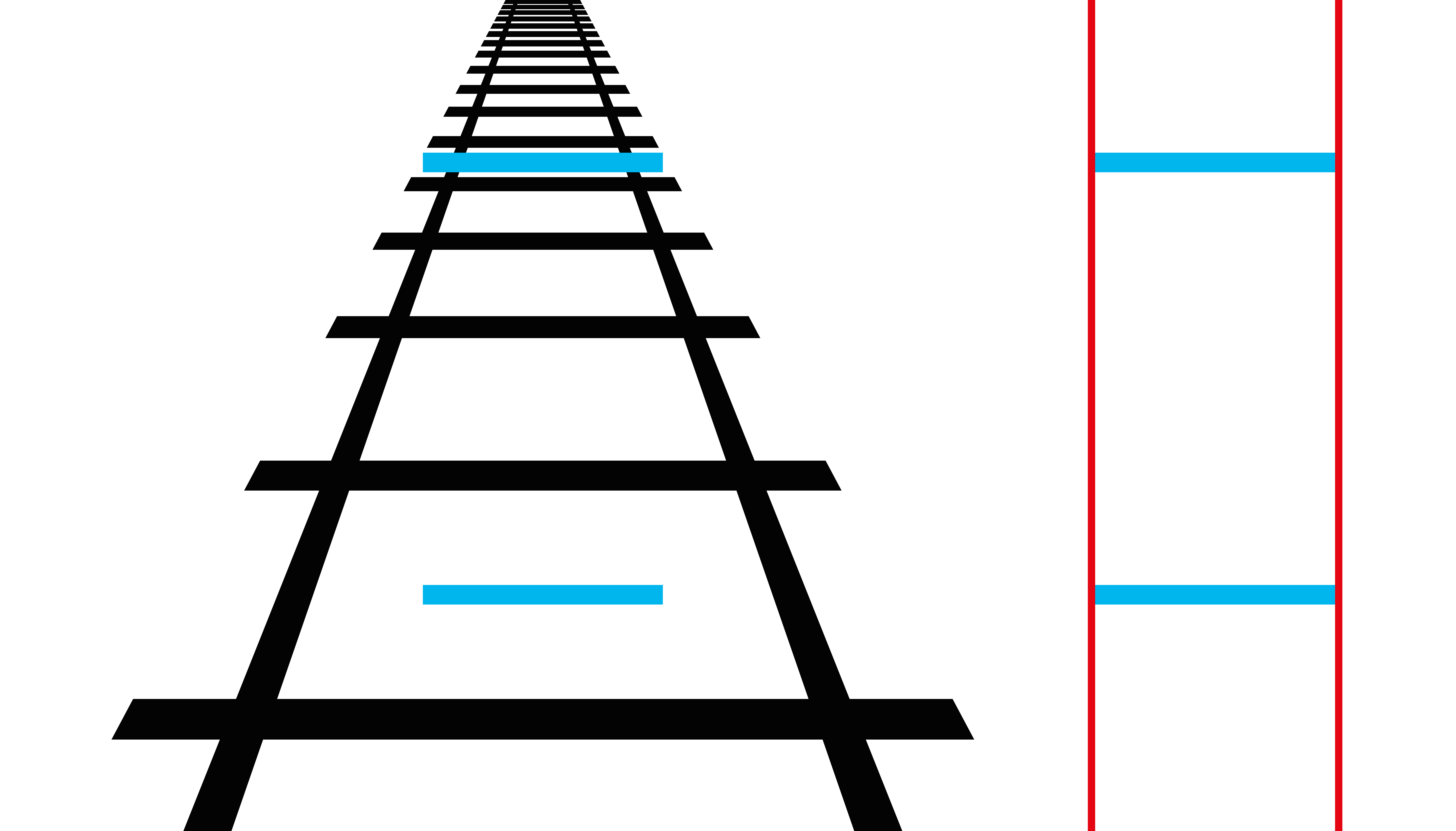
A core observation in psychophysics, consistently replicated across numerous experiments, reveals a fascinating perceptual bias: a filled-in space is invariably perceived as longer or more extended than an equivalent empty space. This phenomenon, Borghuis explained to Live Science, has been a recurring finding in studies of human perception.
Here are a few options for paraphrasing the text, each with a slightly different emphasis and tone, while retaining the core meaning:
**Option 1 (Focus on the misconception):**
> Our everyday perception of the sky as a flattened bowl, rather than its true hemispherical shape, significantly influences how we see the moon. According to Kohler, this mental model leads to the moon illusion: when the moon appears on the horizon, our brains interpret it as being further away than when it’s directly overhead. Consequently, an object of the same size is perceived as larger when it’s closer to the ground.
**Option 2 (More direct and explanatory):**
> The moon illusion can be understood by considering how most people visualize the sky: not as a perfect hemisphere, but as a flattened bowl. Kohler explains that this common misconception creates a disparity in our perception of distance. Objects on the horizon are instinctively judged as more distant than those directly above us. This difference in perceived distance, when applied to the moon, tricks our eyes into seeing it as larger when it’s low in the sky.
**Option 3 (Slightly more engaging tone):**
> Ever wondered why the moon seems so much bigger when it’s near the horizon? Kohler suggests a fascinating explanation rooted in our ingrained perception of the sky. We tend to see the sky as a somewhat flattened dome, a mental map that impacts how we judge distance. When an object, like the moon, is positioned on this perceived horizon, our brains place it further away than if it were overhead. This illusion of distance then leads us to believe the moon itself has grown in size.
**Option 4 (Concise and journalistic):**
> Kohler posits that our common perception of the sky as a flattened bowl, rather than a hemisphere, is key to understanding the moon illusion. This mental model leads us to judge objects on the horizon as more distant than those overhead. As a result, the same-sized moon appears larger when it is lower in the sky due to this perceived increase in distance.
Each of these options aims to be unique and engaging by rephrasing the original sentence structure and vocabulary, while clearly conveying the central idea about the flattened sky perception and its link to the moon illusion.
Drawing a parallel to the well-known Ponzo illusion, this concept operates on a similar principle. Just as the Ponzo illusion tricks our perception, making identical lines seem unequal in length due to their placement within a converging perspective, this idea similarly leverages visual cues to alter perceived size.
Here are a few paraphrased options, maintaining a journalistic tone and originality:
**Option 1 (Focus on the experiment’s clarity):**
> This optical phenomenon can be readily demonstrated with a simple at-home experiment. By focusing on a bright light source, such as a light bulb, for a brief period and then shifting your gaze to a plain wall, you’ll typically observe a dark afterimage. While this shadow initially appears to maintain a consistent size regardless of your focal point, a fascinating change occurs when you transition from viewing a distant wall to a closer one; the perceived size of the spot can actually fluctuate. According to Borghuis, “It’s the most illustrating little test or experiment that you can do.”
**Option 2 (More concise and active):**
> An accessible home experiment offers a vivid demonstration of this illusion. Stare at a bright object, like a light bulb, for several seconds, then turn to a blank wall. You’ll likely perceive a dark shadow that seemingly remains constant in size. However, the illusion reveals itself further when you switch your focus from a distant wall to a nearer one, as the size of this afterimage may appear to change. Borghuis highlights its effectiveness, stating, “It’s the most illustrating little test or experiment that you can do.”
**Option 3 (Emphasizing the visual shift):**
> You can witness this illusion firsthand with a straightforward experiment you can perform at home. After gazing at a bright object, such as a light bulb, for a few moments, direct your eyes to a blank wall. You should see a darker shadow, which at first seems to hold its size irrespective of what you’re looking at. Yet, as you shift your visual attention from a far-off wall to a closer one, you might observe that the dimensions of this persistent spot alter. Borghuis describes it as “the most illustrating little test or experiment that you can do.”
Even with an understanding of our cognitive limitations in judging size, these visual tricks continue to fool us. Still, as Kohler points out, “observing the moon through its various phases is a consistently rewarding experience, simply because it’s so captivating.” He adds, “the added benefit of simultaneously exploring the fascinating world of brain science makes it an even more intriguing pursuit.”





