Scientists have leveraged the most powerful gravitational-wave signal ever recorded to subject Albert Einstein’s more than century-old theory of gravity to its most rigorous examination yet. The foundational principles of General Relativity, established over a hundred years ago, once again emerged validated, affirming their enduring accuracy against unprecedented scrutiny.
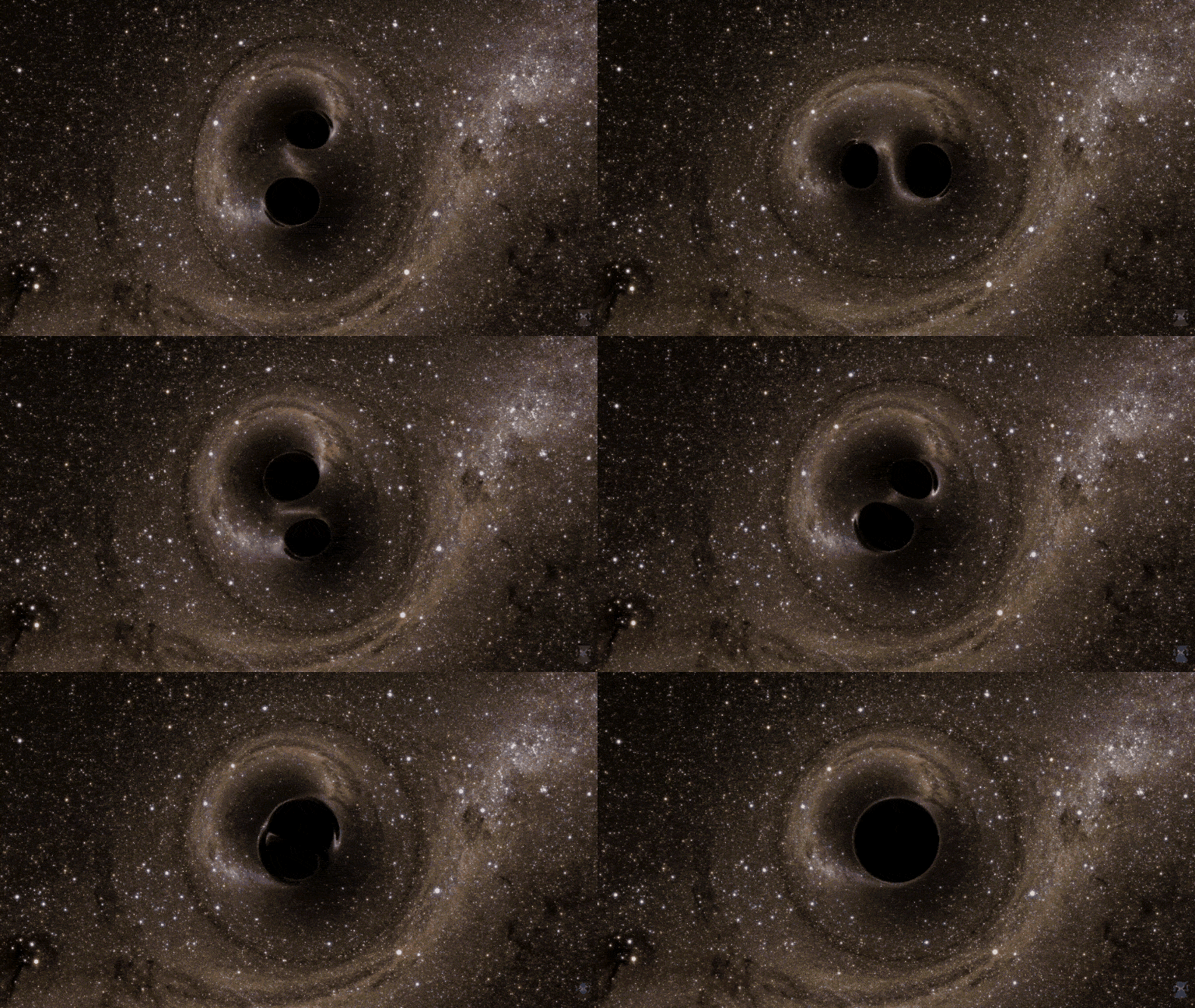
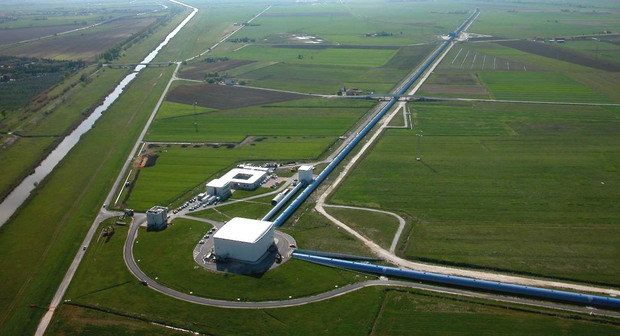
On January 14, 2025, Earth was swept by powerful gravitational waves, cosmic tremors that confirmed a monumental event 1.3 billion light-years away. Detected by the U.S.-based Laser Interferometer Gravitational-Wave Observatory (LIGO), this unique signal, designated GW250114, originated from the cataclysmic merger of two black holes. Each of these celestial behemoths boasted approximately 30 times the mass of our sun, unleashing ripples through the very fabric of space-time as they collided.
Scientists are buzzing about a recent cosmic event that bears a striking resemblance to the landmark 2015 occurrence, which yielded humanity’s first direct detection of gravitational waves. This compelling parallel suggests that the black holes involved in both colossal mergers were likely of comparable dimensions and situated at a similar cosmic distance from Earth.
Significantly, this new signal was captured with nearly three times the clarity of the momentous 2015 discovery. This dramatic improvement in data quality has allowed scientists to conduct the most stringent tests of Einstein’s theory of general relativity ever performed.
Keefe Mitman, a postdoctoral researcher at the Cornell Center for Astrophysics and Planetary Science and co-author of a groundbreaking new paper, has characterized a recent cosmic event as unequivocally “the loudest” ever observed. Speaking to Live Science, Mitman underscored its unparalleled significance, noting that this singular occurrence delivered more crucial data for testing general relativity than all previous observations combined.
According to Mitman, the extraordinary clarity of the signal is the direct result of a decade of sustained upgrades to the detection systems. These continuous enhancements significantly minimized ambient interference, effectively silencing disruptive background noise from sources such as seismic vibrations and even nearby vehicular traffic. This rigorous refinement ultimately granted the detectors the extreme sensitivity needed to register the minuscule distortions in space-time—fluctuations an astonishing 700 trillion times smaller than the diameter of a human hair—produced by the recently observed black hole merger.
A new study, published on January 29th in the esteemed journal *Physical Review Letters*, reveals groundbreaking findings.
The recent detection of a remarkably clear signal has allowed researchers, including Mitman, to scrutinize a brief, post-merger event called the “ringdown.” In this crucial phase, the newly coalesced black hole exhibits a temporary vibration, akin to a resonating bell. This oscillation generates gravitational waves that carry distinctive patterns, or “tones,” which effectively reveal the black hole’s fundamental characteristics, such as its mass and spin.
**Gravitational Wave Detection Confirms Einstein’s Theory of Relativity**
In a significant scientific breakthrough, researchers analyzing gravitational wave event GW250114 have successfully detected the two main frequencies predicted for a black hole merger. This remarkable observation has provided independent measurements of the black hole’s mass and spin, both of which precisely matched theoretical predictions. This congruence serves as a powerful validation of Einstein’s theory of general relativity, as detailed in a recent study by the research team.
In a groundbreaking discovery, researchers have precisely detected a faint, fleeting “overtone” that emerges at the very beginning of a cosmic “ring,” a phenomenon previously theorized by Einstein’s general relativity.
The observation strikingly confirmed a key prediction of general relativity, an outcome that profoundly excited researchers, as reported by Mitman to Live Science.
Had the experimental results not aligned, the physicist explained in a statement, “it would have presented us with a significant challenge as scientists, requiring extensive investigation to understand the discrepancy and to formulate a revised theory of gravity applicable to our universe.”
**New study validates Stephen Hawking’s enduring black hole prediction.**
Recent research, building on analyses released in September 2025, has offered compelling evidence for another significant prediction made by theoretical physicist Stephen Hawking over half a century ago. Hawking’s groundbreaking work in general relativity posited that the surface area of a black hole, defined by its event horizon, is a strictly increasing or unchanging quantity. This holds true even in the extreme scenario of a merger, where substantial energy is radiated away as gravitational waves.
Here are a few paraphrased options, maintaining a journalistic tone:
**Option 1 (Focus on scale):**
> The cosmic collision detected in GW250114 involved two primordial black holes, each with a surface area estimated to be around 93,000 square miles (240,000 square kilometers) – a combined expanse comparable to the state of Oregon. Following their dramatic merger, the newly formed black hole boasted a surface area of approximately 155,000 square miles (400,000 square km), a size that rivals California and aligns with theoretical predictions made by Stephen Hawking.
**Option 2 (Focus on the prediction validation):**
> In a remarkable cosmic event, GW250114 revealed the merger of two black holes. Scientists calculated that these original celestial bodies collectively spanned about 93,000 square miles (240,000 square kilometers), an area reminiscent of Oregon. The resultant black hole after the merger was significantly larger, measuring around 155,000 square miles (400,000 square km) – a size akin to California. This observed expansion is in harmony with the predictions of Stephen Hawking’s theories.
**Option 3 (More concise):**
> The black hole merger observed in GW250114 brought together two entities with a combined surface area comparable to Oregon (93,000 sq mi / 240,000 sq km). The single, larger black hole formed by this event now possesses a surface area of approximately 155,000 square miles (400,000 sq km), a scale reminiscent of California, validating theoretical calculations, including those by Stephen Hawking.
Here are a few paraphrased options, each with a slightly different emphasis, maintaining a journalistic tone:
**Option 1 (Focus on incompleteness):**
> While Albert Einstein’s theory of general relativity has a proven track record in explaining vast cosmic events, scientists widely believe it falls short as a definitive account of gravity. The theory struggles to account for the mysteries of dark matter and dark energy, phenomena crucial for understanding the structural integrity of galaxies and the accelerating outward rush of the universe. Furthermore, general relativity presents significant challenges when attempting to merge with quantum mechanics, the fundamental theory governing the subatomic world.
**Option 2 (Focus on unexplained phenomena):**
> Despite its triumphs in mapping the cosmos on a grand scale, physicists suspect general relativity is not the final word on gravity. The theory falters when confronted with phenomena like dark matter and dark energy – invisible forces essential for binding galaxies and their assemblies, and for driving the universe’s accelerating expansion. Additionally, a fundamental conflict persists between general relativity and quantum mechanics, the established rules of the very small.
**Option 3 (More concise):**
> Physicists acknowledge the remarkable achievements of general relativity in describing cosmic structures and events. However, they posit that the theory is incomplete, failing to explain key components of our universe such as dark matter and dark energy. These enigmatic forces are vital for galactic cohesion and the universe’s accelerating expansion. A significant hurdle also remains in reconciling general relativity with quantum mechanics, the bedrock of physics at microscopic scales.
**Key changes made in these paraphrases:**
* **”Repeated success”** became “proven track record,” “triumphs,” or “remarkable achievements.”
* **”Physicists suspect the theory cannot be the complete description”** became “scientists widely believe it falls short,” “suspect it is not the final word,” or “posit that the theory is incomplete.”
* **”Hold galaxies and their clusters together”** became “structural integrity of galaxies,” “binding galaxies and their assemblies,” or “galactic cohesion.”
* **”Explain the universe’s accelerating expansion”** became “driving the universe’s accelerating expansion” or “the universe’s accelerating expansion.”
* **”Reconcile cleanly with quantum mechanics”** became “presents significant challenges when attempting to merge,” “fundamental conflict persists between,” or “significant hurdle also remains in reconciling.”
* **”Framework that governs nature at the smallest scales”** became “fundamental theory governing the subatomic world” or “established rules of the very small” or “bedrock of physics at microscopic scales.”
* **Sentence structure:** Varied to create a more dynamic flow.
* **Word choice:** Employed synonyms and more descriptive language.
Here are a few paraphrased options, each with a slightly different emphasis:
**Option 1 (Focus on discovery):**
> The powerful gravitational waves unleashed by colliding black holes hold the promise of revealing physics beyond Albert Einstein’s established theories. Scientists are eagerly anticipating that future observations of these cosmic events might exhibit minute discrepancies with Einstein’s predictions, potentially unlocking doors to new scientific understanding.
**Option 2 (Focus on potential and method):**
> By studying the faint ripples in spacetime generated by colossal black hole mergers, researchers are on the lookout for subtle clues that could challenge Einstein’s celebrated theory of gravity. The hope is that these gravitational waves, if they deviate even slightly from Einstein’s predictions, could serve as a critical signpost towards groundbreaking new physics.
**Option 3 (More direct and concise):**
> Future observations of gravitational waves from black hole mergers could potentially offer evidence that deviates from Einstein’s predictions, paving the way for the discovery of new physics. Scientists are examining these cosmic signals with the hope of detecting subtle anomalies that might hint at phenomena not accounted for by current theories.
**Option 4 (Emphasizing the “what if”):**
> The universe’s most cataclysmic black hole mergers send out gravitational waves that scientists believe could, one day, betray tiny imperfections in Einstein’s long-standing predictions. Should such subtle deviations be detected, they could offer a profound glimpse into physics that lies beyond our current understanding.
Here are a few paraphrased options, each with a slightly different emphasis, while maintaining a journalistic tone:
**Option 1 (Focus on the “beyond Einstein” aspect):**
> According to Mitman, the ringdown phase of gravitational wave signals offers a particularly compelling avenue for testing fundamental physics. He explained that numerous theories proposing physics beyond Einstein’s general relativity predict subtle variations in the signal’s vibrational patterns during this final “ringdown” period. By analyzing multiple frequencies, as his team accomplished with the GW250114 event, scientists can effectively narrow down the possibilities for any departures from Einstein’s established framework.
**Option 2 (Focus on the predictive power of the ringdown):**
> Mitman highlighted the significant potential of the ringdown phase for scrutinizing the limits of current gravitational theories. He stated that many theoretical models extending beyond Einstein’s general relativity suggest distinct vibrational characteristics during this concluding stage of a gravitational wave event. The ability to detect and analyze more than one frequency, a feat achieved by his team using GW250114, provides a powerful tool for scientists to establish boundaries on potential deviations from the predictions of general relativity.
**Option 3 (More concise and direct):**
> The ringdown phase, Mitman noted, is a prime candidate for testing theories that go beyond Einstein’s general relativity. He elaborated that these “beyond-Einstein” frameworks anticipate slightly different vibrational signatures during ringdown. Consequently, measuring multiple tones, as his team did with GW250114, allows scientists to constrain any potential deviations from general relativity.
**Option 4 (Emphasizing the team’s achievement):**
> Mitman underscored the promising nature of the ringdown phase for conducting crucial tests of gravitational physics. He explained that many theories venturing beyond Einstein’s general relativity predict subtle alterations in the ringdown’s vibration patterns. By successfully measuring more than one tone in the GW250114 event, Mitman’s team has provided scientists with a valuable method for placing constraints on any possible deviations from the well-established principles of general relativity.
These options aim to rephrase the original text using different sentence structures, vocabulary, and emphasis points while preserving the core information about the ringdown phase, “beyond-Einstein” theories, and the significance of multi-tone analysis for testing general relativity.
Should any discrepancy be identified, researchers would undertake a rigorous comparison, cross-referencing the anomalous data with predictions from competing theories of gravity. This critical analysis would aim to determine which theoretical model, if any, truly aligns with the observed universe.
Mitman underscored the critical need to resolve a foundational paradox, emphasizing that such a solution is imperative for achieving theoretical consistency between our understanding of gravity and the principles of quantum mechanics.
The field of gravitational wave astronomy is on the cusp of a revolutionary leap with upcoming next-generation observatories, including Europe’s proposed Einstein Telescope and the U.S.-based Cosmic Explorer. These cutting-edge facilities are engineered to deliver an astonishing tenfold increase in sensitivity compared to current instruments.
This dramatic enhancement will not only significantly boost the detection of events akin to GW250114, but also crucially enable scientists to observe lower-frequency gravitational waves. Such signals are the unmistakable signatures of far more massive black holes, promising to unlock entirely new classes of these cosmic behemoths for in-depth study.
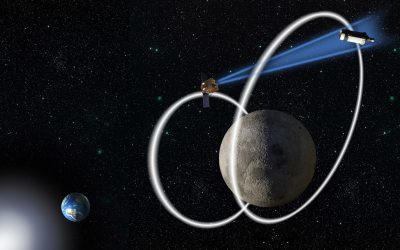
Anticipation is building for the European Laser Interferometer Space Antenna (LISA), a groundbreaking mission poised to revolutionize our understanding of cosmic phenomena. Scheduled for launch in 2035, LISA is designed to observe gravitational waves emanating from the colossal supermassive black holes that anchor galaxies. Mitman states that the observatory is expected to detect a deluge of events and could even resolve dozens of distinct “tones” within the complex gravitational signature of a single black hole merger.
Mitman highlighted the current operational constraints stemming from a significant data deficit, noting that researchers are essentially in a holding pattern, awaiting crucial new inputs. However, he predicted a dramatic shift with the activation of LISA, anticipating that the incoming data would become “overwhelming.”
Should sustained funding for gravitational-wave science continue, he projected, the field stands poised to uncover a growing number of “golden events”—pivotal observations expected to yield profound insights into the fundamental nature of gravity throughout our universe.