A new report released by the agency reveals NASA has delivered a sobering assessment of Boeing’s Starliner capsule’s failed 2024 test flight. The mission’s setback has been officially categorized alongside some of NASA’s most notorious historical incidents, including the Challenger and Columbia space shuttle disasters, and the perilous Apollo 13 mission.
NASA has officially designated the mission that left two of its astronauts unexpectedly marooned in space for a nine-month period spanning 2024 to 2025 as a “Type A mishap” — the agency’s most severe classification within its rigorous safety management framework.
A Type A mishap designation is reserved for the most severe incidents in spaceflight, triggered by one of four critical scenarios: the death or permanent incapacitation of a crewmember, the catastrophic structural disintegration of the spacecraft or its hull, an uncontrolled or unplanned deviation from its intended flight path, or if mission-related damages surpass the $2 million mark.
A comprehensive 282-page report has unveiled critical shortcomings, primarily identifying flawed engineering, insufficient oversight, and a distinct lack of coordination among mission stakeholders. Nevertheless, NASA has confirmed its ongoing collaboration with Boeing to continue testing the Starliner spacecraft, with the stated objective of resuming crewed flights in the coming years.
During a news conference today, February 19, NASA Administrator Jared Isaacman delivered a stark assessment, revealing that the most significant issue uncovered by the investigation was not a hardware malfunction. Instead, he pinpointed flaws in leadership decision-making as the primary concern, warning that such issues, if left unaddressed, could foster an operational culture fundamentally incompatible with human spaceflight missions.
Isaacman unequivocally stated the agency’s firm commitment: “To be clear, NASA will not fly another crew on Starliner until technical causes are understood and corrected.” This declaration underscores that no further crewed Starliner flights will proceed until all underlying technical problems are thoroughly comprehended and rectified.
NASA Administrator Isaacman, who assumed his role on December 17, 2025, and was not affiliated with the agency during the mission in question, has unequivocally declared that the Starliner test should have been classified as a Type A mishap. Isaacman asserts this designation was warranted over a year ago, immediately after it became clear that the spacecraft’s faulty thrusters had jeopardized the crew.
“The record is now being corrected,” Isaacman stated, adding a firm promise: “There will be leadership accountability.”
Boeing’s Starliner spacecraft encountered a swift succession of technical setbacks during its inaugural crewed test flight, which commenced on June 5, 2024, from Florida’s Cape Canaveral Space Force Station. Shortly after reaching orbit, the capsule reported a series of anomalies, including five helium leaks and five failures in its vital reaction control system (RCS) thrusters.
Engineers faced the challenge of diagnosing problems directly from the source. Investigations at NASA’s Starliner facility in White Sands, New Mexico, pinpointed the likely cause of the issues encountered during the spacecraft’s ascent to the International Space Station (ISS). According to NASA, the Teflon seals within five malfunctioning RCS thrusters are believed to have overheated and deformed, subsequently blocking the propellant’s flow.
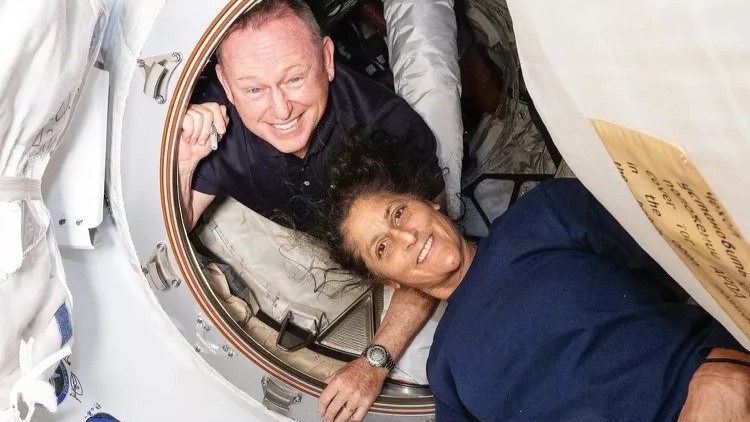
**Astronauts Butch Wilmore and Suni Williams found themselves in an extended stay aboard the International Space Station as NASA and Boeing conducted rigorous, months-long testing procedures.**
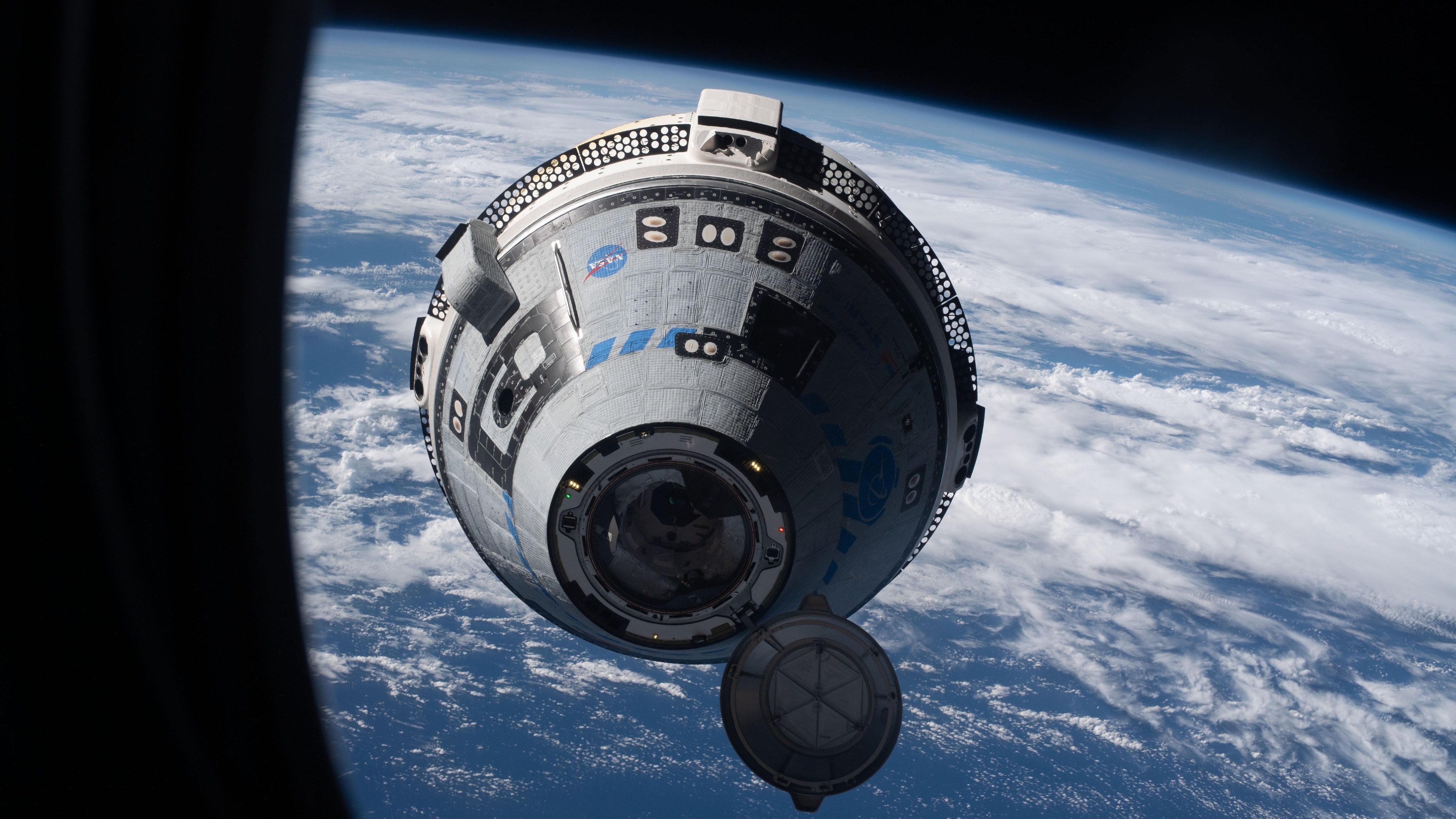
On July 27, 2024, a crucial hot-fire test was performed while the spacecraft was attached to the International Space Station (ISS). The results were encouraging, indicating that the engine’s thrust had returned to expected levels. Despite this positive development, NASA engineers remained cautious. Their primary concern was the potential for the issue to re-emerge during the spacecraft’s return journey to Earth. Furthermore, engineers expressed unease regarding the helium leaks, fearing they could compromise the functionality of the orbital maneuvering and attitude control system (OMAC) thrusters, systems essential for maintaining the spacecraft’s safe trajectory.
Here are a few paraphrased options, each with a slightly different emphasis, maintaining a journalistic tone:
**Option 1 (Focus on extended mission):**
> NASA confirmed in late August its intention to return Boeing’s troubled spacecraft empty, extending astronauts Wilmore and Williams’ mission significantly. Their planned eight-day stay ballooned to an unprecedented 286 days before their safe retrieval aboard a SpaceX Dragon capsule, which successfully splashed down on March 18, 2025.
**Option 2 (Focus on the decision and duration):**
> By the end of August, NASA revealed its decision to bring Boeing’s malfunctioning craft back to Earth without its crew. What began as an anticipated eight-day orbital journey for Wilmore and Williams transformed into a marathon 286-day mission. They were ultimately recovered on March 18, 2025, via a SpaceX Dragon capsule after its splashdown.
**Option 3 (More concise):**
> A late August announcement from NASA detailed plans to retrieve Boeing’s problematic spacecraft sans crew. Astronauts Wilmore and Williams, initially slated for an eight-day mission, ended up spending 286 days in space before being brought home by a SpaceX Dragon capsule that completed its splashdown on March 18, 2025.
**Option 4 (Emphasizing the contrast):**
> The planned eight-day space excursion for astronauts Wilmore and Williams took a dramatic turn when, by late August, NASA decided to bring Boeing’s troubled capsule back without them. Their stay ultimately stretched to an extraordinary 286 days, concluding with their safe return on March 18, 2025, via a SpaceX Dragon capsule splashdown.
Here are a few options for paraphrasing the provided text, maintaining a professional, journalistic tone:
**Option 1 (Focus on Program and Cost):**
> In the wake of NASA’s space shuttle retirement in 2011, Boeing developed its Starliner capsule as a key component of the agency’s Commercial Crew Program. This initiative fosters partnerships with private industry to transport astronauts to low Earth orbit. However, the Starliner’s development journey has been marked by significant challenges, reportedly costing Boeing approximately $2 billion in losses as of last year to overcome these setbacks.
**Option 2 (Emphasis on Challenges and Investment):**
> To meet the need for astronaut transport to low Earth orbit following the 2011 retirement of its space shuttle fleet, NASA partnered with private companies under the Commercial Crew Program. Boeing’s contribution to this endeavor, the Starliner capsule, has faced considerable developmental hurdles. These persistent issues have led to substantial financial strain for the aerospace giant, with reports indicating Boeing incurred nearly $2 billion in losses by last year to rectify the Starliner’s ongoing development problems.
**Option 3 (Concise and Direct):**
> Boeing’s Starliner capsule, a product of NASA’s Commercial Crew Program designed to transport astronauts to low Earth orbit after the 2011 retirement of the space shuttles, has encountered significant development challenges. These setbacks have proven costly for the company, which by last year had reportedly absorbed around $2 billion in losses to address the issues.
Here are a few options for paraphrasing the provided text, each with a slightly different emphasis, while maintaining a journalistic tone:
**Option 1 (Focus on NASA’s commitment):**
> Undeterred by a critical review, NASA official Isaacman affirmed the space agency’s ongoing collaboration with Boeing to resolve lingering issues with the Starliner spacecraft. He emphasized that maintaining diverse launch capabilities is a strategic advantage for American space endeavors. The joint effort involves continued testing of Starliner’s reaction control system thrusters at White Sands Space Harbor in New Mexico, with a cargo-only mission to the International Space Station slated for as early as April.
**Option 2 (Focus on the dual approach):**
> Despite a recent critical assessment, NASA is committed to partnering with Boeing to address the Starliner program’s challenges and reinstate crewed missions. Isaacman highlighted the importance of having multiple avenues for transporting American astronauts and cargo into orbit. This commitment is being demonstrated through ongoing tests of Starliner’s RCS thrusters at New Mexico’s White Sands Space Harbor. The next step involves a cargo-only Starliner flight to the ISS, anticipated for April.
**Option 3 (More concise):**
> NASA intends to continue working with Boeing to rectify Starliner’s problems and resume crewed flights, even after a severe report. Isaacman stated that multiple launch options are crucial for America’s access to space. The agency and Boeing are presently testing Starliner’s RCS thrusters at White Sands, New Mexico, with a cargo-only mission to the ISS planned for April.
**Key changes made in these paraphrases:**
* **Word Choice:** Replaced “scathing report” with “critical review” or “severe report.” “Fix” became “resolve lingering issues” or “rectify problems.” “Return it to crewed flight” became “reinstate crewed missions” or “resume crewed flights.”
* **Sentence Structure:** Varied the order of clauses and combined or separated sentences for a more dynamic flow.
* **Emphasis:** Shifted focus slightly to NASA’s strategic goals or the ongoing testing.
* **Journalistic Tone:** Used more formal language and maintained objectivity.
* **Clarity:** Ensured the core message about continued work, the reason for it, and the upcoming mission remains clear.
Here are a few paraphrased options, maintaining a journalistic tone and focusing on originality:
**Option 1 (Concise and direct):**
> This report arrives as NASA faces increased public and internal examination ahead of its upcoming crewed Artemis II lunar mission. Boeing, as the lead contractor for the Space Launch System’s core stage, holds significant responsibility for the monumental orange section housing the powerful engines crucial for the rocket’s initial ascent.
**Option 2 (Slightly more descriptive):**
> With NASA gearing up for the highly anticipated Artemis II crewed mission to the Moon, the agency is under a microscope. A key player in this endeavor, Boeing, is the primary contractor for the core stage of the Space Launch System. This critical component, the rocket’s massive orange fuselage, is where Boeing oversees the design, development, and testing of the engines that will ignite the launch sequence.
**Option 3 (Emphasizing Boeing’s role):**
> Amidst a period of intensified scrutiny for NASA, particularly as it readies the Artemis II crewed mission for a lunar voyage, Boeing’s pivotal role in the Space Launch System is under the spotlight. The aerospace giant is the prime contractor for the rocket’s core stage – the iconic, oversized orange structure that houses the essential engines for liftoff, making Boeing accountable for its entire design, development, and testing process.
**Key changes made and why:**
* **”Heightened scrutiny”**: Replaced with “increased public and internal examination,” “under a microscope,” and “intensified scrutiny” to offer variety.
* **”Prepares for the launch of”**: Phrased as “ahead of its upcoming,” “gearing up for the highly anticipated,” and “readies the… mission for a lunar voyage” for more dynamic language.
* **”Prime contractor for the core stage of the Space Launch System”**: Rephrased to “lead contractor for the Space Launch System’s core stage,” “primary contractor for the core stage of the Space Launch System,” and “prime contractor for the rocket’s core stage” for conciseness and clarity.
* **”Meaning it was responsible for”**: Changed to “holds significant responsibility for,” “This critical component… Boeing oversees,” and “making Boeing accountable for” to vary sentence structure and emphasize responsibility.
* **”Gigantic orange fuselage housing the engines that will give the rocket its first push into liftoff”**: Described as “monumental orange section housing the powerful engines crucial for the rocket’s initial ascent,” “massive orange fuselage housing the powerful engines crucial for the rocket’s initial ascent,” and “iconic, oversized orange structure that houses the essential engines for liftoff” to add descriptive flair and avoid repetition.
* **Journalistic Tone**: Maintained by using clear, objective language, focusing on facts, and structuring sentences for readability.
* **Uniqueness and Originality**: Achieved through synonym substitution, reordering of clauses, and varied sentence construction.
Here are a few paraphrased options, maintaining a journalistic tone and the core meaning:
**Option 1 (Focus on consequences):**
> According to Isaacman, ignoring difficult situations sends a dangerous message: that failure is acceptable in human spaceflight. He emphasized that this approach teaches the wrong lessons, potentially paving the way for repeated setbacks because it wrongly implies that failure is a viable option, when in reality, it is not.
**Option 2 (More direct and assertive):**
> “When we pretend unpleasant situations didn’t happen, we teach the wrong lessons,” stated Isaacman, highlighting a critical flaw in how challenges are addressed. He cautioned that a failure to learn from these experiences inevitably invites future failure, creating a dangerous precedent in human spaceflight that suggests failure is a possibility – a notion he firmly rejects.
**Option 3 (Emphasizing the learning aspect):**
> Isaacman asserts that attempting to erase or ignore negative events is counterproductive, as it deprives individuals of crucial learning opportunities. He argued that this avoidance strategy not only imparts incorrect lessons but also fosters an environment where failure becomes a perceived option in human spaceflight, a perception he insists is fundamentally untrue.
**Option 4 (Concise and impactful):**
> “Pretending unpleasant situations did not occur teaches the wrong lessons,” Isaacman declared, warning that such a mindset invites repeated failure. He underscored that in human spaceflight, failure is not an option, and by not learning from setbacks, that dangerous perception is unfortunately cultivated.