
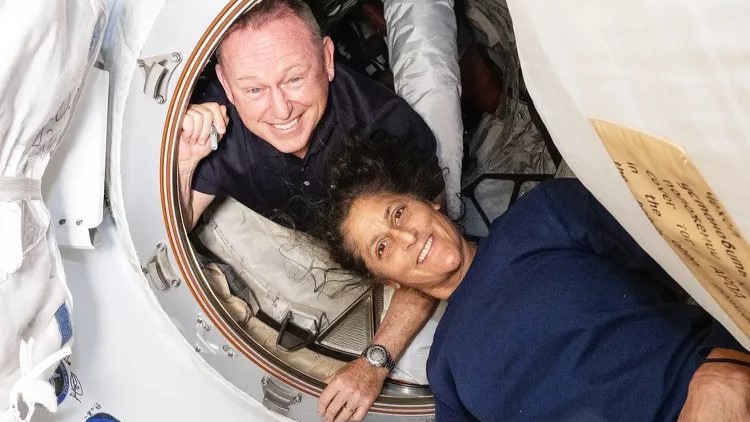
A new report from NASA reveals a stark assessment: the agency has placed Boeing’s unsuccessful 2024 Starliner capsule test flight in the same historical category as some of its most profound challenges, including the catastrophic Challenger and Columbia shuttle disasters, and the perilous Apollo 13 mission.
The U.S. space agency, NASA, has officially labeled the botched flight that left two of its astronauts unexpectedly marooned in space for nine months between 2024 and 2025 as a “Type A mishap.” This designation represents the most critical incident classification within NASA’s comprehensive safety management system.
In the realm of space operations, a Type A mishap signifies the most severe category of incident, declared when one of four critical conditions is met. This classification is triggered by any event resulting in the death or permanent disability of a crewmember, the catastrophic structural failure or disintegration of the spacecraft or its hull, an unplanned deviation from its intended flight trajectory, or when the financial impact of damages incurred by the mission exceeds $2 million.
The comprehensive 282-page report delivered sharp criticisms, pinpointing design flaws, inadequate supervision, and disjointed coordination among the mission’s key stakeholders. Despite these damning findings, NASA has affirmed its commitment to ongoing collaboration with Boeing for further Starliner testing, with the ultimate goal of returning the spacecraft to crewed missions in the years ahead.
**NASA Administrator Jared Isaacman today (Feb. 19) revealed that a recent investigation’s most troubling finding centers not on hardware defects, but on critical shortcomings in leadership decision-making.**
Speaking at a news conference, Isaacman warned that such managerial missteps, if left unaddressed, could foster an internal culture “incompatible with human space flight.”
Consequently, the agency is taking decisive action: Isaacman unequivocally stated that NASA will not authorize another crewed Starliner mission until all underlying technical causes are thoroughly understood and comprehensively corrected.
Newly appointed NASA Administrator Isaacman, who took his oath of office on December 17, 2025, and was not affiliated with the agency during the Starliner mission, has asserted that the spacecraft’s test flight should have been formally declared a Type A mishap.
He contends the severe classification was merited more than a year ago, immediately following revelations that the spacecraft’s faulty thrusters placed the crew in jeopardy. Isaacman affirmed, “The record is now being corrected,” adding a stern promise: “There will be leadership accountability.”
Boeing’s Starliner spacecraft encountered significant technical difficulties almost immediately after launching on its inaugural crewed test flight from Florida’s Cape Canaveral Space Force Station on June 5, 2024. Upon entering orbit, the capsule reported a series of critical anomalies, notably five distinct helium leaks and an equal number of failures within its essential reaction control system (RCS) thrusters.
Engineers were compelled to diagnose problems directly from the source. Investigations at NASA’s Starliner facility in White Sands, New Mexico, pinpointed the likely cause of the issues encountered during the spacecraft’s ascent to the International Space Station (ISS). According to NASA, the Teflon seals within five malfunctioning RCS thrusters are believed to have overheated and deformed, subsequently blocking the flow of propellant.
**NASA and Boeing’s extensive testing extended for weeks and months, keeping astronauts Butch Wilmore and Suni Williams aboard the International Space Station for an extended period.**
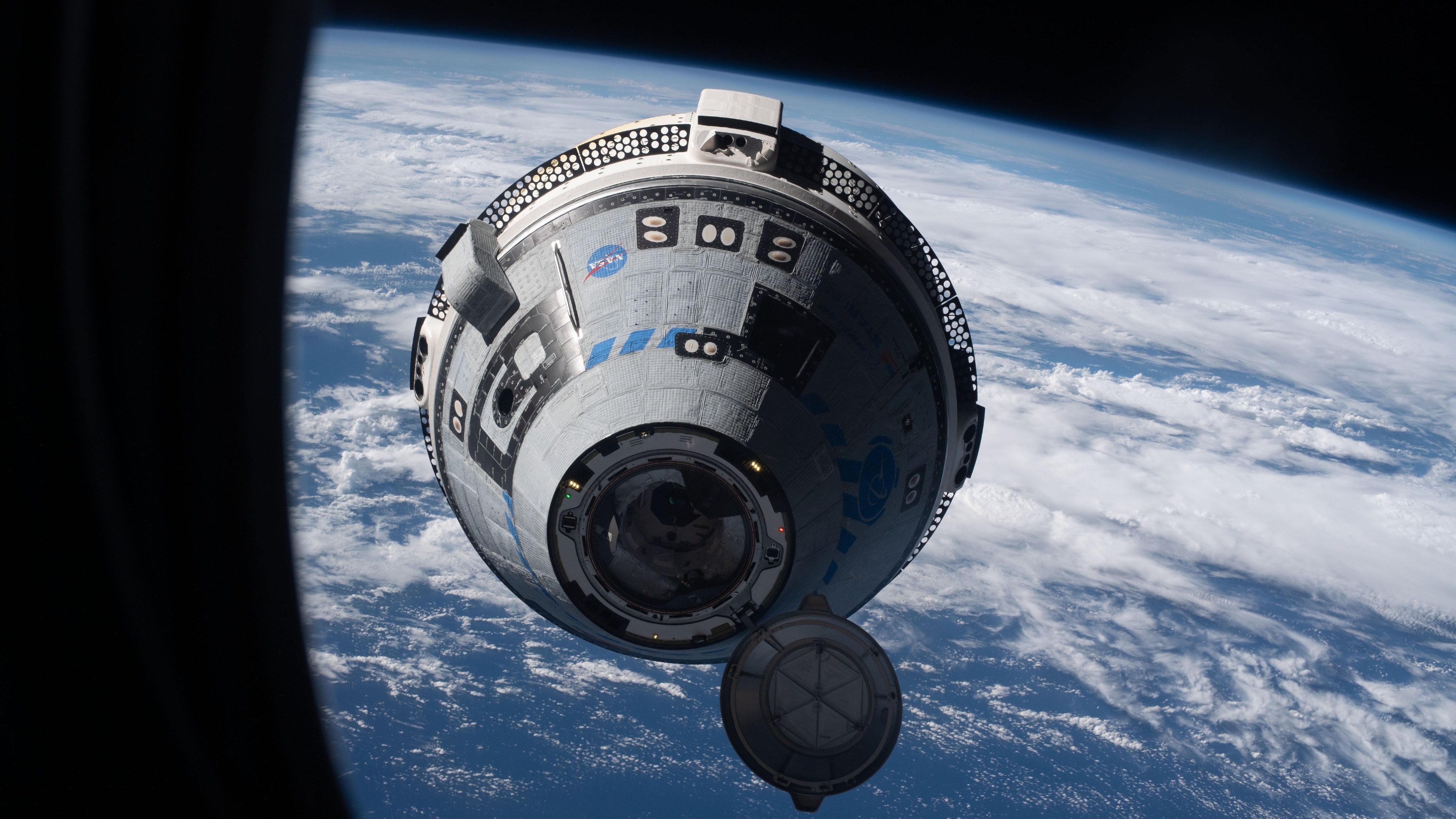
On July 27, 2024, a hot-fire test conducted while the spacecraft was docked with the International Space Station successfully confirmed that thrust levels had returned to normal. However, NASA engineers harbor significant reservations about the craft’s impending return to Earth. A primary concern is the potential for the propulsion issue to re-emerge during the critical descent phase. Compounding these worries are ongoing helium leaks, which threaten to incapacitate several orbital maneuvering and attitude control system (OMAC) thrusters—vital components essential for maintaining the spacecraft’s safe flight path and precise trajectory.
By late August, NASA confirmed plans to return Boeing’s troubled Starliner spacecraft uncrewed, foregoing its original purpose to carry astronauts. This pivotal decision left veteran spacewalkers Butch Wilmore and Suni Williams in orbit for a dramatically extended period. Their mission, initially slated for just an eight-day stay, ultimately stretched to an extraordinary 286 days before their eventual retrieval. The pair finally returned to Earth via a SpaceX Dragon capsule, executing a precision splashdown on March 18, 2025.
Boeing’s Starliner capsule was conceived as a cornerstone of NASA’s Commercial Crew Program, an initiative fostering collaboration between the space agency and private industry. Its critical mission: to ferry astronauts to low Earth orbit, thereby filling the vital void left by the 2011 retirement of NASA’s iconic space shuttle fleet.
However, the Starliner’s development has been plagued by extensive delays and technical challenges, leading to significant financial repercussions for Boeing. As of last year, the aerospace giant had reportedly absorbed approximately $2 billion in losses as it grappled with and sought to rectify myriad setbacks during the capsule’s production.
Despite a highly critical report, [Isaacman’s first name, if known, or “NASA Administrator Isaacman”] reaffirmed the space agency’s commitment to collaborating with Boeing. The objective remains to rectify Starliner’s lingering issues and prepare it for crewed flights, with Isaacman emphasizing that “America benefits by having multiple ways to take our crew and cargo to orbit.”
In a concerted effort, NASA and Boeing engineers are currently conducting extensive testing of Starliner’s Reaction Control System (RCS) thrusters at the White Sands Space Harbor in New Mexico. This rigorous evaluation aims to pave the way for a cargo-only Starliner mission to the International Space Station (ISS), tentatively scheduled to launch as early as April.
The release of this report coincides with heightened scrutiny on NASA, as the agency gears up for the launch of its crewed Artemis II mission to the moon. Central to the Artemis program’s success is Boeing, serving as the prime contractor for the Space Launch System’s (SLS) core stage. This critical role encompassed the design, development, and exhaustive testing of the rocket’s enormous orange fuselage—the massive structure built to house the powerful engines that will provide the initial thrust for liftoff.
Ignoring setbacks and challenging realities, Isaacman asserted, cultivates dangerous complacency. He argued that a refusal to extract lessons from such incidents virtually guarantees their recurrence, fostering a perilous misconception that, in the critical arena of human spaceflight, failure is a permissible option. Isaacman adamantly concluded, “It is unequivocally not.”





