
A quartet of astronauts preparing for a historic lunar expedition will face a brief postponement before their much-anticipated liftoff.
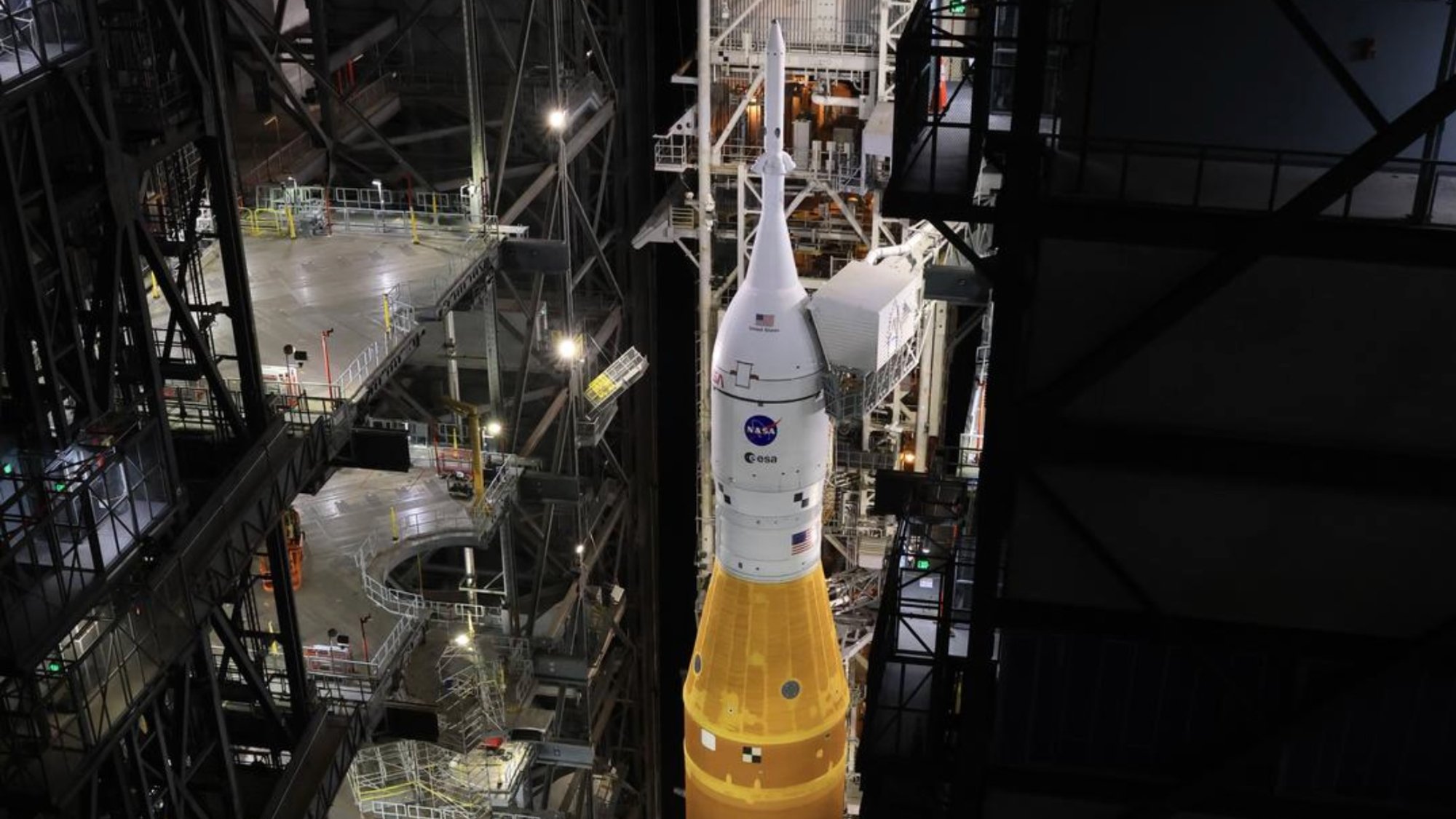
Today, February 25, NASA’s towering Space Launch System (SLS) rocket completed its journey back from Launch Complex-39B (LC-39B) to the secure confines of the Vehicle Assembly Building (VAB) at Kennedy Space Center (KSC) in Florida.
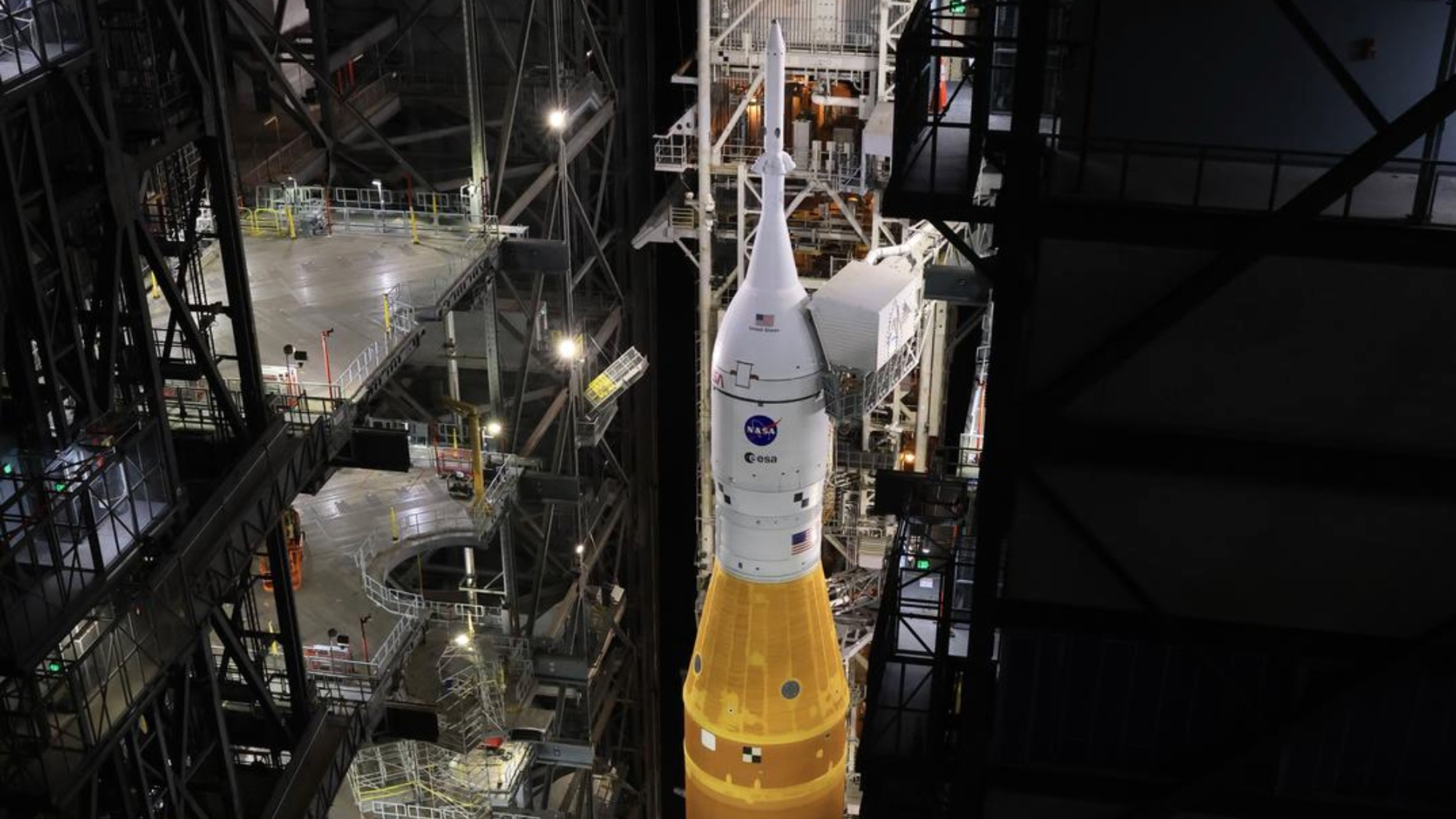
Now safely positioned within the VAB’s High Bay 3, the colossal booster is set for critical work. Engineers will begin tackling issues identified on its upper stage, an area requiring specialized access and a controlled environment not available at the launchpad.
A critical equipment issue has forced a delay for NASA’s highly anticipated Artemis 2 mission, pushing its ambitious lunar voyage to no earlier than April. The spacecraft, initially slated for a launch window that opened March 6, was recently rolled back to the Vehicle Assembly Building (VAB) following the detection of a helium flow malfunction.
This setback postpones the pioneering 10-day journey around the Moon planned for a crew of four astronauts: NASA’s Reid Wiseman, Victor Glover, and Christina Koch, alongside Canadian Space Agency astronaut Jeremey Hansen.
A critical helium anomaly was detected within NASA’s Space Launch System (SLS) rocket overnight between February 20 and 21. This discovery occurred less than 24 hours after the completion of a “wet dress rehearsal,” a comprehensive pre-launch simulation that involved fully fueling the rocket and running through a complete launch countdown.
This rehearsal represented the second fueling test for the SLS, and significantly, it was the first to be officially deemed a success. The initial attempt, conducted on February 2, was prematurely aborted. During that earlier test, a liquid hydrogen leak was identified while the SLS core stage was undergoing propellant loading, leading the mission clock to trigger an auto-abort command at the T-5:15 mark.
During a routine purge and repressurization procedure, NASA’s Space Launch System (SLS) encountered an unexpected technical challenge: engineers were unable to establish the necessary helium flow through the rocket’s Interim Cryogenic Propulsion Stage (ICPS). This operational snag was confirmed by NASA Administrator Jared Isaacman in a February 21 post on X.
A critical dependency on helium for the Interim Cryogenic Propulsion Stage (ICPS) has forced NASA to postpone its rocket launch. The helium tanks are exclusively accessible for maintenance and inspection while the rocket is housed within the Vehicle Assembly Building (VAB). This operational constraint necessitated the rollback of the massive vehicle, leading to an unavoidable launch delay.
Responding to the development, space entrepreneur Isaacman took to X, speculating that the problem could originate from various sources. He emphasized that the return to the VAB was a crucial step, providing engineers the necessary environment to conduct a comprehensive investigation and accurately diagnose the root cause of the anomaly.
The uncrewed Artemis 1 mission in 2022 faced its own significant hurdles during launch preparations, most notably a persistent hydrogen propellant leak. This issue necessitated three complex rollbacks of the Space Launch System (SLS) rocket and Orion spacecraft between the Vehicle Assembly Building (VAB) and Launch Complex 39B over several months. NASA eventually cleared the SLS for launch, culminating in its successful liftoff in November of that year.
Now, as the agency looks ahead to Artemis 2, it is determined to prevent a similar series of extensive delays and rollbacks. Highlighting these preventative measures, NASA’s Isaacman noted in a recent post that “corrective actions were taken to minimize reoccurrence on Artemis 2.”
**Cape Canaveral, Fla. –** The colossal Space Launch System (SLS) rocket began its deliberate journey back to the Vehicle Assembly Building (VAB) this morning, following a “go” order from Artemis 2 launch director Charlie Blackwell-Thompson.
At precisely 9:28 a.m. EST (1428 GMT), Blackwell-Thompson greenlit the rollback, with the first movement of the towering 322-foot (98.15-meter) rocket occurring approximately 10 minutes later, according to a NASA update.
Perched atop NASA’s massive Crawler-Transporter 2, the SLS gracefully descended the gentle slope of Launch Complex 39B, commencing its 4-mile (6.4-kilometer) trek towards its protective hangar.
The colossal crawler-transporter, burdened by the immense weight of its rocket and mobile launch platform, traversed the critical pathway between the launchpad and the Vehicle Assembly Building. Moving with a deliberate, almost imperceptible slowness of approximately 1 mph (1.6 kph), the vehicle’s massive treads systematically pulverized the Alabama river rock-lined road beneath them, reducing the rugged aggregate to a fine sand as it advanced.
The Artemis II stack has successfully completed its 10.5-hour journey back to the Vehicle Assembly Building (VAB) at Kennedy Space Center, arriving at approximately 8 p.m. EST on February 25 (0100 GMT, February 26), NASA officials confirmed.
Now securely housed within the VAB, engineers will focus on diagnosing and repairing critical issues identified in the rocket’s upper stage. The agency’s objective is to resolve these concerns promptly, enabling the Space Launch System (SLS) to be transported back to Launch Complex 39B.
This repositioning is anticipated to precede a crucial third wet dress rehearsal. All efforts are geared towards meeting the early April launch window for the Artemis II mission, which opens on April 1, with additional opportunities available daily from April 3 through April 6.





