
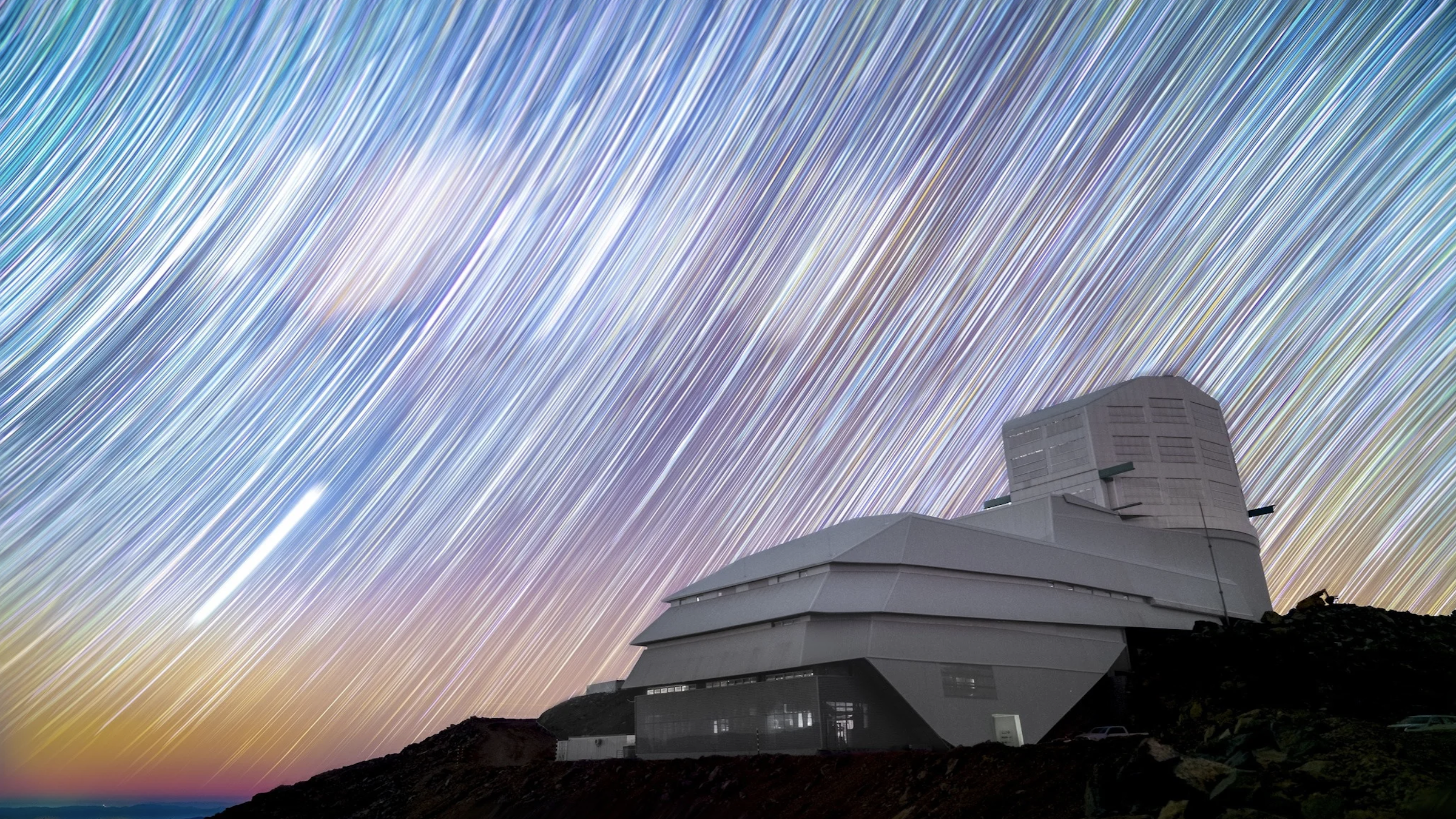
In an immediate demonstration of its immense capabilities, the newly commissioned Vera C. Rubin Observatory issued an astonishing 800,000 astronomy alerts over a single night. This unprecedented volume of cosmic discoveries is set to skyrocket, with projections indicating its nightly output will grow by nearly a factor of ten before the close of this year.
Perched high on Chile’s Cerro Pachón mountain, a powerful telescope meticulously surveys the entire celestial sphere, now issuing vital alerts. These real-time notifications are designed to steer scientists toward groundbreaking discoveries, ranging from newly identified asteroids and cataclysmic stellar explosions (supernovae) to a myriad of other transient phenomena reshaping the cosmos. The revelation comes from a statement released by representatives for the U.S. National Science Foundation (NSF).
While currently in its nascent operational phase, the Rubin Observatory is projected to reach an immense scale. Scientists anticipate that it will eventually deliver a staggering 7 million alerts every night.
Luca Rizzi, an NSF program director for research infrastructure, emphasized the observatory’s groundbreaking capability, explaining that it will “empower scientists with a vast, continuous stream of cosmic information.” This unprecedented access, he noted, will allow researchers to meticulously track “the universe’s events as they dynamically unfold, spanning the spectrum from violent explosions to the most subtle and fleeting celestial phenomena.”
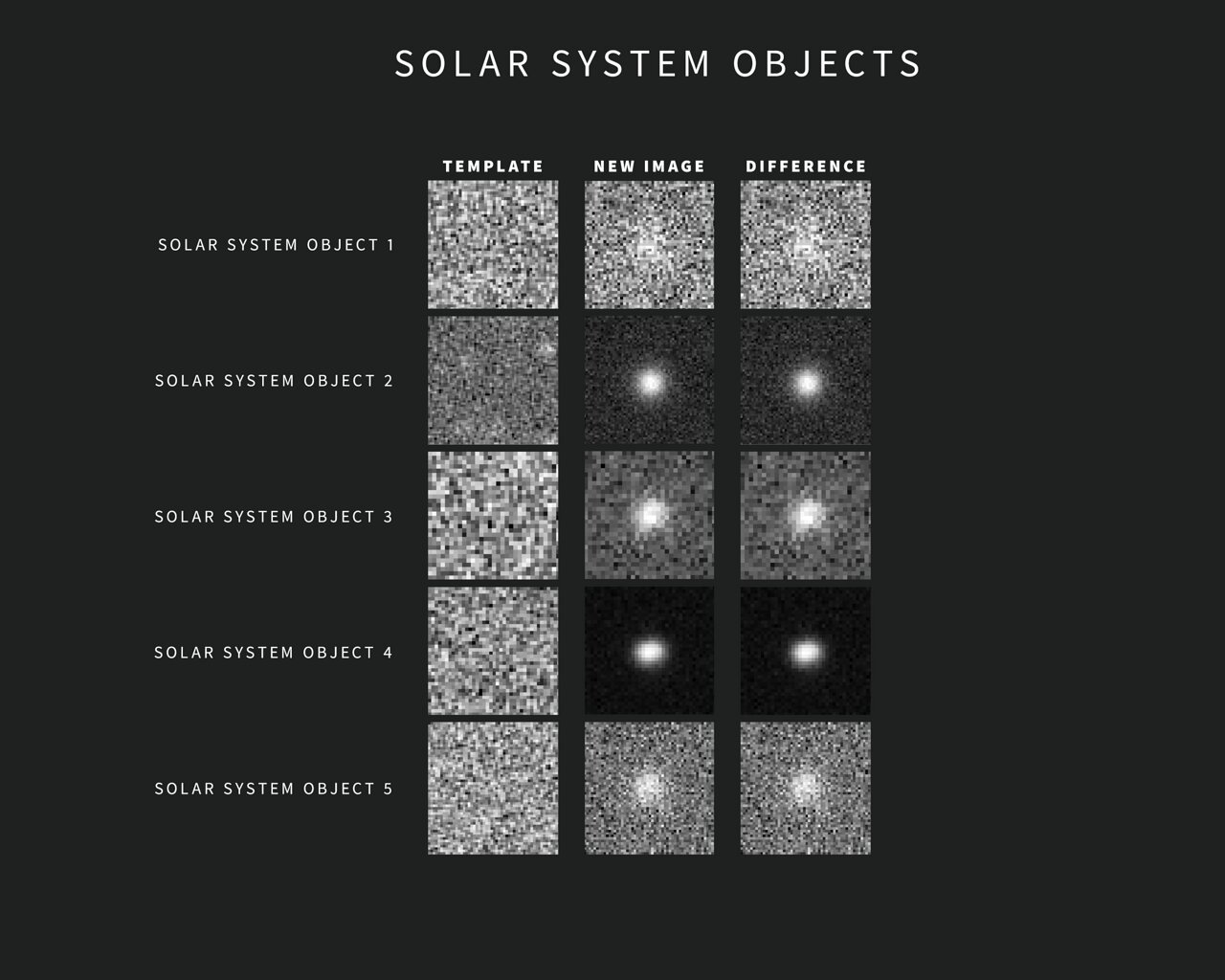
The National Science Foundation (NSF) highlights that these alerts will usher in an unprecedented era of scientific collaboration. This capability stems from Rubin’s rapid detection of celestial phenomena, which will allow other ground-based and space-borne telescopes to swiftly conduct coordinated follow-up observations.
Furthermore, these timely notifications are anticipated to be crucial in shedding light on long-standing astronomical mysteries, particularly those demanding quick targeting and comprehensive data acquisition for their resolution.
Scientists are poised to gain a significantly enhanced capability for observing supernovae in their earliest moments, tracking potentially hazardous asteroids to assess threats to Earth, and identifying rare interstellar objects as they race through our solar system, National Science Foundation (NSF) representatives affirmed. This wealth of critical data, they noted, will subsequently empower researchers to delve deeper into the nature of dark matter, dark energy, and the cosmos’s many other unsolved mysteries.
The Rubin Observatory is preparing to launch its crucial alert system, a significant step preceding the start of its ambitious 10-year program, the Legacy Survey of Space and Time (LSST), later this year. Once operational, Rubin will embark on nightly sky scans, utilizing the world’s largest digital camera to construct a detailed mosaic of the entire Southern Hemisphere sky every few nights. This unprecedented imaging capability is designed to meticulously detect any subtle or significant changes in the cosmic landscape above.
The Rubin Observatory stands to revolutionize astronomy with its “singular capacity to document both the fleeting, instantaneous alterations and the profound, slow-motion transformations unfolding across the celestial sphere,” explained Rosaria Bonito. Bonito, a researcher at the Italian National Institute for Astrophysics and co-chair of the Rubin LSST Transients and Variable Stars science collaboration, highlighted this dual observational power as the observatory’s most revolutionary asset.
Unveiled in June 2025, the observatory’s inaugural images delivered an astronomical bounty. These initial captures showcased more than 10 million galaxies within and surrounding the Virgo Cluster, a significant number of which had never before been documented or studied. Adding to the remarkable haul, the observatory also pinpointed 2,000 previously undiscovered asteroids, a feat accomplished after merely a few nights of dedicated observation.
The Legacy Survey of Space and Time (LSST) program is poised to revolutionize astronomical observation, according to the National Science Foundation (NSF). Its scale is unprecedented: in its inaugural year alone, LSST is projected to image more night-sky objects than all other optical observatories combined have managed throughout human history.
This monumental undertaking will generate a staggering 10 terabytes of data from its observations every single night. To manage this immense influx and achieve its ambitious scientific goals, significant foundational engineering was imperative, encompassing pioneering advancements in image processing methodologies, the development of robust database systems, and innovative solutions for efficient data distribution.
All advisories issued by the observatory are freely available for public access and review on the ANTARES public alert broker website.
**Editor’s Note:** This article received an update on February 26 at 2:50 p.m., incorporating additional images and new quotes.





