
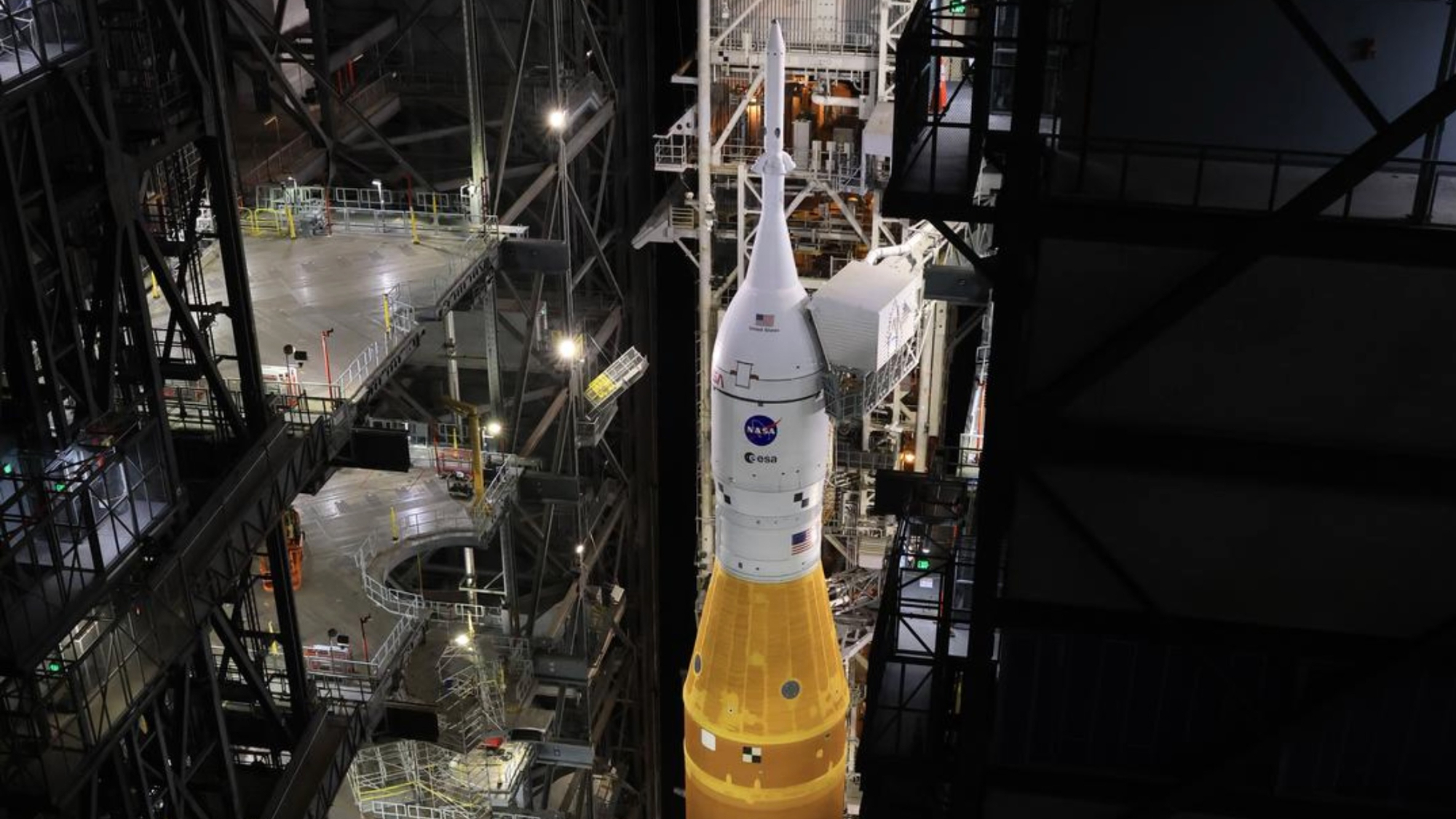
NASA’s highly anticipated lunar mission has been rescheduled and is now proceeding as planned.
**Artemis 2 Managers Convene for Crucial Flight Readiness Review as SLS Rocket Nears Launch Pad**
Mission managers for the upcoming Artemis 2 mission have concluded a two-day flight readiness review (FRR), a critical step before the Space Launch System (SLS) rocket and its Orion capsule make their way back to the launch pad. This review signals the final assessment of the mission’s preparedness for its planned liftoff.
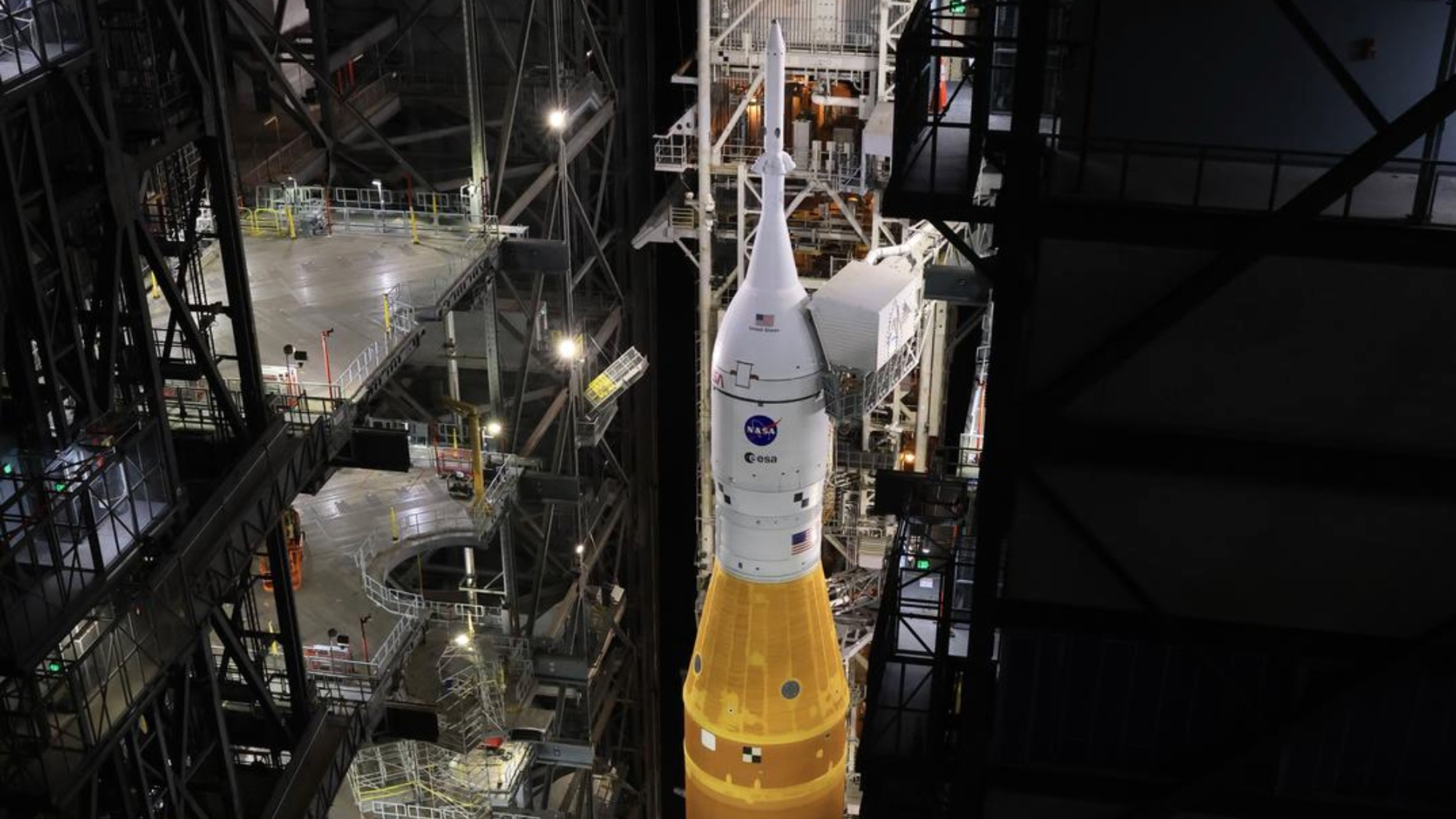
The SLS rocket recently underwent and completed necessary repairs within the Vehicle Assembly Building (VAB) at NASA’s Kennedy Space Center (KSC) in Florida. Following the successful completion of these repairs, ground crews are now gearing up to prepare the massive rocket for its journey to Launch Complex-39B, marking a significant milestone in the lead-up to the mission’s launch.
NASA has announced that the highly anticipated rollout is now slated for March 19. Agency officials confirmed today, March 12, that the launch is being targeted for as early as April 1.
NASA is prioritizing safety above all else as it prepares for its next launch opportunity, despite a compressed timeline. This commitment was underscored during the flight readiness review, which agency officials described as exceptionally comprehensive and transparent.
“We had extremely thorough discussions — very open, transparent,” stated Lori Glaze, NASA’s acting associate administrator for Exploration Systems Development, during a press briefing following the review. While acknowledging the swift schedule, NASA leadership emphasized that rigorous evaluation is paramount to ensuring mission success and crew well-being.
Glaze detailed the organization’s strategic approach to risk, specifically addressing how potential vulnerabilities are being mitigated. The discussion also encompassed a comprehensive review of past challenges, highlighting the corrective actions and solutions implemented. Furthermore, Glaze outlined the critical work still ahead, laying out the strategies for completing outstanding tasks and navigating future obstacles.
Marking a monumental return to lunar exploration, NASA’s Artemis II mission is poised to launch the first human crew towards the Moon in over 50 years. This pioneering 10-day journey aboard the Orion spacecraft will carry NASA astronauts Reid Wiseman, Victor Glover, and Christina Koch, alongside Canadian astronaut Jeremy Hansen, on a trajectory that will loop around the Moon and bring them safely back to Earth.

Originally slated for launch earlier this month, the mission has encountered delays stemming from technical issues with the Space Launch System (SLS).
The rocket faced initial difficulties during its first “wet dress rehearsal” (WDR) countdown simulation, experiencing an unsteady fueling test. However, the SLS successfully completed this critical procedure during a second attempt in February. Subsequent post-WDR inspections, though, revealed a disruption in the helium flow within the SLS upper stage. This discovery necessitated the rocket’s rollback to the Vehicle Assembly Building (VAB) on February 25 for essential repairs.
Following its return to the hangar, NASA engineers successfully diagnosed and rectified the technical issue, instilling sufficient confidence to target Artemis II’s April launch opportunity.
Investigators traced the problem to a quick-disconnect (QD) seal located on the Space Launch System’s (SLS) upper stage. These QDs serve as crucial interfaces, facilitating the transfer of fuel from the launch tower’s umbilicals into the rocket. This incident echoes a similar hydrogen leak detected from a first-stage QD during the inaugural Artemis II Wet Dress Rehearsal, which previously resulted in an aborted countdown.
**HOUSTON, TX** – A critical engineering solution for the upcoming Artemis 2 lunar mission has been successfully implemented and approved, Exploration Ground Systems Program Manager Shawn Quinn announced during today’s briefing.
Quinn detailed how a collaborative effort, pooling talent from both ground systems and Space Launch System (SLS) engineering teams, devised a crucial design fix for the Quick Disconnect (QD) component. This solution underwent rigorous testing on a dedicated article and has since achieved full qualification for flight.
“Our combined engineering teams across our ground systems and SLS teams came up with a design fix,” Quinn stated. “That design fix was implemented on a test article, and we have successfully tested it, and we have qualified it for use on Artemis 2, and the modified QD is already on the upper stage.”
The modified QD is now fully integrated into the mission’s upper stage, ensuring readiness for the historic lunar journey.
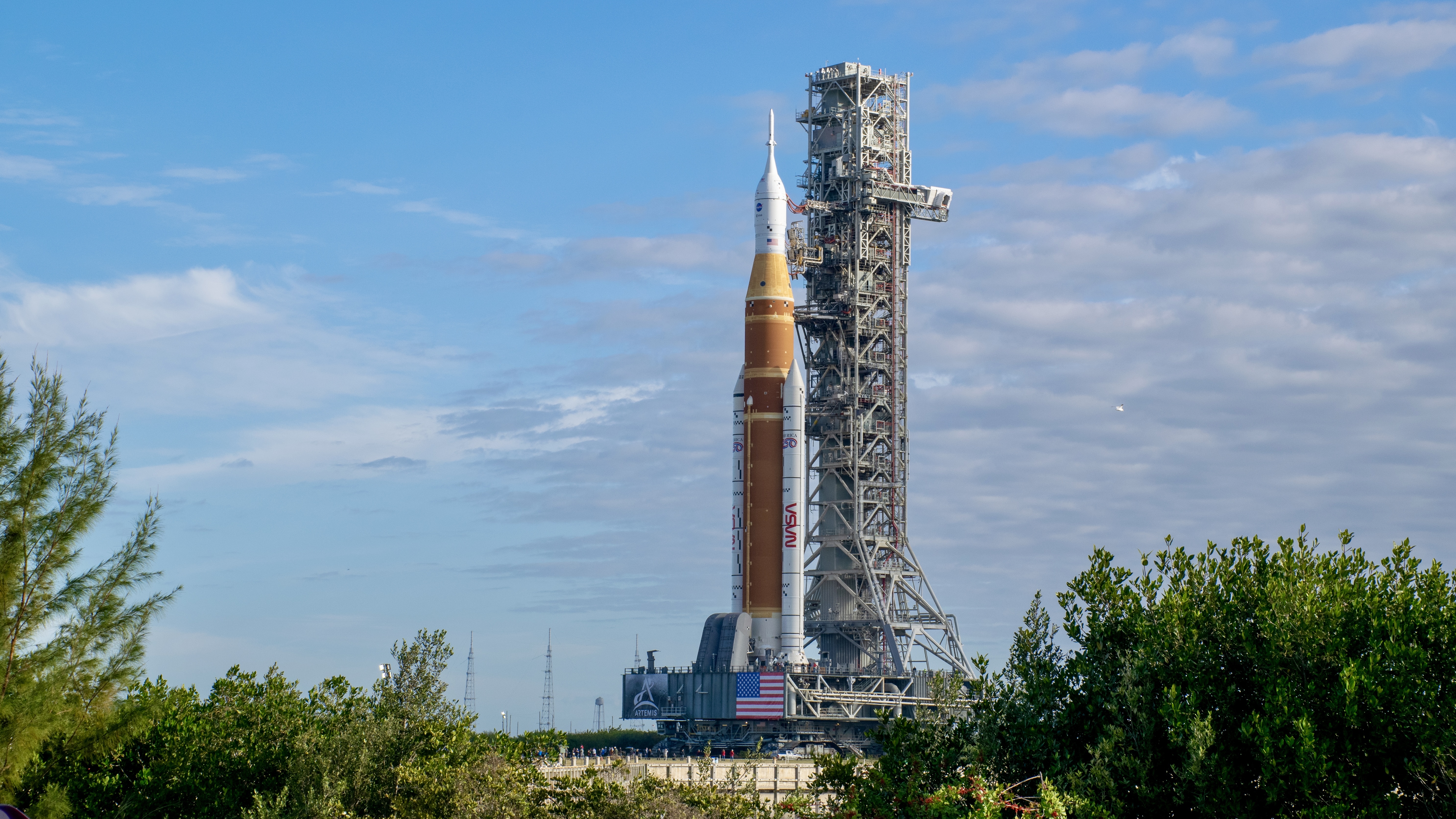
NASA’s top officials now convey a high degree of certainty regarding the rocket’s operational readiness, setting April 1 as the earliest possible date for liftoff.
Helium, a vital component for both maintaining specific environmental systems and pressurizing the Space Launch System (SLS) propellant tanks, experienced a flow issue. This anomaly was detected following the successful completion of the second Artemis II Wet Dress Rehearsal (WDR) but, crucially, did not compromise the integrity or outcome of that critical test.
With the issue now fully resolved, NASA officials have determined that a third fueling test will be unnecessary once the Artemis II stack returns to the launchpad. The mission is therefore cleared to proceed directly toward its launch opportunity, bypassing further preparatory fueling evaluations.
Here are a few paraphrased options, keeping a journalistic tone:
**Option 1 (Focus on consequence):**
> According to Glaze, each time the vehicle experiences a “tank,” it subtly degrades the vehicle’s operational capacity, a detail he shared with Space.com during a briefing today.
**Option 2 (More direct):**
> During a briefing today, Glaze explained to Space.com that every instance of the vehicle “tanking” incrementally diminishes its overall lifespan.
**Option 3 (Slightly more evocative):**
> Glaze revealed to Space.com today that the vehicle’s performance suffers a cumulative toll with each “tank,” effectively shortening its operational life.
**Option 4 (Concise and active):**
> Each “tank” the vehicle experiences chips away at its lifespan, Glaze stated to Space.com during a briefing held today.
Choose the option that best fits the flow and emphasis of your surrounding text.
Here are a few paraphrased options, maintaining a journalistic tone and focusing on originality:
**Option 1 (Focus on preparedness):**
> “The team and the hardware have undergone rigorous testing,” a spokesperson stated. “Looking ahead, when the vehicle undergoes its next simulated failure, my preference is for that event to coincide with an actual launch opportunity, allowing us to proceed with a ‘go’ for launch.”
**Option 2 (More direct and action-oriented):**
> “We’ve thoroughly tested both our personnel and the equipment,” she explained. “My aim is to ensure that the next time we intentionally simulate a vehicle failure, it occurs on a day when a launch is actively planned, so we can confidently give the ‘go’ to proceed.”
**Option 3 (Emphasizing a desired outcome):**
> “Extensive simulations have been completed for both the team and the hardware,” she confirmed. “Ultimately, I want our next scheduled vehicle ‘tanking’ exercise to happen on a day when a launch is feasible, enabling us to make the decision to ‘go’ for liftoff.”
**Option 4 (Concise and impactful):**
> “The team and the hardware have been exercised,” she stated, adding, “My goal is for the next vehicle tanking exercise to occur on a day we can actually launch, so we can poll ‘go’ and proceed.”
Each option aims to rephrase the original statement while retaining the core message of thorough testing and a desire for simulated failures to align with actual launch windows for optimal readiness.
Here are a few paraphrased options, each with a slightly different emphasis, while maintaining a journalistic tone:
**Option 1 (Focus on Progression):**
> Building on the success of its predecessor, Artemis 2 marks a significant leap forward for NASA’s ambitious Artemis program. While the Artemis 1 mission in November 2022 saw an uncrewed Orion capsule journey to lunar orbit to validate its systems, Artemis 2 will be the groundbreaking first flight to carry a human crew. This mission’s primary objective is to rigorously test the Orion capsule’s capacity to sustain astronauts on an extended voyage into deep space.
**Option 2 (Focus on the “First”):**
> The upcoming Artemis 2 mission is poised to make history as the first crewed flight of NASA’s Artemis program, a crucial step beyond the program’s initial uncrewed test. Artemis 1, launched in November 2022, successfully sent an Orion capsule without astronauts to lunar orbit for system certification. Now, Artemis 2 will put the spacecraft through its paces with a human crew onboard, aiming to confirm its life-support capabilities for deep space exploration.
**Option 3 (Concise and Direct):**
> NASA’s Artemis 2 mission represents a pivotal moment, transitioning from an uncrewed test to the program’s inaugural crewed flight. Following the November 2022 Artemis 1 mission, which certified the Orion spacecraft’s systems in lunar orbit without passengers, Artemis 2 will focus on ensuring the capsule’s ability to support astronauts during a deep space journey.
**Option 4 (Slightly more evocative):**
> Set to embark on a pioneering journey, Artemis 2 will be the first manned mission in NASA’s Artemis program, following in the wake of a successful uncrewed test. The Artemis 1 flight in November 2022 saw the Orion capsule navigate lunar orbit, proving its technical readiness. Now, Artemis 2 is tasked with a more profound challenge: demonstrating the Orion’s capability to safely carry and support astronauts on a voyage far beyond Earth.
Each of these options aims to rephrase the original text using different sentence structures and vocabulary, while clearly conveying that Artemis 2 is the first crewed mission following an uncrewed test of the Orion capsule in lunar orbit, with the goal of verifying its deep space suitability for astronauts.
NASA’s ambitious Artemis program is charting a course for humanity’s long-term presence on and in orbit around the Moon. This lunar endeavor is viewed as a crucial stepping stone, intended to cultivate the expertise and technological capabilities necessary for establishing a crewed Martian base, a feat the agency aims to accomplish in the 2040s. Originally, Artemis 2 was conceived as a preparatory mission leading up to the groundbreaking Artemis 3 lunar landing in 2028. However, recent strategic adjustments within NASA have led to a significant revision of these plans.
Here are a few options for paraphrasing the provided text, each with a slightly different journalistic emphasis:
**Option 1 (Concise and Direct):**
> While the path for Artemis 2 remains set—a lunar flyby and return to Earth—plans for subsequent missions have seen a significant adjustment. Artemis 3 will forgo a lunar landing, shifting its objective to complex rendezvous and docking operations. This mission will involve NASA’s Orion spacecraft interacting with lunar landers developed by private companies SpaceX and Blue Origin. Both companies have secured contracts to support future crewed landings, and NASA has signaled flexibility in selecting the first operational lander based on readiness.
**Option 2 (Emphasizing the Shift in Strategy):**
> NASA’s Artemis program is undergoing a strategic recalibration, even as the Artemis 2 mission proceeds with its planned figure-eight trajectory around the Moon. The focus for Artemis 3 has dramatically changed: instead of touching down on the lunar surface, this mission will now concentrate on critical in-space maneuvers. Astronauts aboard Orion will practice linking up with lunar landers from SpaceX and Blue Origin, the very companies contracted to provide the crucial landing capabilities for future Artemis expeditions. NASA’s willingness to prioritize readiness in selecting its landing partners underscores the evolving nature of the program.
**Option 3 (Highlighting Private Sector Involvement):**
> The Artemis 2 mission’s lunar flyby and return journey remains on track, but the future landscape of lunar exploration is shifting. Artemis 3 will no longer feature a historic moon landing. Instead, this pivotal mission will pivot to testing the intricate dance of rendezvous and docking between NASA’s Orion capsule and the lunar landers built by private aerospace giants SpaceX and Blue Origin. These companies, holding NASA contracts for future landing services, are central to the agency’s strategy, which is now prioritizing the spacecraft that can achieve operational status first.
**Key changes made across these paraphrases:**
* **Vocabulary:** Replaced “unchanged,” “shifted slightly,” “no longer,” “focus on,” “indicated a willingness” with synonyms like “remains set,” “significant adjustment,” “forgo,” “concentrate on,” “practice,” “pivot to testing,” “prioritizing.”
* **Sentence Structure:** Varied sentence beginnings and combined or separated clauses for better flow.
* **Emphasis:** Each option subtly highlights different aspects – the directness of the plan, the strategic shift, or the role of private companies.
* **Tone:** Maintained a professional, journalistic tone, avoiding overly technical jargon while remaining informative.
* **Originality:** Ensured the phrasing is distinct from the original while preserving all factual information.
NASA’s ambitious lunar program, Artemis, remains on track to achieve its 2028 objective of landing astronauts on the Moon. However, the agency has adjusted the timeline for the inaugural crewed lunar landing, now targeting the Artemis 4 mission. Following this, NASA plans to conduct a subsequent lunar landing with the Artemis 5 mission, aiming to achieve this significant milestone within a year of its predecessor’s mission.
**NASA’s Artemis 2 Mission: Contingency Launch Windows Identified**
Should the planned April 1 launch of the Artemis 2 mission encounter unforeseen delays, NASA has secured alternative launch opportunities. A subsequent window is available from April 2 through April 6, followed by another potential opening on April 30, with the possibility of extending into early May. These backup dates provide flexibility for the critical mission to send astronauts around the Moon.