For future astronauts venturing to the Moon, waking up early might be more than just a habit – it could be a health imperative. Scientists have uncovered what appears to be a natural “cavity” of significantly reduced cosmic radiation in the lunar vicinity.
This intriguing discovery offers a potential strategy to safeguard human health during upcoming lunar missions. By strategically scheduling demanding surface operations, such as extravehicular activities (EVAs) or equipment deployment, during the Moon’s local “morning” hours, mission planners could drastically lower astronauts’ exposure to the hazardous cosmic radiation prevalent in space. The finding provides a crucial new tool in the ongoing effort to mitigate risks for lunar explorers, transforming the simple concept of “morning” into a vital protective window.
Data gathered by China’s Chang’e-4 lunar lander has revealed a surprising finding: Earth’s magnetic field may extend its influence much farther into space than scientists previously understood. This significant discovery, according to researchers, directly challenges the long-standing assumption that galactic cosmic rays are uniformly distributed across the vast expanse between Earth and the Moon, particularly in regions considered beyond our planet’s established magnetic shield.
A recent study, published Wednesday (March 25) in the journal *Science Advances*, has revealed a notable decrease in galactic cosmic ray intensity on the moon’s surface. Scientists analyzed data from the Lunar Lander Neutron and Dosimetry (LLND) experiment, a key instrument aboard China’s Chang’e-4 mission, to uncover this phenomenon. Researchers specifically reported observing this reduction in cosmic rays during the moon’s local morning, typically a few hours after lunar sunrise.
For astronauts venturing beyond the protective confines of low Earth orbit, cosmic rays represent a substantial radiation hazard. These high-energy particles possess the ability to penetrate both spacecraft and human tissue, causing cellular DNA damage and significantly elevating cancer risks.
With an increased focus on crewed lunar missions, beginning with NASA’s Artemis II mission slated for launch as early as April 1, researchers are emphasizing the critical need for more precise radiation intensity maps. Such comprehensive mapping, they assert, would be instrumental in guiding mission planners to minimize astronaut exposure during vital surface operations.
Future lunar expeditions are likely to set their sights on the Moon’s polar regions, strategically chosen for their potential to offer near-permanent sunlight. This perspective comes from Professor Robert Wimmer-Schweingruber, a corresponding author of a recent study and a distinguished professor at Kiel University’s Institute of Experimental and Applied Physics in Germany.
Wimmer-Schweingruber also highlighted optimal timing for astronaut activities. He suggests that scheduling excursions during the lunar morning could significantly enhance crew safety by reducing radiation exposure on astronauts’ skin by approximately 20% when compared to average radiation levels experienced elsewhere on the Moon.
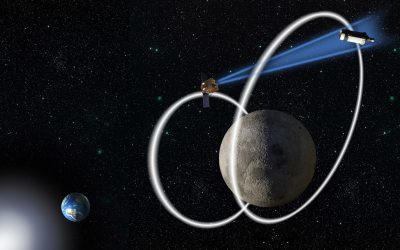
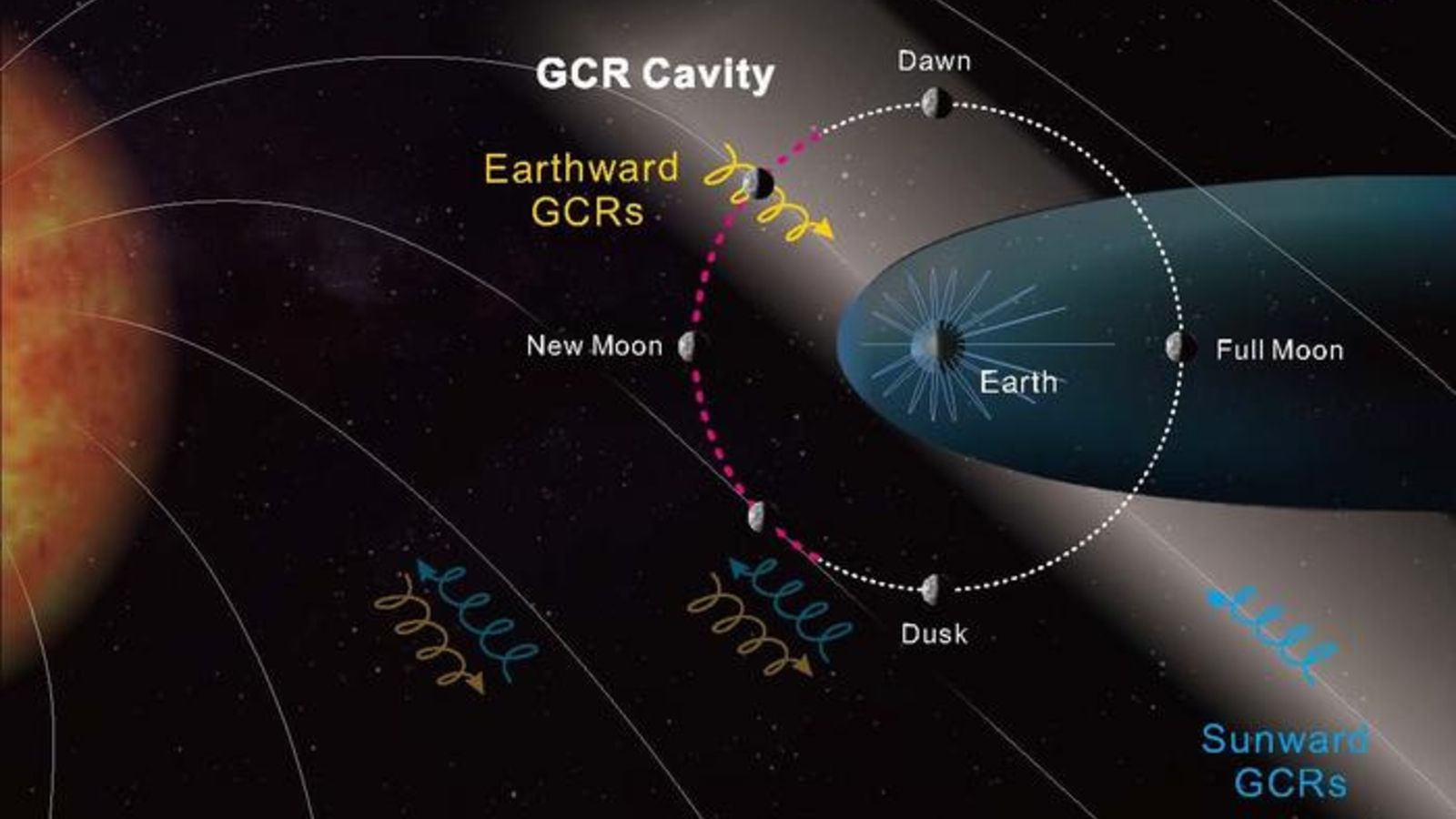
To pinpoint the enigmatic cosmic-ray cavity, scientists undertook a rigorous examination of data gathered across 31 lunar cycles, specifically from January 2019 to January 2022. Their analysis strategically concentrated on “quiet times” in the solar cycle, periods when galactic cosmic rays represent the dominant source of measured space radiation. The core of their investigation involved tracking recurring fluctuations in the proton counts recorded by China’s Chang’e-4 lunar lander, correlating these changes with the Moon’s varying orbital positions around Earth.
Data from the Lunar Lander Neutron and Dosimetry (LND) instrument reveals a significant fluctuation in galactic cosmic ray (GCR) protons, particularly when analyzed by lunar local time and energy. Researchers observed that lower-energy protons, those measuring between 9.18 and 34.14 mega-electron-volts (MeV), experienced an approximate 20% reduction. This notable decline occurred during the moon’s local morning, coinciding with its waxing gibbous phase – the period of increasing illumination between a new moon and a full moon – compared to measurements taken in later hours of the lunar day.
Here are a few paraphrased options, maintaining a journalistic tone and focusing on originality:
**Option 1 (Concise & Direct):**
> Scientists pinpointed a recurring dip in cosmic ray radiation during a specific phase of the moon’s waxing cycle. This observation led them to hypothesize that the moon was traversing a region shielded by Earth’s magnetic field, which they proposed was deflecting high-energy protons. To test this theory, researchers simulated the path of these protons around the moon’s orbit, successfully replicating the identified radiation deficit.
**Option 2 (Slightly More Elaborate):**
> The researchers noticed a distinct and predictable dip in cosmic ray levels, specifically during a certain point in the moon’s waxing phase. This pattern, rather than a general decline, suggested the moon was passing through an actual area of diminished radiation. Their explanation: Earth’s magnetic field was acting as a shield, blocking a portion of high-energy protons. To validate this, the team conducted orbital simulations of proton trajectories, which confirmed the existence of this “cavity” in the radiation field.
**Option 3 (Focus on the Inference):**
> The key to the team’s deduction lay in the timing of a cosmic ray decrease: it consistently appeared during a particular stage of the moon’s waxing period. This specificity led them to conclude that the moon wasn’t experiencing a uniform reduction in radiation, but rather was moving through a localized “dead zone.” They theorized this phenomenon was caused by Earth’s magnetic field diverting high-energy protons. Subsequent simulations of these protons’ journey along the moon’s orbit supported their hypothesis, revealing a similar radiation void.
**Key changes and why they work:**
* **”Decrease showed up” / “dip in cosmic ray radiation”:** More active and descriptive verbs.
* **”Specific, recurring part of the moon’s waxing phase” / “recurring dip…during a specific phase of the moon’s waxing cycle” / “consistently appeared during a particular stage of the moon’s waxing period”:** Rephrased to avoid repetition and offer variety.
* **”Rather than across all times” / “This pattern, rather than a general decline”:** Clarifies the contrast.
* **”Inferred” / “hypothesize” / “deduction” / “theorized”:** Uses synonyms that are common in scientific reporting.
* **”Real region of reduced cosmic ray radiation” / “region shielded by Earth’s magnetic field” / “actual area of diminished radiation” / “localized ‘dead zone'”:** More evocative language.
* **”Believed was being created as Earth’s magnetic field blocked some high-energy protons” / “which they proposed was deflecting high-energy protons” / “caused by Earth’s magnetic field diverting high-energy protons”:** Varied phrasing for the mechanism.
* **”To investigate this idea” / “To test this theory” / “To validate this”:** Clear transitions to the next step.
* **”Ran simulations” / “conducted orbital simulations” / “Subsequent simulations”:** Action-oriented and professional.
* **”Found the same cavity” / “successfully replicating the identified radiation deficit” / “confirmed the existence of this ‘cavity’ in the radiation field” / “revealing a similar radiation void”:** Stronger conclusions.
“Frankly, the discovery of this ‘shadow’ or cavity caught me by surprise,” stated Wimmer-Schweingruber. “While it seems logical in hindsight, my initial reaction was one of considerable skepticism, prompting our team to conduct extensive verification tests,” he explained.
Here are a few paraphrased options, each with a slightly different emphasis, while maintaining a journalistic tone:
**Option 1 (Focus on the shift in understanding):**
> New research is reshaping our understanding of cosmic radiation’s journey between Earth and the moon. Previously, the scientific consensus held that galactic cosmic rays, after penetrating Earth’s magnetic shield, dispersed relatively uniformly throughout the lunar region, with minimal further influence from our planet’s magnetic field.
**Option 2 (More direct and active voice):**
> Scientists have uncovered a new perspective on the behavior of cosmic radiation in the space between Earth and its moon. The prevailing scientific view had been that, once galactic cosmic rays breached Earth’s magnetosphere, they would distribute evenly and experience only minor impacts from Earth’s magnetic field within this region.
**Option 3 (Emphasizing the “surprise” element):**
> Contrary to previous assumptions, new findings reveal a more complex picture of cosmic radiation dynamics in the Earth-moon system. Scientists had largely operated under the belief that galactic cosmic rays, once past Earth’s protective magnetosphere, would spread out evenly and be largely unperturbed by our planet’s magnetic field in the vastness of space leading to the moon.
**Option 4 (Concise and to the point):**
> A revised understanding of cosmic radiation’s behavior between Earth and the moon has emerged from recent discoveries. The long-held scientific belief was that galactic cosmic rays, after entering Earth’s magnetosphere, distributed evenly throughout this space with minimal interaction from Earth’s magnetic field.
**Earth’s Magnetic Shield Extends Its Reach Far Beyond Expectations**
The Earth’s protective magnetic field, known as the magnetosphere, exerts an influence on space much farther out than previously understood. Researchers have discovered that this magnetic influence extends into areas they did not anticipate.
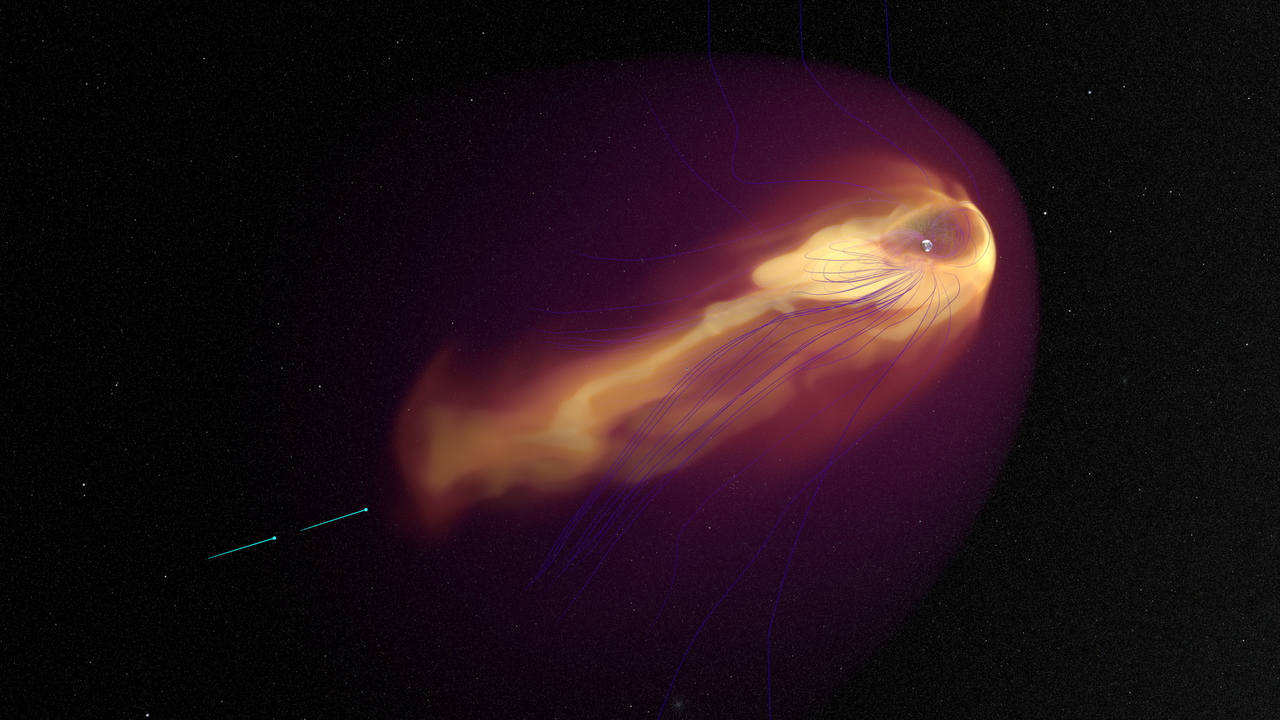
While the team, led by Professor Wimmer-Schweingruber, expected to observe Earth’s magnetic tail – the elongated stream of magnetic field stretching away from the sun on the planet’s night side – affecting its surroundings, they were surprised to find a similar magnetic effect occurring on the sunward side of the magnetosphere. This finding suggests that Earth’s magnetic influence is more pervasive in space than current models account for.
Future research, utilizing more extensive data, holds the key to precisely mapping the dimensions and understanding the dynamics of this lunar cavity. Such insights could significantly advance the practicalities of space exploration on the Moon. Wimmer-Schweingruber offered a straightforward piece of advice for safeguarding lunar expeditions, drawing a parallel to terrestrial safety: “Astronauts should prioritize venturing onto the Moon’s surface during the local morning hours, much like we do for our own safety on Earth.”