
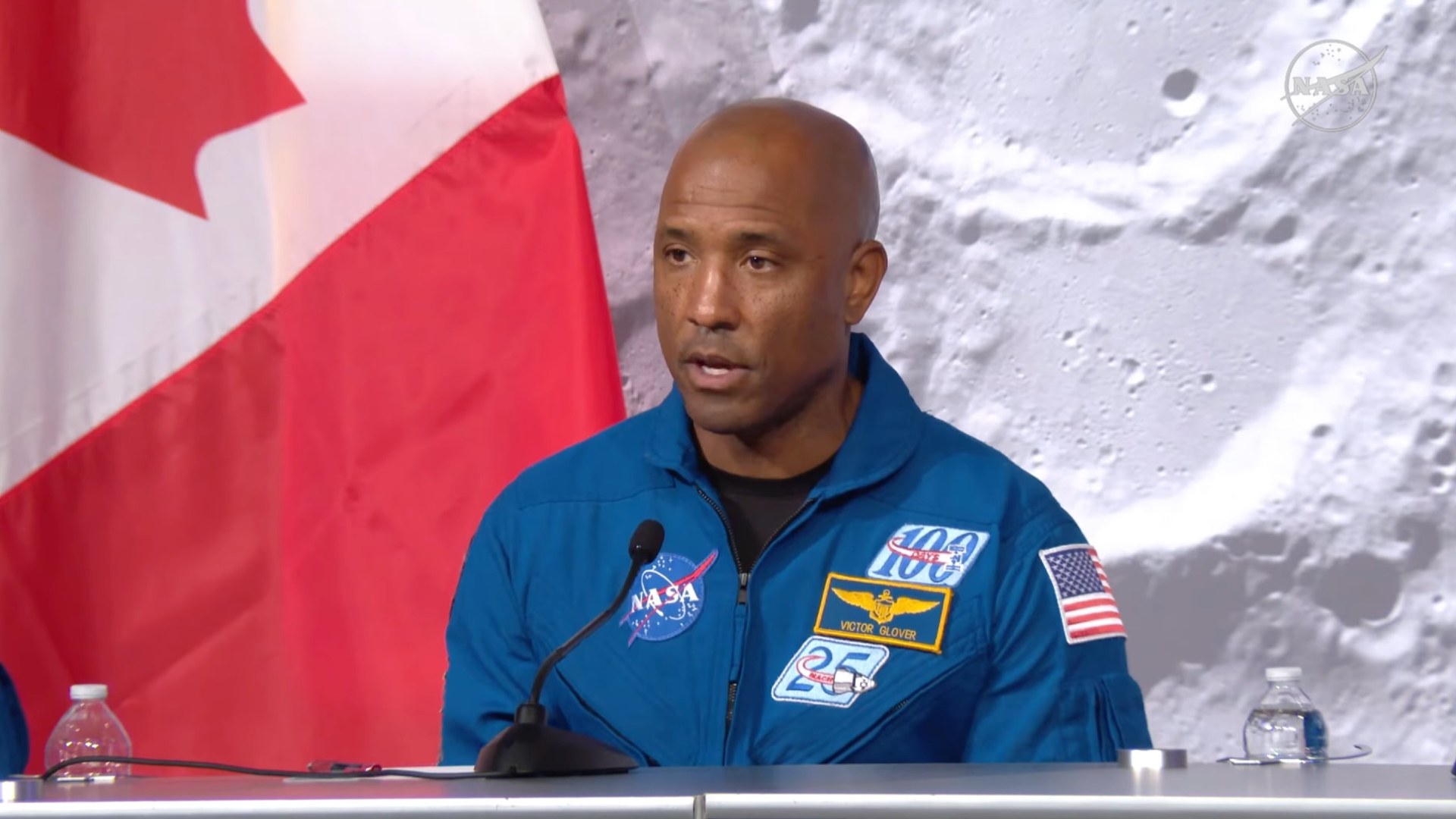
Astronaut Victor Glover has articulated a clear priority: to actively engage and solicit insights from all audiences as they learn about his forthcoming lunar mission. Crucially, he aims to prioritize perspectives from those who typically remain outside the orbit of traditional space enthusiasts, seeking to broaden understanding and cultivate interest beyond the usual circles.
NASA astronaut Victor Glover, poised to become the first Black individual to travel beyond low Earth orbit (LEO) on the upcoming Artemis II mission, largely dismisses the significance of personal milestones. Speaking with Space.com, Glover stated that his attention is not primarily on this historic achievement, even as the mission is slated for launch no earlier than April 1. Instead, his core priorities are firmly fixed on ensuring mission safety through rigorous training and, equally vital, effectively sharing the unprecedented experience with diverse communities.
Astronaut Glover previously played a pivotal role as pilot for Crew-1, SpaceX’s landmark inaugural operational mission to the International Space Station. During his 168-day tenure aboard the orbital outpost, he notably conducted four challenging spacewalks.
Beyond his contributions to spaceflight, Glover boasts a distinguished career as a U.S. Navy aviator, complete with combat experience. He also served as an elite test pilot, pushing the boundaries of advanced aircraft like the F/A-18 Hornet. Academically, his expertise is underscored by multiple advanced degrees in engineering and science.
Now, this versatile pioneer sets his sights on an even grander destination: the Moon.
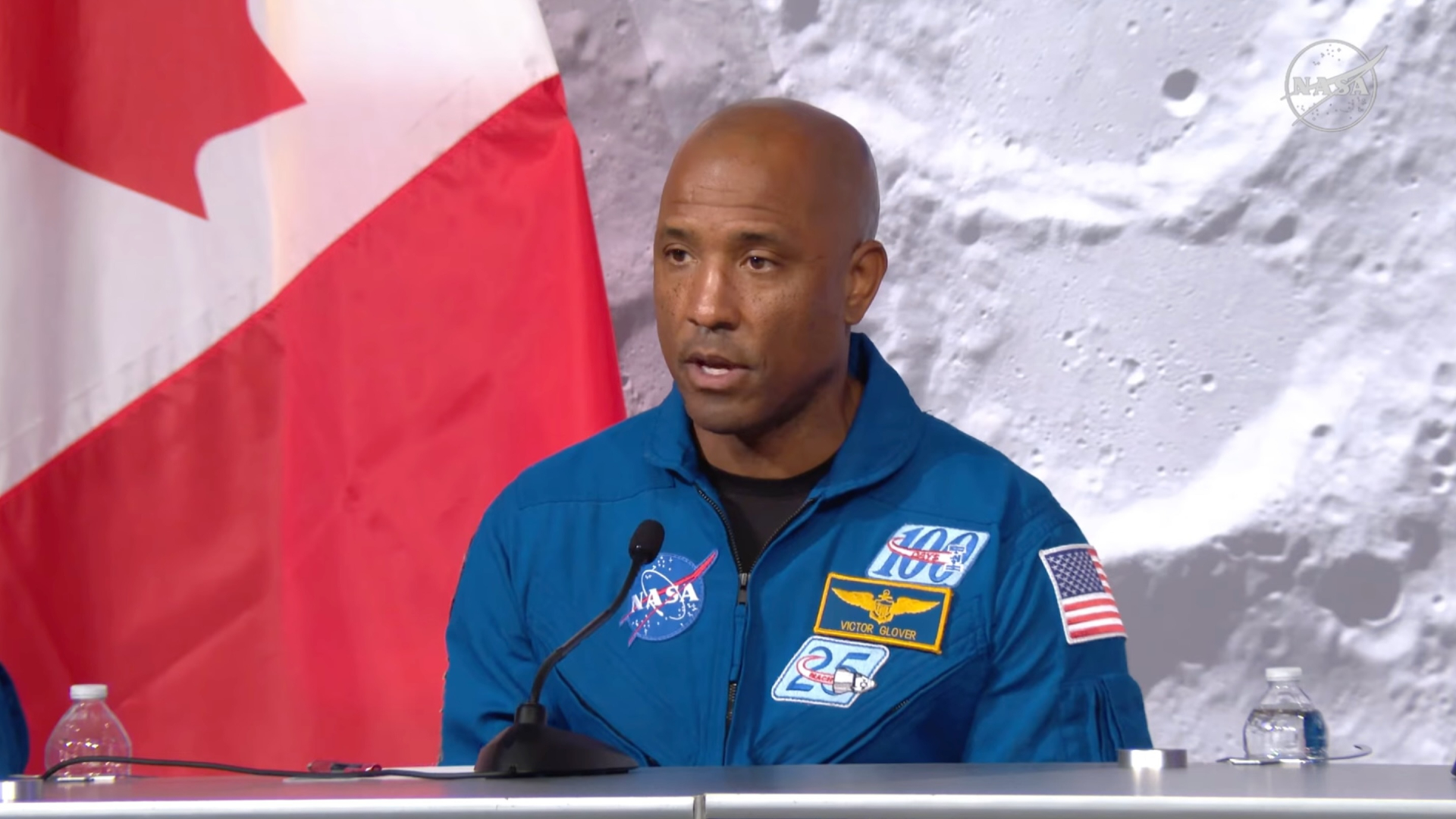
The Artemis II mission is poised to launch a historic crew into space, including NASA commander Reid Wiseman, NASA mission specialist Christina Koch—who will become the first woman to venture beyond low Earth orbit—and Canadian Space Agency mission specialist Jeremy Hansen, marking the first time a non-American will leave LEO.
This pioneering 10-day journey aboard the Orion spacecraft will see the crew execute a critical loop around the Moon before returning to Earth. The successful completion of Artemis II, coupled with Artemis III’s planned docking activities in low Earth orbit, will pave the way for Artemis IV, which aims to land astronauts on the lunar surface as early as 2028.
Astronaut Glover provided comments to Space.com during a September 2025 interview. The discussion, held at NASA’s Johnson Space Center, took place amidst the extensive press activities for the upcoming Artemis II mission. Below, we present key excerpts from his remarks, which have been edited for length and clarity.
In a powerful summation, Jeremy articulated a profound message: this undertaking exemplifies how “excellence comes in all shapes, sizes, forms, backgrounds [and] educational experiences.” At a time when societal divisions often dominate headlines, there’s a deep-seated hope that this collaborative effort can cultivate a much-needed sense of unity – an aspiration, he concedes, that might strike some as clichéd.
However, this isn’t simply about launching a “unity movement.” The monumental task of journeying to the moon and returning safely demands a comprehensive convergence of diverse skills and collective effort from every participant. Within the tight-knit confines of the crew, navigating inevitable human frictions becomes paramount. Whether through direct resolution or by judiciously affording each other space, the ultimate success hinges on the ability of these distinct individuals to overcome their differences and function as a cohesive, high-performing team.

While acknowledging the media’s focus on groundbreaking achievements, such as being the “first pilot to the moon in the 21st century” – a distinction the speaker noted they had only recently become aware of – the individual’s primary focus remains firmly on their core responsibilities.
Despite the significant hiatus in human lunar exploration, the team is equipped with the foresight to anticipate key questions and potential pitfalls, including both known challenges and unforeseen complexities. To address this, a meticulously engineered, resilient system has been developed, incorporating extensive backups and redundancies to mitigate risks. Ultimately, successful navigation of the mission will rely on leveraging the collective expertise of both the ground support team and the onboard crew to devise optimal solutions.
Prioritizing mental well-being and preserving cognitive capacity, the individual adopts a deliberate strategy to circumvent undue pressure, consciously avoiding thought patterns that could induce stress.
This focus on personal resilience is intrinsically linked to a preference for simplification, a leadership principle championed by former U.S. Secretary of State Colin Powell, who famously asserted that “a great leader is a great simplifier.”
Applying this philosophy, the individual meticulously translates complex challenges—encompassing operational aspects, team dynamics, and overarching mission objectives—into readily understandable, “simple widgets.” This methodical approach facilitates clear comprehension and the subsequent development of pragmatic, effective solutions.
Crucially, the emphasis remains squarely on execution. Rather than framing tasks in high-stakes or elaborate terms during the process, the focus is on diligently completing the job. Any narratives of success or celebration are reserved for retrospective analysis and acknowledgment, shared only after the mission has been definitively accomplished.
Here are a few options for paraphrasing the provided text, each with a slightly different journalistic emphasis:
**Option 1 (Focus on Unseen Preparation):**
> The critical work leading up to this mission, the unseen hours spent in simulations pushing boundaries and problem-solving without established protocols, will be a defining chapter. This period of intense, often informal, learning and collaboration is where true advancement and trust are forged – the very essence of exploration. Our commitment is to rise to this challenge, recognizing that vigilance extends far beyond public view.
**Option 2 (Emphasis on the Process of Exploration):**
> The upcoming mission represents a culmination of ten days of dedicated, often unobserved, effort. It’s during these simulation sessions, where the team engages in rigorous practice, embraces challenges lacking pre-defined solutions, and fosters a culture of mutual learning and trust, that the true spirit of exploration takes shape. We are actively preparing for this significant moment, understanding that our diligence is most vital in the phases that remain unseen.
**Option 3 (More Direct and Action-Oriented):**
> This mission will be remembered for the ten days of intensive, unpublicized preparation. It’s in the simulation environment, where we’ve been working through uncharted territory, having fun while solving complex problems, that we’ve truly grown. This process of continuous learning, team development, and trust-building is the bedrock of exploration. We are committed to meeting this pivotal moment, with our most crucial efforts happening behind the scenes.
**Option 4 (Highlighting the Human Element):**
> The ten days spent flying in simulation will become a significant part of this mission’s narrative – a period of unobserved dedication where we embraced challenges without a roadmap. Through this hands-on, often enjoyable, process, we’ve learned, evolved, and solidified our trust as a team. This collaborative growth is at the heart of exploration. We are dedicated to confronting this defining moment, knowing that our most impactful work occurs away from the spotlight.
Here are a few paraphrased options, each with a slightly different nuance, presented in a journalistic tone:
**Option 1 (Focus on the Routine and Meaning):**
> A weekly ritual for some is the contemplation of Gil Scott-Heron’s seminal poem, “Whitey on the Moon.” Far from being a commentary on race, the piece delves into the broader human condition, serving as a stark reminder that not everyone shared in the triumph of the early Apollo missions. While the nation celebrated lunar exploration, many faced pressing domestic struggles, questioning the impact of NASA’s endeavors on everyday concerns like mounting bills and neglected infrastructure.
**Option 2 (More Direct and Punchy):**
> Every Monday, a thought-provoking tradition unfolds: listening to Gil Scott-Heron’s “Whitey on the Moon.” This powerful work transcends discussions of racism to illuminate the universal human experience. It powerfully illustrates that the excitement surrounding the first Apollo missions was not universally felt. For many, the reality of their own lives – grappling with financial burdens and unrepaired roads – made space exploration seem disconnected from their immediate needs.
**Option 3 (Emphasizing the Contrast):**
> For one individual, a weekly grounding ritual involves engaging with Gil Scott-Heron’s “Whitey on the Moon.” This poem, deeply rooted in the human condition rather than racial politics, highlights a crucial historical contrast. It underscores that the euphoria surrounding America’s initial lunar expeditions was not a shared experience. While the nation looked to the stars, many were focused on earthly problems, their lives marked by financial hardship and civic neglect, leading to a disconnect with the perceived progress of NASA.
When the Reverend Ralph Abernathy, successor to Dr. Martin Luther King Jr. in the Civil Rights Movement, arrived at Kennedy Space Center to voice his opposition to the Apollo 11 launch, NASA Administrator Thomas Paine personally intervened. Paine descended to meet with Abernathy and his fellow protestors, initiating a dialogue that, remarkably, concluded with the demonstrators offering a prayer for the astronauts’ safe return. This pivotal encounter underscored the power of direct human interaction and open communication, as shared understanding and mutual respect emerged from what began as a protest.
Here are a few paraphrased options, maintaining a journalistic tone:
**Option 1 (Focus on the lesson learned):**
> The speaker highlighted a crucial lesson: why do we study history when we’ve already lived through similar experiences? This reflection serves as a potent reminder that while engaging with tech enthusiasts at events like Comic-Con and South by Southwest is valuable, NASA’s outreach must extend to all corners of the country. Many citizens may be unaware of NASA’s work and its ongoing missions, making it equally vital to connect with these audiences.
**Option 2 (More direct and action-oriented):**
> A key takeaway, the speaker articulated, is the value of understanding our past to inform our present. While it’s straightforward to find a receptive audience at tech-centric gatherings like Comic-Con and South by Southwest, the speaker emphasized that this is only part of the equation. NASA must also actively engage with individuals across the nation who may not fully comprehend the agency’s objectives or achievements, stressing the equal importance of this broader communication effort.
**Option 3 (Emphasizing the dichotomy of engagement):**
> The speaker drew a parallel to historical lessons, questioning the need to revisit past events when we’ve already experienced them. This insight underscored a critical challenge: the ease of connecting with a tech-savvy crowd at events like Comic-Con and South by Southwest, who are already enthusiastic about NASA’s work. However, the speaker stressed that this readily available audience shouldn’t overshadow the necessity of reaching the broader American public, many of whom may lack awareness of NASA’s contributions and ongoing endeavors, thus requiring a parallel outreach strategy.
This quote underscores the profound personal connection to a particular song, serving as a powerful reminder of a past community that, much like the speaker’s own upbringing, felt unheard. This experience highlights the existence of diverse perspectives and untold stories beyond the usual celebratory narratives surrounding entities like NASA. The speaker emphasizes a commitment to serving all segments of society, including those whose voices may not be as readily amplified.





