

For theoretical physicist David Gross, a pivotal moment arrived at age 13: a personally inscribed copy of “The Evolution of Physics.” This 1938 popular science classic, co-authored by Albert Einstein himself, ignited Gross’s fascination with the subatomic realm. That seminal gift set him on a lifelong journey into the heart of matter, culminating in a groundbreaking achievement years later. Gross would eventually help unravel a perplexing question that had long stumped particle physicists: whether quarks, the fundamental constituents of protons and neutrons, could ever truly be broken apart.
In 2004, physicists David Gross, Frank Wilczek, and H. David Politzer were jointly awarded the Nobel Prize for their groundbreaking discovery of asymptotic freedom. This pivotal principle unveiled a counter-intuitive behavior of quarks: the fundamental forces between them weaken significantly when in close proximity but dramatically intensify as they attempt to move apart.
Asymptotic freedom quickly became a cornerstone of quantum chromodynamics (QCD), the theory governing the strong nuclear force. Furthermore, its insights proved instrumental in paving the way for the unification of the strong, weak, and electromagnetic forces, thereby completing the comprehensive framework known as the Standard Model of particle physics.
For several decades, physicist Dr. Gross has significantly shifted his scientific focus, transitioning from the study of atomic constituents to pioneering the development of string theories. These ambitious theoretical frameworks are designed to achieve the monumental task of unifying gravity—the universe’s fourth fundamental force—with the three other known fundamental forces.
In recognition of a lifetime dedicated to groundbreaking achievements in physics, Dr. Gross, who previously served as the director of the Kavli Institute for Theoretical Physics at the University of California, Santa Barbara, was recently awarded the prestigious $3 million Special Breakthrough Prize in Fundamental Physics.
In an exclusive interview, Live Science recently delved into the career and profound insights of physicist Gross. The extensive conversation probed fundamental scientific questions, from unraveling the deep mysteries residing at the heart of an atom to the formidable challenges involved in unifying the universe’s four fundamental forces. Perhaps most strikingly, Gross posited that the ultimate barrier to developing a complete theory of quantum gravity isn’t a scientific puzzle, but rather the limited time humanity has left on Earth.
Tia Ghose initiated the interview by probing into the origins of the subject’s initial draw to the scientific discipline of physics.
David Gross exhibited an early and clear aptitude for mathematics, consistently finding enjoyment and success in solving complex puzzles. His nascent connection to the scientific world was subtly highlighted during his bar mitzvah when he received a gift from a family friend. This individual happened to be the brother of Leopold Infeld, the distinguished physicist renowned for his collaboration with Albert Einstein on the popular science book, *The Evolution of Physics*.
A captivating book ignited a passion for the practical application of mathematics, leading to an early and decisive aspiration: to become a theoretical physicist. This revelation, that mathematical puzzles held a deeper allure when connected to real-world phenomena, set a clear and unwavering course. The journey toward the forefront of scientific understanding, while demanding, is a direct one, requiring a robust foundation in both mathematics and physics.
Here are a few options for paraphrasing the question, maintaining a clear, journalistic tone:
**Option 1 (Direct and Engaging):**
“Looking back, did you feel your work genuinely explored the uncharted territories of human understanding, operating at the very cutting edge of knowledge?”
**Option 2 (Concise and Focused):**
“In your assessment, do you believe your endeavors truly pushed the absolute boundaries of what was known?”
**Option 3 (Emphasizing the Personal Journey):**
“Reflecting on your journey, did you reach a point where you were operating at the ultimate frontiers of human discovery?”
**Option 4 (Slightly more formal):**
“From your unique vantage point, do you contend that your contributions ultimately led you to the extreme limits of current understanding?”
Here are a few options, depending on the specific nuance you want to emphasize, all maintaining a clear, journalistic tone:
**Option 1 (General Emphasis):**
> DG affirmed that the situation’s scope extended well beyond what had been previously discussed.
**Option 2 (Emphasizing Greater Magnitude):**
> The individual identified as DG underscored that the implications were even more profound, far surpassing initial assessments.
**Option 3 (Concise and Direct):**
> DG stressed that the reality stretched significantly further than indicated.
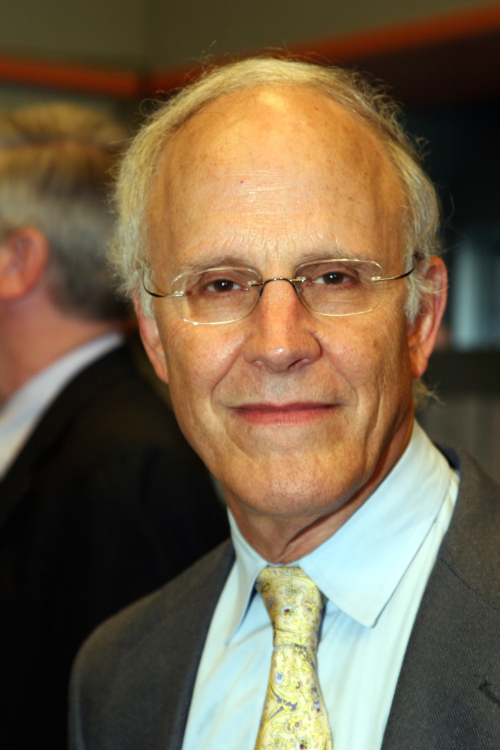
The theory of asymptotic freedom, for which you were awarded the Nobel Prize in Physics in 2004, remains a cornerstone of modern physics. Could you guide us through the insights that led to its development and explain its profound implications?
During his early graduate school years, DG observed a significant theoretical void regarding the atomic nucleus. At that time, he noted, physicists grappled with a profound absence of comprehensive understanding and substantive clues concerning the complex processes unfolding within the atom’s core.
Following the completion of graduate studies, the researcher embarked on a postdoctoral fellowship, transitioning from Berkeley to Harvard. This period coincided with a series of pivotal experiments aimed at understanding the fundamental constituents of matter. The core methodology involved precisely directing high-energy electrons—particles whose behavior is well-understood—at protons. By meticulously analyzing the resultant scattering patterns of these electrons, scientists sought to create a sophisticated virtual microscope, effectively allowing them to peer into and uncover the intricate internal structure of the proton itself.
In a surprising turn for scientific understanding, groundbreaking experiments indicated that the proton appeared to be composed of point-like particles, seemingly devoid of internal structure. This remarkable observation, however, was confined to instances of very short distances and brief timescales, presenting a perplexing enigma for physicists.
Here are a few paraphrased options, each with a slightly different emphasis, maintaining a journalistic tone:
**Option 1 (Focus on Discovery and Hypothesis):**
> My work involved developing models and forecasting potential outcomes based on daring theoretical assumptions. These investigations revealed particles that aligned with the characteristics of quarks, a concept previously put forth as a mathematical framework to decipher observed particle production patterns.
**Option 2 (Focus on the Role of Quarks):**
> Through extensive analysis and projections fueled by speculative hypotheses, I found that the observed particles behaved consistently with the theoretical construct of quarks. This fundamental idea had been proposed earlier as a way to mathematically account for the diverse array of particles being generated.
**Option 3 (More Direct and Concise):**
> By running simulations and making bold assumptions about what might occur, I determined that these particles behaved as predicted for quarks. This theory had been advanced previously as a mathematical explanation for the patterns observed in particle production.
**Option 4 (Emphasizing the Predictive Power):**
> My research focused on extrapolating potential scenarios through a series of ambitious theoretical leaps. The results indicated that the particles under examination were consistent with the properties of quarks, a theoretical entity previously hypothesized to explain the underlying patterns of particle generation.
This groundbreaking experiment yielded a startling revelation: quarks were not only real, but demonstrably in motion within the proton. This defied all existing scientific understanding, as such movement would logically lead to their expulsion under forceful impact. Until this point, no scientist had ever directly observed a quark.
This fascination with the subject ultimately propelled me to uncover the concept of asymptotic freedom, a cornerstone of quantum chromodynamics. Asymptotic freedom describes a phenomenon where the interaction strength between quarks diminishes as they approach each other. This characteristic defies conventional understanding and stands in stark contrast to all previously established physical theories.
Here are a few paraphrased options, keeping a journalistic tone and unique phrasing:
**Option 1 (Focus on the paradox):**
> Intriguingly, the bond appears to defy conventional expectations. Its strength intensifies with separation, suggesting a peculiar resilience that may render it unbreakable, a characteristic that seems to hold true in this instance.
**Option 2 (More direct and explanatory):**
> The observed phenomenon presents a counterintuitive dynamic: the connection weakens as proximity increases, yet it solidifies significantly with greater distance. This remarkable property suggests a force so potent that separation becomes an impossibility, a conclusion seemingly borne out by the current situation.
**Option 3 (Emphasizing the strength):**
> A powerful force is at play here, one that operates in opposition to typical physical interactions. Rather than diminishing with distance, this force grows stronger the further apart the subjects are pushed, creating a bond so robust that it appears to be utterly insurmountable.
**Option 4 (Concise and impactful):**
> The force exhibits an inverse relationship with proximity, growing stronger as the subjects move further apart. This increasing resistance suggests a bond of such magnitude that it defies separation, a state that appears to be the defining feature of this situation.
The early 1970s marked a pivotal period in our understanding of fundamental physics. It was during this time that the theory describing the strong nuclear force experienced a significant breakthrough, representing a watershed moment for the field. Concurrently, in a separate but conceptually related development, the theory of the weak nuclear force was also taking shape. This advancement, like that of the strong force, involved a sophisticated generalization of the principles of electrodynamics. By the latter half of the decade, these cumulative efforts culminated in the formulation of what is now known as the Standard Model – the definitive theory of particle physics, explaining the fundamental constituents of matter and the forces that govern their interactions.
TG: It appears we’ve successfully unified three fundamental forces, leaving gravity as the intriguing outlier. What’s the next step in this exploration?
Here are a few paraphrased options, maintaining a journalistic tone and the core meaning:
**Option 1 (Focus on the breakthrough):**
> “It was impossible to simply move on,” the speaker, DG, explained. “Once we developed a theoretical framework that allowed for the calculation of nuclear phenomena, we could then make predictions and rigorously test its validity.”
**Option 2 (Emphasizing the predictive power):**
> DG shared that immediate progression wasn’t feasible. “The development of a theory capable of calculating nuclear phenomena was a critical juncture,” they stated. “This breakthrough enabled us to generate predictions and subsequently verify the theory through experimentation.”
**Option 3 (More concise and direct):**
> According to DG, the inability to “move on immediately” stemmed from a significant theoretical advancement. “Once we could calculate nuclear phenomena, we gained the ability to make predictions and test the theory,” they elaborated.
**Option 4 (Highlighting the scientific process):**
> The speaker, DG, noted that a period of contemplation was necessary before moving forward. “The crucial step was establishing a theory that permitted the calculation of nuclear phenomena,” they said. “This provided the means to formulate predictions and conduct empirical testing.”
Here are a few paraphrased options, maintaining a journalistic tone and the core meaning:
**Option 1 (Focus on contrast):**
> The intricate and ongoing narrative of quantum chromodynamics, a field of profound scientific inquiry, reveals a fascinating duality. At extremely short distances, where quarks are in close proximity, the powerful strong force surprisingly diminishes, allowing for remarkably precise calculations that have been refined over five decades to an astonishing degree of accuracy.
**Option 2 (More direct and active):**
> Quantum chromodynamics, a complex yet elegant area of physics, continues to be a vibrant field of research. Its secrets become more accessible at short ranges, where the strong force between quarks weakens, enabling scientists to perform intricate calculations with remarkable precision – a feat they have perfected over more than 50 years.
**Option 3 (Emphasizing the “beauty” and “depth”):**
> The story of quantum chromodynamics is one of immense depth, complexity, and striking beauty, a narrative that continues to unfold with great intensity. When quarks venture close together, the fundamental strong force surprisingly recedes, simplifying calculations and allowing for astonishingly accurate predictions that have been honed over half a century of dedicated research.
**Option 4 (Concise and impactful):**
> The field of quantum chromodynamics, a deeply complex and beautiful area of physics, operates with remarkable clarity at short distances. Here, the strong force weakens, paving the way for highly accurate calculations that scientists have meticulously developed and refined for over 50 years.
The central question that captivated me was the fundamental nature of quark confinement: is it an absolute reality, and what are the underlying mechanisms? Furthermore, I sought to unravel the complexities of theoretical physics when dealing with exceptionally strong forces, a significantly more challenging endeavor.
Here are a few ways to paraphrase that sentence, depending on the nuance you want to convey:
**Option 1 (Focus on frustration and difficulty):**
> Despite numerous unanswered questions, the endeavor proved too challenging, and I ultimately found myself unable to arrive at a solution.
**Option 2 (More concise and direct):**
> The persistent unanswered questions, coupled with the difficulty of the task, led to my exhaustion and inability to resolve the issues.
**Option 3 (Emphasizing the feeling of being stuck):**
> Faced with a multitude of unresolved questions and the sheer difficulty of the problem, I grew weary and could not find a path forward.
**Option 4 (Slightly more formal):**
> The presence of many unresolved questions, combined with the significant difficulty of the task, resulted in my fatigue and the inability to achieve a satisfactory outcome.
**Option 5 (More active voice, focusing on the effort):**
> I struggled with many open questions, but the difficulty of the task became overwhelming, and I was ultimately unable to find solutions.
Choose the option that best fits the overall tone and context of your writing.
Beyond that, as you pointed out, the established scientific framework itself revealed its limitations. When pushed to its ultimate limits – encompassing incredibly high energies and infinitesimally small distances – the theory faltered, precisely because gravity began to exert its influence. This served as a crucial indicator, signaling the necessity of a unified approach, one that would integrate all fundamental forces alongside gravity.
Here are a few options, maintaining a unique, engaging, and original journalistic tone:
**Option 1 (Direct & Clear):**
> This pivotal development ultimately led to the theoretical framework of string theory, a complex field that has predominantly shaped and occupied the speaker’s research efforts ever since.
**Option 2 (Emphasizing Sustained Focus):**
> That particular breakthrough initiated a profound and enduring focus on string theory, which has subsequently become the primary domain of the speaker’s academic and professional work.
**Option 3 (Highlighting Trajectory):**
> The trajectory of their research was subsequently set toward string theory, a challenging discipline that has, for the most part, defined their intellectual pursuits in the years that followed.
**Option 4 (Concise & Impactful):**
> The path then converged on string theory, a groundbreaking area of physics that has commanded the majority of their dedicated study and work ever since.
The discussion then shifted to the intricate domain of theoretical physics. The guest was prompted to demystify string theory, outlining its core concepts, and to detail the specific avenues of their ongoing research in the field.
In the ambitious pursuit of string theory, researchers are tackling questions that extend far beyond simply unifying the fundamental forces of nature. As noted by DG, the scope of inquiry delves deeper, particularly into the essence of gravity. Drawing from Albert Einstein’s groundbreaking insights, gravity is fundamentally understood as the very dynamics and curvature of space-time itself.
The scientific community is increasingly recognizing the imperative to revise and deepen its comprehension of space-time. This burgeoning realization signals another significant paradigm shift, echoing a long-standing pattern in the history of physics where foundational concepts have frequently undergone re-evaluation and refinement.
In the realm of fundamental physics, scientists are relentlessly pursuing answers to some of the universe’s most profound questions.
A central inquiry revolves around the intrinsic nature of **spacetime**: What constitutes the very fabric of our reality? Is it a smooth, continuous manifold as described by Einstein’s general relativity, or does it possess a deeper, perhaps granular, substructure at incredibly minute scales? This leads directly to the challenging question of **spacetime’s behavior at short distances**, particularly at the Planck scale. Here, the classical understanding of gravity is expected to break down, giving way to quantum gravitational effects – potentially manifesting as “quantum foam” or other exotic phenomena that challenge our current models.
Concurrently, a major focus remains on deciphering the **universe’s evolutionary history**. Researchers are committed to reconstructing the grand cosmic narrative, from its explosive genesis in the Big Bang and subsequent rapid inflation, through the formation of the first stars and galaxies, the emergence of complex large-scale structures, and the ongoing influence of dark matter and dark energy that continues to shape its expansion and ultimate destiny.
The universe’s ultimate origins remain a profound enigma for scientists, with current cosmological understanding particularly strained by the very first moments of existence. It is precisely at this foundational stage that existing theoretical models, including initial attempts to apply string theory, prove inadequate. Despite these persistent challenges, string theory continues to be regarded as the most promising theoretical framework for eventually unraveling the monumental question of how the cosmos began.
TG: So, a significant hurdle arises because while numerous unified theories exist, their experimental verification demands conditions of extreme energy, making direct testing a formidable challenge?
Here are a few paraphrased options, maintaining a journalistic tone:
**Option 1 (Focus on the challenge):**
> In the 19th century, scientists faced a significant hurdle: directly observing atoms was exceptionally difficult. This challenge led chemists and physicists to propose their existence as a theoretical framework.
**Option 2 (More active voice):**
> The direct testing of atoms proved an immense challenge in the 19th century. Consequently, chemists and physicists put forth the hypothesis that these fundamental building blocks of matter must exist.
**Option 3 (Concise and direct):**
> Due to the extreme difficulty in direct experimentation, 19th-century chemists and physicists theorized the existence of atoms.
**Option 4 (Slightly more descriptive):**
> The inability to directly observe and experiment with them posed a considerable obstacle. As a result, chemists and physicists in the 19th century put forward the concept that atoms were the underlying constituents of matter.
Here are a few options for paraphrasing the provided text, maintaining a clear, journalistic tone:
**Option 1 (Focus on the unknown):**
> Prior to this, the existence of atoms, let alone their composition, remained entirely unseen and inaccessible to direct investigation. This presented a comparable challenge.
**Option 2 (Emphasizing lack of evidence):**
> At that time, no one had ever witnessed an atom, nor was there any method to directly explore its constituent parts or even confirm their existence. The circumstances were strikingly similar.
**Option 3 (More concise):**
> The atom, a concept then, was beyond direct observation, with no means to investigate its makeup or even verify its presence. It was a parallel predicament.
**Option 4 (Slightly more descriptive):**
> Until that point, atoms were theoretical entities, unseen and unexamined. There was no way to probe their fundamental nature or ascertain their very existence, mirroring a similar scenario.
Here are a few paraphrased options, each with a slightly different emphasis:
**Option 1 (Focus on the unexpected nature of discoveries):**
> The 20th century witnessed truly unexpected breakthroughs in comprehending the atomic structure of everyday matter. Prior to these discoveries, atoms were often viewed more as theoretical constructs or mathematical tools for building theories, rather than tangible realities.
**Option 2 (Focus on the shift in perception):**
> A profound shift in understanding the fundamental building blocks of matter occurred in the 20th century with groundbreaking revelations about atomic structure. For a significant period, atoms were largely considered a convenient mathematical abstraction rather than a physical reality.
**Option 3 (More direct and concise):**
> The 20th century brought about unanticipated major advancements in our understanding of atomic structure. Before these developments, many scientists viewed atoms as mere theoretical devices, not as actual, physical entities.
**Option 4 (Slightly more narrative):**
> It wasn’t until the 20th century that genuine breakthroughs illuminated the atomic structure of the matter that surrounds us. This understanding was largely unforeseen, with many previously considering atoms to be more of a conceptual aid for theoretical frameworks than something truly existent.
Here are a few options for paraphrasing the provided text, each with a slightly different emphasis:
**Option 1 (Focus on Scientific Resolution):**
> The scientific process frequently revisits fundamental questions, with empirical evidence serving as the ultimate arbiter. This iterative approach has led to breakthroughs in our understanding of atoms, as demonstrated by the resolution of debates surrounding Brownian motion, thanks to insights like Einstein’s, and the revolutionary findings from Rutherford’s gold foil experiments. These advancements paved the way for the development of quantum mechanics, ultimately providing a complete comprehension of ordinary matter.
**Option 2 (More Narrative Flow):**
> History in science is replete with recurring cycles of inquiry and resolution, a testament to the power of experimentation to definitively answer complex questions. This pattern is evident in our evolving understanding of the atom, from clarifying Brownian motion through seminal work like Einstein’s, to Rutherford’s groundbreaking gold foil experiments revealing the atom’s structure. The subsequent emergence of quantum mechanics solidified this progress, leaving us with a comprehensive grasp of everyday materials.
**Option 3 (Concise and Direct):**
> Science often progresses through repeated investigations, with experiments serving as the crucial means to settle lingering questions. This has been the case with our understanding of atoms, notably resolving the puzzle of Brownian motion with contributions from figures like Einstein, and through Rutherford’s pivotal gold foil experiments. The advent of quantum mechanics further cemented this knowledge, leading to a complete understanding of ordinary matter.
**Key changes and why:**
* **”That happens over and over again [in science]”**: Rephrased as “The scientific process frequently revisits fundamental questions,” “History in science is replete with recurring cycles of inquiry and resolution,” or “Science often progresses through repeated investigations.” This sounds more formal and journalistic.
* **”the great thing is that experiments can settle the issue”**: Changed to “with empirical evidence serving as the ultimate arbiter,” “a testament to the power of experimentation to definitively answer complex questions,” or “with experiments serving as the crucial means to settle lingering questions.” This elevates the language and emphasizes the role of evidence.
* **Specific Examples (atoms, Brownian motion, Rutherford, quantum mechanics)**: Kept these crucial facts but integrated them more smoothly into the sentences. Phrases like “as demonstrated by the resolution of debates surrounding Brownian motion,” “thanks to insights like Einstein’s,” and “the revolutionary findings from Rutherford’s gold foil experiments” provide more context and flow.
* **”now we understand ordinary material completely”**: Rephrased to “ultimately providing a complete comprehension of ordinary matter,” “leaving us with a comprehensive grasp of everyday materials,” or “leading to a complete understanding of ordinary matter.” This uses more sophisticated vocabulary and a more formal tone.
* **Journalistic Tone**: The overall phrasing aims for clarity, objectivity, and a slightly more formal register, characteristic of journalistic writing.
Here are a few paraphrased options, playing with slightly different journalistic angles:
**Option 1 (Focus on Scale & Difficulty):**
> As scientists delve into the realm of string theories, the challenges mount with increasing distance from human-sized dimensions. The minuscule scales under investigation represent an extreme limit of tininess, pushing the boundaries of our observational capabilities.
**Option 2 (More Direct & Concise):**
> Testing string theories presents escalating difficulties the further we venture from the familiar human scale. The dimensions being explored are extraordinarily small, reaching the absolute limits of microscopic measurement.
**Option 3 (Emphasizing the “Teeny” Aspect):**
> The pursuit of string theories encounters growing obstacles when deviating from the human scale. The dimensions under scrutiny are remarkably, almost unimaginably, tiny – representing a scale at the very edge of what is comprehensible.
**Option 4 (Slightly More Evocative):**
> The quest to verify string theories becomes progressively arduous as we move away from the human scale. Researchers are probing a realm of existence so infinitesimally small, it approaches the ultimate limit of tininess.
Each option aims to:
* **Maintain the core meaning:** The difficulty increases with smaller scales, and those scales are extremely small.
* **Use a clear, journalistic tone:** Avoids overly technical jargon while sounding authoritative.
* **Be unique and engaging:** Employs varied vocabulary and sentence structure.
* **Be original:** Rephrases the original ideas in a new way.
Journalist: So, the Planck scale, approximately 1.6 x 10^-35 meters, represents the point at which quantum effects are believed to become the dominant force over gravity?
Here are a few options for paraphrasing the provided text, each with a slightly different emphasis:
**Option 1 (Focus on the critical nature of the Planck scale):**
> According to DG, the Planck scale represents a critical juncture where gravity’s influence becomes overwhelmingly powerful. At this fundamental level, the very fabric of spacetime is thought to become so intricate and disordered that our conventional understanding of space may no longer apply.
**Option 2 (More direct and concise):**
> DG explains that the Planck scale is the point at which gravity’s force intensifies dramatically. The complexity of space itself at this scale is believed to be so profound that it may be inappropriate to even conceptualize space in familiar terms.
**Option 3 (Emphasizing the breakdown of current models):**
> At the Planck scale, DG points out, gravity exerts a tremendously strong force. The structure of space-time is theorized to become so convoluted at this fundamental limit that our current frameworks for understanding space may prove inadequate.
**Option 4 (Slightly more evocative):**
> DG highlights the Planck scale as the realm where gravity’s dominion is absolute. The very architecture of space-time is anticipated to be so convoluted and extreme at this minuscule dimension that our traditional notions of spatial structure may cease to be meaningful.
**Key changes made in these paraphrases:**
* **Vocabulary:** Replaced “strong force” with “overwhelmingly powerful,” “intensifies dramatically,” “tremendously strong force,” and “dominion is absolute.” Replaced “complicated” with “intricate and disordered,” “profound,” “convoluted,” and “extreme.”
* **Sentence structure:** Varied sentence beginnings and combined ideas in different ways.
* **Tone:** Maintained a clear, journalistic tone, using phrases like “According to DG,” “DG explains,” “DG points out,” and “DG highlights.”
* **Clarity:** Ensured the core meaning about gravity’s strength and space’s complexity at the Planck scale is preserved.
* **Originality:** Created new phrasing that is distinct from the original statement.
The notion of “space” as we understand it might not accurately describe the environment at such a minute scale.
Here are a few paraphrased options, maintaining a journalistic tone and the core meaning:
**Option 1 (Focus on understanding):**
> According to DG, our understanding of space develops in infancy as a fundamental tool for navigating the world, enabling us to acquire necessities like food and toys. It represents our foundational model for comprehending how the environment functions.
**Option 2 (Focus on cognitive development):**
> DG explains that space is essentially a conceptual framework we construct as infants, driven by the need to interact with our surroundings and obtain resources. This early development of spatial awareness forms our initial framework for understanding the world.
**Option 3 (More concise):**
> DG posits that our infant perception of space is a primitive model of reality, essential for securing basic needs like food and toys. This fundamental cognitive tool serves as our initial explanation for how the world operates.
**Option 4 (Slightly more evocative):**
> Space, as described by DG, is the rudimentary mental map we develop in infancy, a vital mechanism for locating and obtaining what we need, from a cherished toy to sustenance. It’s the very blueprint of our early understanding of the world.
This particular explanation may not be entirely accurate; it could be a generalized or approximate concept. We’re heading in that direction, but we’re only just starting to grasp its implications and develop the necessary tools to address it.
The discussion pivoted to a forward-looking inquiry: By the middle of this century, would the scientific community be substantially closer to unveiling a comprehensive, unified theory capable of seamlessly integrating all the fundamental forces of nature?
Currently, a core part of DG’s work involves confronting a common misconception: the belief that individuals have a high probability of extending their lives by another five decades. He routinely highlights the statistical reality that such extended longevity remains a remarkably rare prospect for most.
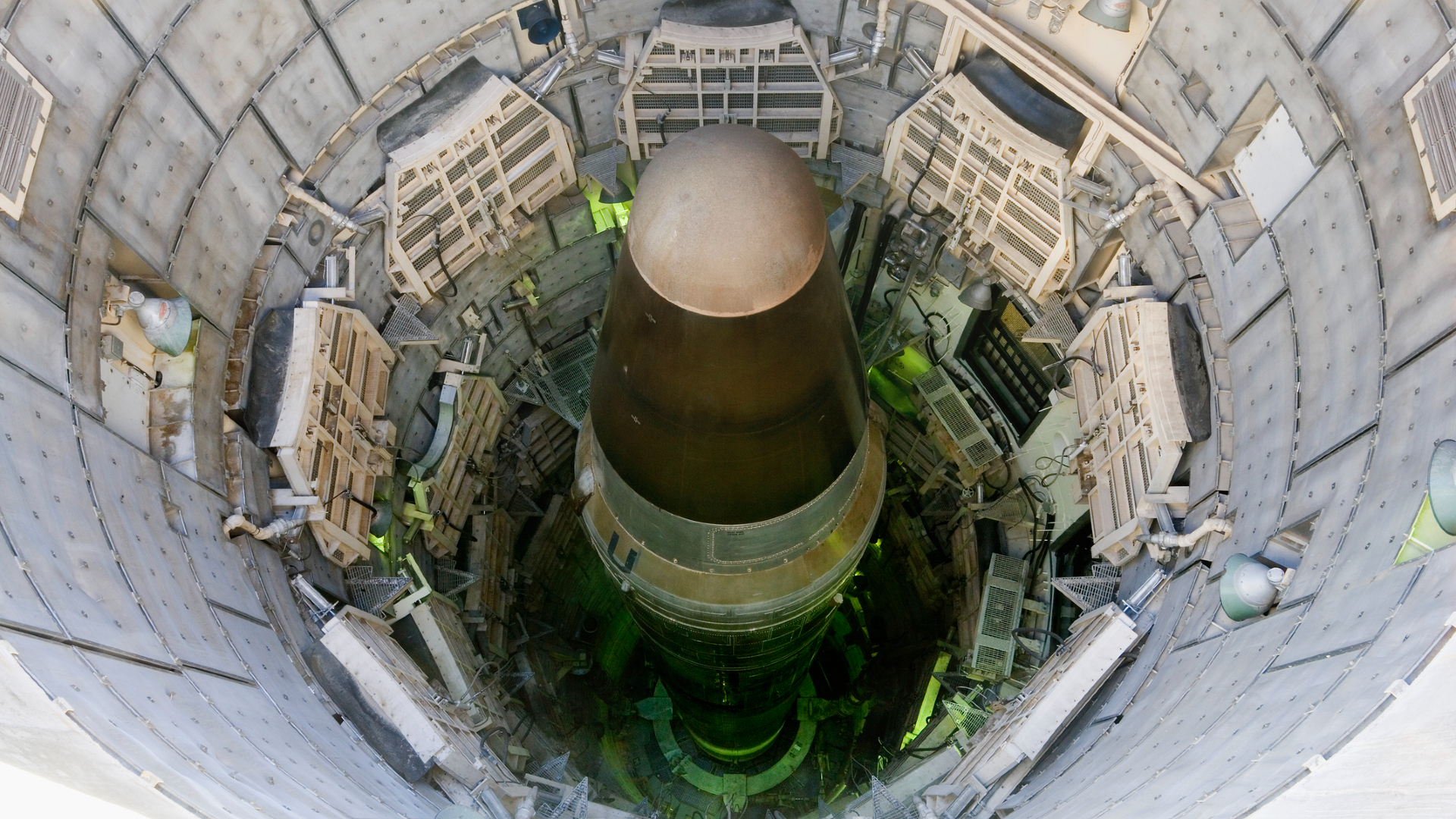
The existential threat posed by nuclear war comes with a sobering forecast: a collective lifespan of roughly 35 years remains.
Here are a few options, maintaining the core meaning while enhancing uniqueness and tone:
**Option 1 (Focus on the ‘why’ and ‘prediction’):**
“You’ve asserted a grim prognosis for humanity, predicting a significant risk of self-destruction within the next three-and-a-half decades. Could you explain the rationale behind this concerning forecast?”
**Option 2 (More direct, emphasizing the timeframe):**
“What leads you to conclude that humanity faces a high likelihood of self-inflicted catastrophe — effectively, its own undoing — within roughly 35 years?”
**Option 3 (Slightly more formal, using “demise”):**
“Given your perspective that humanity is on a path toward its own demise within approximately 35 years, what specific factors or trends inform this alarming assessment?”
While the precise probability of nuclear conflict remains an inherently crude estimation, even in the relative calm following the Cold War — an era characterized by strategic arms control treaties that have since largely dissolved — experts once projected an annual 1% chance of global nuclear war.
That historical baseline, however, pales in comparison to the current geopolitical landscape. Over the past three decades, the global security environment has demonstrably deteriorated, with a palpable escalation of risks that is unequivocally reflected in contemporary news cycles and international affairs.
Challenging prevailing estimates, one assessment posits the annual probability of a nuclear conflict at a sobering 2%. This translates to a chilling 1-in-50 chance of such an event occurring in any given year.
If this annual risk holds true, the “expected lifetime” before a nuclear war occurs would be approximately 35 years. This “expected lifetime” is defined not as a precise prediction, but as the average duration one would statistically anticipate until such a conflict has taken place, a concept calculated using similar equations to those determining the “half-life” of radioactive materials.
Here are several options for paraphrasing the question, maintaining a professional, journalistic tone:
**Option 1 (Focus on proactive measures):**
> What proactive steps can be taken to mitigate that risk?
**Option 2 (Focus on solutions):**
> What are your recommended solutions for reducing that risk?
**Option 3 (More direct and concise):**
> How can that risk be effectively lowered?
**Option 4 (Slightly more formal):**
> What measures do you propose to diminish the identified risk?
**Option 5 (Emphasizing strategic action):**
> What strategies would you advise to curb that particular risk?
Choose the option that best fits the surrounding context and the desired nuance of the conversation.
Last year, Chicago hosted a significant gathering: the Nobel Laureate Assembly, focused on mitigating the threat of nuclear war.
Nations can readily adopt straightforward measures to improve their relationships, such as engaging in direct dialogue.
The past decade has witnessed a notable absence of new arms control treaties, signaling a concerning shift towards a new and potentially unprecedented global arms race. With three major nuclear-armed nations at the forefront, the international landscape is increasingly defined by escalating military capabilities.
Here are a few paraphrased options, each with a slightly different journalistic flavor:
**Option 1 (Direct and Urgent):**
> In an era marked by heightened geopolitical tensions, the specter of nuclear conflict has resurfaced in public discourse. These anxieties are underscored by the ongoing major war in Europe, ongoing military actions in Iran, and the near-escalation of hostilities between nuclear-armed neighbors, India and Pakistan.
**Option 2 (Focus on Global Instability):**
> A confluence of crises is fueling global unease, with discussions around nuclear weapon use entering mainstream conversation. Europe is currently gripped by a significant conflict, while military operations are underway in Iran. Adding to the volatile landscape, India and Pakistan have recently teetered on the brink of war.
**Option 3 (Concise and Impactful):**
> The world finds itself at a precarious juncture, with the unthinkable notion of nuclear warfare now a topic of public debate. This concern is amplified by the war raging in Europe, ongoing military engagements in Iran, and a critical standoff that nearly plunged India and Pakistan into conflict.
**Option 4 (Slightly More Analytical):**
> A series of alarming developments is placing global security under intense scrutiny, prompting conversations about the use of nuclear weapons. The ongoing major conflict in Europe, coupled with military actions in Iran and the recent near-war situation between India and Pakistan, highlights a period of significant international instability.
Each of these options aims to:
* **Be Unique:** They rephrase the original sentences using different vocabulary and sentence structures.
* **Be Engaging:** They use stronger verbs and more descriptive language.
* **Maintain Core Meaning:** They convey the same essential information about nuclear concerns, the war in Europe, actions in Iran, and the India-Pakistan situation.
* **Use a Journalistic Tone:** They are objective, informative, and present the information in a straightforward manner.
The risk of nuclear conflict has demonstrably risen, with one expert conservatively estimating the current probability at 2%. This figure, described as potentially even higher in the current volatile global climate, highlights a significant and concerning escalation in geopolitical tensions.
Here are a few paraphrased options, maintaining a journalistic tone:
**Option 1 (Focus on the aspiration):**
> **Question:** Is the complete abolition of nuclear weapons a realistic future goal?
**Option 2 (More direct and evocative):**
> **Question:** Could humanity ever achieve a world free from the threat of nuclear arsenals?
**Option 3 (Emphasizing the challenge):**
> **Question:** What are the prospects for ultimately eliminating nuclear weapons from the global landscape?
**Option 4 (Slightly more formal):**
> **Question:** Do you foresee a scenario where nuclear weapons are entirely eradicated?
Here are a few paraphrased options, keeping a journalistic tone and preserving the original meaning:
**Option 1 (Focus on the stark contrast):**
> While acknowledging the aspirational hope for a future unthreatened by AI, DG expressed a stark warning: the probability of humanity surviving the next century is slim, and the odds of enduring for two centuries are even more remote. This grim outlook, he suggested, makes the hypothetical risk of an AI launching nuclear weapons in 100 years a secondary concern compared to humanity’s immediate existential challenges.
**Option 2 (More direct and impactful):**
> DG dismissed the notion of AI posing an immediate nuclear threat as idealistic, but stressed that humanity’s own long-term survival is far from guaranteed. He estimated that the chances of humanity existing in 100 years are “very small,” plummeting to “infinitesimal” within two centuries. This projection, he implied, overshadows the theoretical risk of an AI initiating a nuclear conflict in the distant future.
**Option 3 (Emphasizing the timescale):**
> The prospect of an AI weaponizing nuclear capabilities in a century is a scenario DG does not endorse, though he acknowledges the underlying hope. He cautioned that humanity’s own longevity is far from assured, estimating the likelihood of our species persisting for another 100 years as “very small,” and for 200 years as “infinitesimal.” Therefore, DG suggested, the long-term survival of humankind presents a more immediate and pressing concern than the remote possibility of an AI-driven nuclear strike.
**Key changes made in these paraphrases:**
* **Stronger Verbs:** “Dismissed the notion,” “expressed a stark warning,” “acknowledged the aspirational hope,” “cautioned.”
* **Varied Sentence Structure:** Combining short, impactful sentences with more complex ones.
* **Figurative Language (Subtle):** “Stark warning,” “grim outlook,” “immediate existential challenges.”
* **Clearer Transitions:** Using phrases like “While acknowledging,” “This grim outlook,” “This projection.”
* **Reordering Information:** Placing the core message about human survival more prominently in some options.
* **Maintaining Tone:** Keeping a factual and objective, yet serious, journalistic voice.
A chilling potential answer to the enduring Fermi Paradox—the question of why we haven’t detected alien civilizations despite the vastness of the universe—suggests that advanced extraterrestrial life may simply not survive long enough to make contact. This perspective posits that intelligent organisms across the galaxy may have an inherent tendency to self-destruct, extinguishing their own civilizations before they can communicate with others or embark on interstellar endeavors.
Over the past few years, my thoughts have been consumed not by the evolution of knowledge or our comprehension of the natural world, but by a far more pressing concern: the very survival of humankind.
**Cold War clarity has given way to a complex global landscape, according to TG, who suggests that the singular focus on a major adversary during that era made geopolitical dynamics more easily understood by the public.**
“Back then, it felt like there was a clear ‘us versus them’,” TG explained. “Now, the interactions between nations are far more intricate and, frankly, chaotic, making it harder for people to grasp the bigger picture.” This shift from a bipolar world order to a multi-faceted international stage has introduced a level of complexity that challenges public comprehension of global affairs.
DG: There are now nine nuclear powers. Even three is infinitely more complicated than two. The agreements, the norms between countries, are all falling apart. Weapons are getting crazier. Automation, and perhaps even AI, will be in control of those instruments pretty soon.
TG: That scares me too — that a lot of weapons are using AI systems to make decisions on some level.
DG: It’s going to be very hard to resist making AI make decisions because it acts so fast. If you have 20 minutes to decide whether to send a few hundred nuclear armed missiles to both China and Russia for “our dear president,” the military might feel that it’s wiser to make AI make that decision. But if you play with AI, you know that it sometimes hallucinates.
TG: The problem feels too big for ordinary people to do anything about, which is the same thing with climate change, right?
DG: People have done something about climate. So that’s something scientists began to warn people about 40 years ago. And they convinced people that’s a real danger.
It’s a much harder argument to make than about nuclear weapons.
We made them; we can stop them.
Editor’s note: This interview has been edited and condensed for clarity.
How much do you know about Albert Einstein and his theories? Test your knowledge with our Einstein quiz!





