
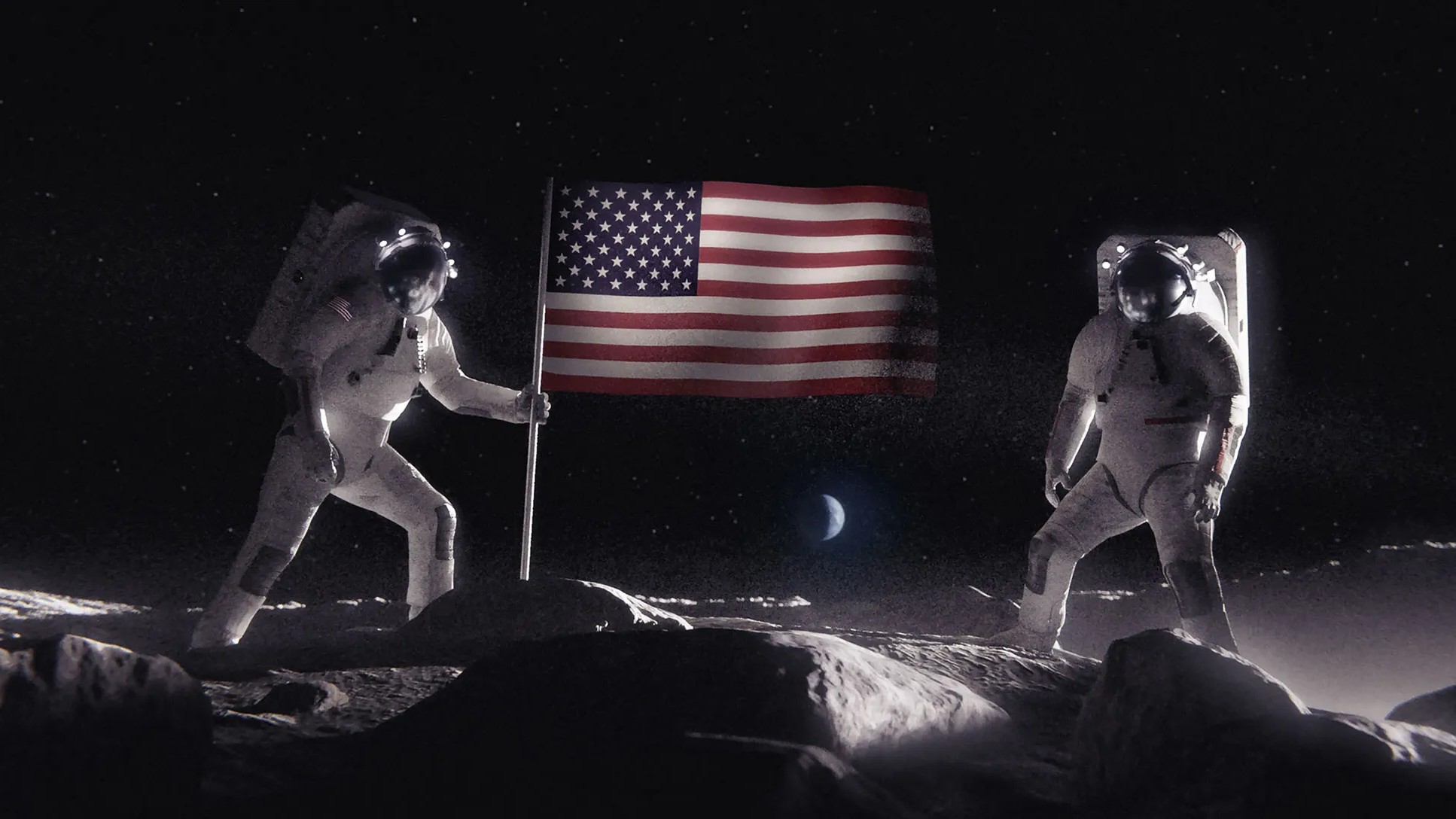
**NASA’s Ambitious Moon Mission Faces Significant Delays Due to Undelivered Spacesuits, Audit Reveals**
The United States’ highly anticipated return to the lunar surface, spearheaded by NASA’s Artemis program, is facing a substantial setback. According to a recent audit, the development of the agency’s next-generation spacesuits has encountered significant delays, potentially pushing back the planned moon landings by over three years. This critical piece of hardware, essential for astronaut safety and operations on the Moon, remains undelivered, casting a shadow over the program’s timeline.
**NASA’s Ambitious Lunar Return Faces Setback as Artemis Spacesuit Testing Slips to 2031**
A critical component of NASA’s planned return to the Moon, the development of new spacesuits, is experiencing significant delays, pushing back crucial demonstrations until 2031. This timeline directly jeopardizes the agency’s goal of sending astronauts back to the lunar surface in 2028.
According to a new report from NASA’s Office of Inspector General (OIG), design and testing hurdles have aligned with recent historical patterns, causing the protracted schedule. The spacesuits are being developed by private contractor Axiom Space.
The OIG’s findings highlight a growing concern that the Artemis program, despite its ambitious timelines, is grappling with the realities of complex technological development and contractor performance. The extended delay in spacesuit demonstrations means that essential field testing and validation will occur well after the intended crewed lunar landing date, raising questions about the program’s readiness and the feasibility of its current schedule.
NASA faces a critical hurdle for its upcoming lunar missions: the urgent need for new spacesuits. The agency’s existing Apollo-era suits, dating back over half a century, are no longer viable for the demanding environment of the Moon. Furthermore, current International Space Station (ISS) spacesuits are also overdue for a significant overhaul, flagged in a recent report for carrying “significant safety risks.”
NASA’s ambition to equip its astronauts with new spacesuits has been hampered by internal challenges, according to a recent Office of Inspector General (OIG) report. The OIG identified that the space agency’s procurement methods created significant obstacles for the companies tasked with developing these crucial pieces of equipment. Compounding these issues, the OIG also concluded that NASA’s projected timeline for delivering the new spacesuits was overly optimistic, setting the stage for potential delays.
Here are a few paraphrased options, maintaining a journalistic tone:
**Option 1 (Focus on the delay):**
> NASA’s original timelines for its new spacesuits were “overly optimistic and unrealistic,” according to Deanna Lee, audit assistant director at the NASA Office of Inspector General. She stated in a video address that both suit development projects are currently facing delays of at least 18 months.
**Option 2 (More direct and concise):**
> According to Deanna Lee, audit assistant director at the NASA Office of Inspector General, the initial schedules for the development of NASA’s new spacesuits were “overly optimistic and unrealistic.” She confirmed in a video statement that both projects are now running at least a year and a half behind their projected completion dates.
**Option 3 (Emphasizing the audit findings):**
> Audit findings reveal that NASA’s initial demonstration schedules for its upcoming spacesuits were “overly optimistic and unrealistic,” stated Deanna Lee, audit assistant director at the NASA Office of Inspector General. In a video release, Lee detailed that both suit programs are now delayed by a minimum of 18 months.
**Key changes made:**
* **Replaced “found that”**: Used “according to,” “audit findings reveal,” or directly stated the finding.
* **Reordered the sentence structure**: To avoid direct copying.
* **Used synonyms**: “timelines” for “schedules,” “development projects” or “programs” for “suits” in context, “facing delays” or “running behind” for “behind schedule.”
* **Clarified the duration**: Explicitly stated “18 months” in addition to “a year and a half” for clarity.
* **Maintained attribution**: Kept Deanna Lee and her title central to the quote.
* **Journalistic tone**: Kept it factual, direct, and objective.
**Potential Delays Loom for Future Lunar Missions as NASA Faces Axiom Challenges**
NASA’s ambitious lunar exploration plans, particularly the Artemis program, could face significant setbacks if a key partner, Axiom, fails to meet critical requirements. Agency officials have indicated that while NASA is actively working to support Axiom’s endeavors, a failure to satisfy the agency’s needs might necessitate substantial adjustments to the Artemis mission schedule.
**Axiom Space, the exclusive provider of spacesuits for NASA, has affirmed its dedication to delivering advanced spacewalking gear on schedule.** Company CEO and President Jonathan Cirtain expressed enthusiasm for a recent review, stating Axiom Space actively welcomed the assessment and remains steadfast in its commitment to the timely provision of next-generation spacesuits.
Here are a few paraphrased options, maintaining a journalistic tone and the core meaning:
**Option 1 (Direct and Concise):**
> The priority is a secure and functional spacesuit, designed to equip American astronauts for a return and subsequent exploration of the Moon in 2028, according to Cirtain’s statement to Live Science.
**Option 2 (Slightly More Active Voice):**
> Cirtain informed Live Science via email that the ongoing mission objective is to produce a safe and effective spacesuit, crucial for enabling American astronauts to journey back to and conduct explorations on the lunar surface by 2028.
**Option 3 (Emphasizing the Goal):**
> To ensure American astronauts can safely tread and explore the lunar surface in 2028, the development of a capable spacesuit remains the central focus, Cirtain stated in an email to Live Science.
**Option 4 (Highlighting the “Return” aspect):**
> “We are committed to providing a spacesuit that is both safe and highly capable, allowing American astronauts to not only return to the Moon but also explore its surface in 2028,” Cirtain explained to Live Science in a written statement.
NASA is setting its sights on landing astronauts on the Moon in 2028 with the Artemis IV and Artemis V missions. While the ambitious Artemis program is currently facing delays and exceeding its budget – a stark contrast to initial plans for a lunar return by this time – the agency has reaffirmed its human spaceflight capabilities. This was notably demonstrated with the successful Artemis II mission, which sent a crew on a journey around the Moon.
For over 15 years, NASA has been on a quest to secure advanced spacesuits, a critical piece of equipment for its astronaut corps. These endeavors, beginning in 2007, have encompassed both internal development projects and collaborations with external aerospace companies. The agency’s latest strategy, initiated in 2022, involves a significant investment of over $3 billion. This funding has been allocated to Axiom Space and Collins Aerospace, who are tasked with creating new spacesuits that NASA will subsequently lease for its upcoming missions.
Here are a few paraphrased options, maintaining a journalistic tone and unique phrasing:
**Option 1 (Focus on NASA’s Situation):**
> NASA found itself in a precarious position in 2024 when Collins withdrew from its spacesuit contract. The agency cited a failure by Collins to adhere to the established timeline, forcing NASA to depend on Axiom Space to develop two distinct spacesuit models: one for operations aboard the International Space Station and a separate design for lunar surface exploration.
**Option 2 (Focus on the Contract Shift):**
> Following Collins’ withdrawal from its spacesuit contract in 2024, reportedly due to an inability to meet deadlines, NASA shifted its reliance to Axiom Space. The agency now looks to Axiom to deliver two new spacesuit configurations, catering to both International Space Station missions and the demanding requirements of lunar landings.
**Option 3 (More Concise):**
> A critical spacesuit contract with Collins was terminated by NASA in 2024 over schedule concerns. This development has placed the responsibility on Axiom Space to engineer two new suit types, intended for use on the ISS and for future lunar missions.
**Option 4 (Emphasizing the “New” Suits):**
> In 2024, NASA’s spacesuit program faced a significant hurdle when Collins pulled out of its contract, citing missed deadlines. Consequently, the agency has turned to Axiom Space to develop two entirely new spacesuit designs: one tailored for the unique environment of the International Space Station and another engineered for the challenges of lunar excursions.
Crucially, the new Artemis spacesuits must interface seamlessly with the diverse suite of Artemis operational systems. A critical element for this interoperability is the Human Landing System (HLS), currently under development by aerospace firms SpaceX and Blue Origin. This essential lunar lander, however, is grappling with its own significant hurdles, including persistent schedule delays and ongoing assessments regarding potential crew safety risks.
While Apollo-era spacesuits featured crucial adaptations, such as reinforced gloves and boots designed to shield astronauts from the moon’s abrasive terrain and pervasive dust, a recent report highlights their fundamental inadequacies for future missions. These bespoke garments were custom-fitted for individual wearers and are now considered technologically obsolete. Crucially, they were not engineered for the long-term durability required by the ambitious Artemis program, rendering them unsuitable for the next generation of lunar explorers.
NASA’s Extravehicular Mobility Unit (EMU) spacesuits, the crucial equipment enabling astronauts to conduct spacewalks from the International Space Station (ISS), are facing increasing scrutiny. Though instrumental in facilitating over 200 successful extravehicular activities, these suits were originally designed for the Space Shuttle program and have not undergone a major redesign in the past two decades. This prolonged service without significant updates has highlighted inherent design flaws, most notably including persistent issues with water leaking into the helmet and difficulties in maintaining optimal thermal regulation for astronauts.
A recent report warns that should Axiom Space fail to deliver its promised next-generation spacesuits, astronauts may be forced to continue utilizing the current, “problematic” Extravehicular Mobility Units (EMUs). This scenario would extend their use through the remainder of the International Space Station’s operational life, currently slated for decommissioning in 2030.
NASA could soon open the bidding process for spacesuits to a wider array of contractors. A recent report highlights that multiple companies, notably aerospace giant SpaceX, are actively developing advanced spacesuit capabilities that could challenge the offerings of current provider Axiom. However, despite this emerging competition, NASA officials reportedly do not believe these new contenders will provide an immediate solution to their current needs.
In a proactive push toward future missions, the space agency is simultaneously tackling critical readiness areas. These efforts encompass identifying potential weaknesses within its supply chain, significantly intensifying the rigor of its spacesuit testing, and forging broader partnerships with other government entities.
The extended delay in NASA’s acquisition of critical spacesuits, now not anticipated until 2031, carries significant geopolitical ramifications. This timeline creates a potential scenario where China could beat the United States in returning humans to the lunar surface. Both nations are currently embroiled in a new space race, intensely focused on establishing a permanent presence at the moon’s South Pole, with Beijing specifically targeting a crewed moon landing before 2030. Nevertheless, NASA administrator Jared Isaacman reportedly maintains a bullish outlook despite these challenges.
Here are a few paraphrased options, maintaining a journalistic tone:
**Option 1 (Focus on confidence and timeline):**
> Isaacman expressed strong confidence on Monday, stating on the social platform X that “when NASA is ready to land on the Moon in 2028, our astronauts will be wearing Axiom suits.”
**Option 2 (More direct and concise):**
> On Monday, through a post on X, Isaacman declared his certainty that Axiom suits will outfit NASA astronauts for their planned 2028 lunar landing.
**Option 3 (Slightly more elaborate, highlighting the partnership):**
> Speaking on the social platform X on Monday, Isaacman conveyed his unwavering belief that Axiom’s spacesuits will be the gear worn by astronauts during NASA’s anticipated 2028 Moon landing.
**Option 4 (Emphasizing the future event):**
> Looking ahead to NASA’s 2028 lunar landing, Isaacman asserted on X on Monday that “our astronauts will be wearing Axiom suits” for the historic mission.