
While general headaches are a common experience, a far more severe and less prevalent condition is the cluster headache. These debilitating attacks inflict acute pain so intense that it typically lasts one to two hours, leaving individuals in complete agony and unable to function. True to their name, these excruciating episodes occur in “sets” or clusters. This rare neurological disorder affects just under one percent of the U.S. population.
While the clinical description provides a framework, the pressing question remains: what does it truly feel like to endure a cluster headache?
Cluster headaches inflict such intense pain that sufferers find it impossible to remain still, explains Tom Zeller, an MIT-based science journalist who has endured them for decades. Zeller vividly compares the agony to holding one’s hand on a scorching hot burner for an hour or two, with no ability to withdraw it. He describes every headache as an emergency, compelling individuals to pace, run, or rock in an effort to cope with the relentless, extreme intensity concentrated entirely within the head.
Migraine headaches present a severe and often prolonged form of pain, frequently described as less acute but more enduring than a cluster attack, yet equally incapacitating. These debilitating episodes often manifest with a host of neurological symptoms, including intense sensitivity to light and noise, visual disturbances, and nausea. Sufferers are frequently forced into isolation in darkened rooms, sometimes for hours or even days, to cope with the profound discomfort. Globally, an estimated 1.2 billion individuals experience migraine attacks, a figure that includes approximately 40 million people in the United States alone.
Migraine and cluster headache disorders, despite their common occurrence, present a profound medical enigma. The exact causes of these debilitating conditions remain unknown, as do definitive methods for their treatment. This lack of fundamental understanding is further exacerbated by the historic lack of prominence given to headaches within modern medical research, raising critical questions about why such pervasive health issues have been consistently overlooked.
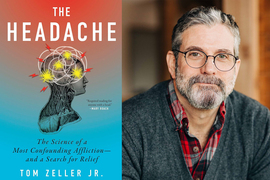
Zeller explores the intricate world of headaches in his compelling new book, “The Headache: The Science of a Most Confounding Affliction — and a Search for Relief,” published this summer by Mariner Books. Zeller is also the editor-in-chief and co-founder of Undark, a digital magazine on science and society produced by the Knight Science Journalism Program at MIT.
Paradoxically, a single term in medical discourse can refer to multiple, distinct syndromes.
In his inaugural book, “The Headache,” Zeller presents a comprehensive and deeply personal examination of the condition. The work interweaves his first-person account of suffering with vivid portrayals of the pain and dread experienced by other headache sufferers, complemented by thorough reporting on scientific and medical research. Zeller’s own struggle with cluster headache attacks has spanned more than 30 years, originating in his twenties.
Zeller revealed that, in a sense, his book was the culmination of his entire adult life’s experiences, accumulated without conscious intent. His years of dedicated research into the conditions discussed in the work were, in fact, directly spurred by his personal and ongoing battle with persistent headaches.
The book critically examines why society has seemingly failed to adequately address the debilitating impact of cluster headaches and migraines, a neglect reflected in the relatively slow advancement of headache disorder research. Contributing to this scientific lag, as Zeller astutely observes, is the profound inherent difficulty in studying the brain and the central nervous system.
In his book, Zeller posits a significant societal conflation: everyday headaches, such as those caused by prolonged screen exposure, are frequently mistaken for the far more debilitating and distinct conditions of cluster headache and migraine. Notably, some individuals experiencing these severe disorders refer to them in the singular form, emphasizing their chronic, ongoing nature rather than a series of isolated painful episodes.
The common use of the term “headache” to describe both minor discomforts and debilitating conditions like cluster headaches and migraines, a point emphasized by Zeller, may contribute significantly to the societal underestimation of severe headache disorders. This linguistic overlap appears to reinforce the perception that even intense headaches are something individuals should simply endure, rather than being recognized as distinct and pressing medical problems.
Zeller notes the enduring societal inclination to associate migraine and other severe headache conditions with malingering, a perception he indicates is unlikely to recede.
Women account for approximately three-quarters of all migraine sufferers, a profound gender disparity that, as Zeller suggests, has plausibly contributed to the condition being historically marginalized. This historical oversight, however, may be more pronounced in recent eras. Zeller’s work highlights that severe headache disorders were recognized in ancient times, raising the possibility that they have, ironically, received less comparative attention in modernity.
The core philosophy guiding medical practice is currently undergoing a profound transformation, heralding an emergent era in healthcare strategy.
For much of the 20th century, medical consensus linked migraine and cluster headaches to abnormalities within blood vessels. However, recent decades have witnessed a profound paradigm shift, as detailed by Zeller, with these debilitating conditions now primarily understood to have neurological origins.
A pivotal advancement in migraine understanding occurred in the 1980s with the identification of calcitonin gene-related peptide (CGRP), a critical neurotransmitter. Researchers determined that CGRP, released from nerve endings around blood vessels, directly contributes to the manifestation of migraine symptoms. This discovery provided an entirely new strategic approach and a specific therapeutic target for alleviating severe head pain. The initial medications designed to inhibit CGRP’s effects became commercially available in 2018. Consequently, the majority of experts in the field now primarily classify idiopathic headache as a neurological disorder, rather than a vascular problem.
Zeller explains that the process of altering scientific direction is inherently difficult, likening the challenge to “turning a ship on a dime.” He notes this same formidable task applies directly to the study of headaches.
Numerous medications have been developed to block specific neurotransmitters. However, permanent relief remains elusive for the majority, with only approximately 20 percent of patients finding lasting benefits. As documented by Zeller, many others experience an initial period of improvement lasting about a year before the medication’s effects diminish. Consequently, a significant number of these individuals are now exploring complex combinations of drugs in their ongoing treatment.
Severe headache disorders are strongly associated with hormonal fluctuations, typically emerging during adolescence and often seeing a reduction in symptoms later in life. Despite a recent significant breakthrough in headache medicine, experts emphasize that considerable further research and development are essential.
Initiating a comprehensive dialogue.
A central evolutionary mystery continues to occupy researchers like Zeller: the fundamental question of why humans experience headache disorders. No clear evidence suggests that other species suffer from severe headaches, nor has the prevalence of these conditions ever demonstrably decreased within human society.
A prominent hypothesis, noted by Zeller, proposes that an acutely responsive nervous system, which may have offered a crucial survival advantage in our primitive past, could simultaneously contribute to severe disorders in some individuals when its complex “wiring” malfunctions. Ongoing neuro-based headache research is expected to shed more light on this intricate connection.
“The Headache” has drawn extensive praise, with Jerome Groopman of The New Yorker particularly commending the book’s “rich material.” Groopman observed that the work expertly integrates historical perspectives, biological science, an overview of current research, patient accounts, and a deeply personal narrative of author Zeller’s own arduous experience.
Zeller has voiced his appreciation for the considerable attention “The Headache” has drawn, recognizing it as one of the summer’s standout nonfiction releases.
Zeller expressed satisfaction that her work has catalyzed an important conversation, one she notes rarely penetrates mainstream discourse. She reported receiving considerable gratitude from patients who feel their voices are now being heard, which she finds profoundly gratifying. Furthermore, Zeller observed a significant engagement from doctors and scientists, acknowledging the opportune moment for such a discussion.