

Whitney Zhang staunchly advocates for a core principle: every worker’s value must be recognized and appreciated, regardless of their specific placement within an organization’s hierarchical structure.
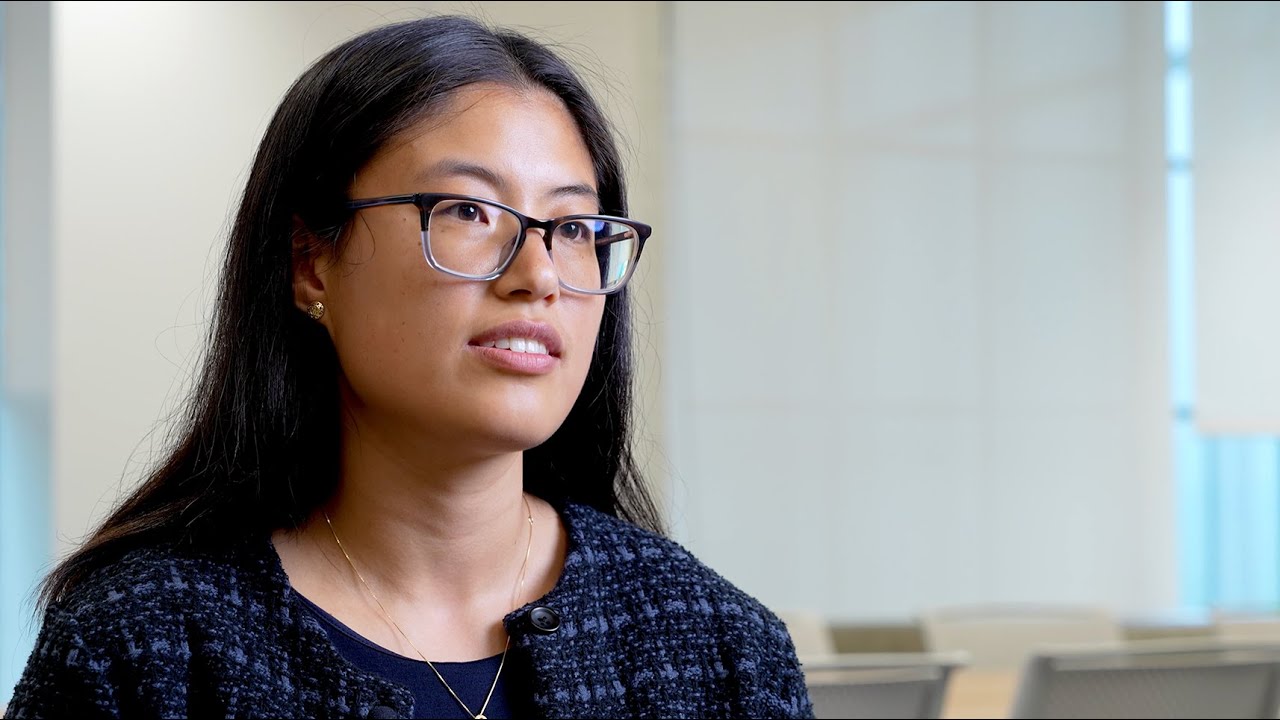
Zhang, a doctoral candidate at MIT’s Department of Economics, specializes in labor economics. Her research specifically investigates how the technological and managerial decisions made by companies influence workers across the full income spectrum.
Having majored in mathematical economics during undergraduate studies, Zhang articulated a long-standing fascination with economics, its broad impacts, and pertinent social issues. This interest was primarily driven by a desire to apply mathematical skills to refine policies and enhance their overall effectiveness.
Zhang is dedicated to advancing worker welfare, advocating for a strategic approach that combines engagement with policymakers and evidence-based policy formulation. She firmly believes it’s essential to keep the human impact at the forefront of policy discussions. “We have to remember the people whose lives are impacted by business operations and legislation,” Zhang emphasized, underscoring the necessity of centering those directly affected by corporate and legislative decisions.
She also grasps the intricate confluence of political forces, social standing, and fiscal duties that shape the operational landscape for organizations and their employees.
Even when her research centers on the workforce, she emphasizes that solving related challenges necessitates a comprehensive understanding of the broader economic landscape, including firm incentives and global financial conditions.
The nexus of technological innovation and employment legislation.
During her early doctoral studies, Zhang initiated comprehensive investigations into employee productivity, artificial intelligence, and their broader implications for economic and labor market phenomena. She frequently collaborated with her fellow PhD candidates within the department on these inquiries.
A 2023 study, co-authored with economics doctoral student Shakked Noy, investigated ChatGPT’s capacity to elevate workplace productivity. The research concluded that the AI tool substantially enhanced workers’ output, particularly on writing assignments. Notably, the most significant productivity gains were observed among employees who initially demonstrated the lowest performance levels on these tasks.
This finding served as one of the initial data points demonstrating the productivity enhancements driven by generative AI, providing concrete insights into the profound influence these tools could exert on workplaces and the labor market, Zhang stated.
Researcher Zhang is concurrently leading a study titled “Determinants of Irregular Worker Schedules,” which delves into the complex issue of scheduling unpredictability. Drawing on comprehensive data from a payroll provider, the research endeavors to uncover why companies adopt erratic work schedules and to evaluate their specific impact on the quality of life for low-wage employees.
A new scheduling project, a collaboration with MIT economics PhD student Nathan Lazarus, aims to mitigate the adverse effects of unpredictable work schedules on low-wage employees. The initiative is primarily motivated by existing sociological research that links such inconsistent arrangements to poorer sleep and reduced overall well-being. Furthermore, researcher Zhang points to a correlation between higher employee turnover and inadequate, inconsistent scheduling, suggesting workers strongly prefer more stable employment conditions.
At an academic roundtable, researcher Zhang presented her findings to Starbucks employees responsible for scheduling and staffing. The attendees expressed keen interest in understanding how various scheduling practices impacted worker productivity and well-being. Zhang highlighted the broad relevance of such investigations, suggesting they could yield valuable insights for organizations ranging from small businesses to large corporations.
Zhang’s ongoing research aims to determine if scheduling regulations genuinely improve the quality of life for affected employees, while simultaneously scrutinizing any potential unforeseen negative consequences. Her study is driven by fundamental questions, exploring the rationale behind current scheduling practices and assessing whether businesses utilizing such models require increased regulatory oversight.
A collaborative research initiative, conducted with MIT economics doctoral student Arjun Ramani, is delving into the complex interplay of offshoring, remote work, and their associated consequences. The project specifically investigates whether technological and managerial advancements facilitating remote work also streamline offshoring processes, if organizations experience substantial efficiency improvements, and the resulting impacts on both U.S. and offshore workforces.
Her academic endeavors receive financial backing from both the National Science Foundation Graduate Research Fellowship Program and the Washington Center for Equitable Growth.
Prioritizing human needs and experiences.
Zhang’s observations have illuminated the diverse individuals brought together by the fields of economics and higher education. While in high school, she participated in a dual enrollment program, completing college-level courses alongside students from a wide array of demographic backgrounds. “I enjoyed centering people in my work,” Zhang explained, noting that her interactions with a diverse student cohort—including military veterans and mothers returning to complete their degrees—profoundly deepened her curiosity regarding socioeconomic issues and the policies designed to address them.
Her academic path led her to MIT, where she participated in the Undergraduate Research Opportunities Program (UROP). During this period, she accrued significant professional experience, including an internship at the World Bank and a summer analyst role at the Federal Reserve Bank of New York. She also served as an assistant to a diverse cohort of faculty, among them distinguished MIT economists David Autor, Jon Gruber, and Nina Roussille. David Autor, whom she acknowledges as a significant influence and mentor, is her primary advisor for her doctoral research.
Professor Autor’s course, 14.03 (Microeconomics and Public Policy), was instrumental in forging strong connections between economic theory and practical application, a student reported. She described the class as revelatory, illuminating the diverse array of questions economics is capable of answering.
Doctoral studies, combined with robust academic networking among peers and faculty, have propelled Zhang’s research into novel areas. Notably, she leveraged faculty connections to obtain essential hourly wage data, a critical component for her work examining employee scheduling and its broader impacts. Zhang underscored the rarity of such granular information, pointing out that “economists generally have had administrative data on earnings, but not on hours.”
Outside of her academic responsibilities, Zhang is deeply involved in community service, serving as a mentor for the Boston Chinatown Neighborhood Center College Access Program and participating in MIT’s Graduate Christian Fellowship group. When not indulging in spicy cuisine or paddling on the Charles River, she finds relaxation and creative outlet through her art at W20 Arts Studios.
Her aspiration was to carve out personal time, separate from the demands of her research and classroom duties.
Zhang credits MIT’s emphasis on cross-disciplinary collaboration and its encouragement for students to explore diverse fields as highly beneficial. As an undergraduate, Zhang pursued a minor in computer science, acquiring essential coding skills vital for her data work. Her exposure to engineering further sparked her interest in the intricate dynamics between technology and the workforce.
Collaboration with fellow scholars within her department has significantly enhanced Zhang’s research practices. She attributes this experience to her development into a comprehensive professional, now capable of identifying and quantifying impacts – a skill she deems indispensable for future projects. Zhang also asserts that broader engagement with diverse academic and research fields is crucial for expanding access to new ideas and essential information.





