
Artificial intelligence models, primarily known for their capacity to translate text into images, are increasingly proving their utility in the realm of material science for synthesizing novel substances. In recent years, generative materials models from leading technology companies such as Google, Microsoft, and Meta have leveraged extensive training data to assist researchers in designing tens of millions of unprecedented materials.
Current theoretical models are proving insufficient for the complex task of designing materials endowed with exotic quantum properties, including superconductivity or novel magnetic states. This deficiency presents a significant hurdle, as advanced computational guidance in material design would greatly accelerate scientific progress. A stark illustration of this challenge lies in quantum spin liquids—a class of materials critical for advancing quantum computing. Despite a decade of intensive investigation, researchers have identified only about a dozen potential candidates. Such a limited pool of viable materials directly impedes the development of the foundational components necessary for future technological breakthroughs.
Researchers at MIT have pioneered a technique that enables prominent generative AI models for materials to create promising quantum substances. This method incorporates specific design rules, or constraints, which guide the models to engineer materials possessing unique structural configurations that give rise to their quantum properties.
Models developed by major companies tend to generate materials primarily optimized for stability, notes Mingda Li, MIT’s Class of 1947 Career Development Professor. Li, however, argues that this approach often diverges from how materials science genuinely advances. He asserts that significant global change doesn’t necessitate millions of new materials, but rather the discovery of just one truly exceptional substance.
A new research methodology, outlined today in a paper appearing in Nature Materials, enabled scientists to computationally generate millions of prospective materials. These candidates possessed geometric lattice structures intrinsically linked to quantum properties. From this extensive array, the team successfully synthesized two distinct materials, both demonstrating exotic magnetic attributes.
The quantum community exhibits significant interest in specific geometric constraints, particularly Kagome lattices, which are defined by their structure of two overlapping, inverted triangles. According to Li, materials engineered with these Kagome lattices were developed due to their capacity to mimic the behavior of rare earth elements, a property that bestows considerable technical importance upon them.
The study’s authorship team was led by senior author Li, who collaborated with a diverse group of researchers. From MIT, the contributors included PhD students Ryotaro Okabe, Mouyang Cheng, Abhijatmedhi Chotrattanapituk, and Denisse Cordova Carrizales; postdoc Manasi Mandal; undergraduate researchers Kiran Mak and Bowen Yu; visiting scholar Nguyen Tuan Hung; Xiang Fu ’22, PhD ’24; and Professor Tommi Jaakkola, an expert in electrical engineering and computer science with affiliations to both the Computer Science and Artificial Intelligence Laboratory (CSAIL) and the Institute for Data, Systems, and Society. Further contributions came from external partners: Yao Wang of Emory University, Weiwei Xie from Michigan State University, YQ Cheng at Oak Ridge National Laboratory, and Robert Cava representing Princeton University.
Directing models toward tangible, high-impact results.
A material’s inherent properties are fundamentally determined by its atomic structure, a principle that holds particular importance within the realm of quantum materials. Certain atomic configurations are notably more prone to exhibiting unusual, or ‘exotic,’ quantum characteristics than others. For example, square lattice structures have been identified as potential platforms for developing high-temperature superconductors. In parallel, distinct geometries known as Kagome and Lieb lattices are being explored for their capacity to foster materials essential for advancements in quantum computing.
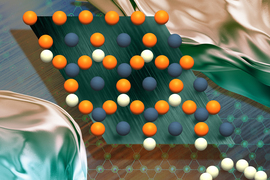
Researchers have developed SCIGEN, a novel computer code designed to significantly enhance the capabilities of diffusion models, a popular class of generative AI. Short for Structural Constraint Integration in Generative Model, SCIGEN enables these models to produce materials that precisely conform to specific geometric patterns.
The innovative code functions by integrating user-defined structural rules directly into each iterative generation step, ensuring strict adherence to the desired designs. This functionality empowers users to impose specific geometric constraints on any generative AI diffusion model as it creates new materials.
Artificial intelligence diffusion models function by extracting patterns from their training datasets to produce novel structures, ensuring these outputs accurately mirror the distribution characteristics of the original data. A complementary system, SCIGEN, then plays a crucial role by intercepting and blocking any generations that do not adhere to established structural rules.
In a key validation of SCIGEN, researchers integrated the system with DiffCSP, a prominent AI model used for material generation. The SCIGEN-enhanced model was subsequently tasked with creating materials that featured Archimedean lattices. These unique geometric patterns are characterized by their two-dimensional tilings composed of various polygons. Archimedean lattices are of significant scientific interest, known for their potential to exhibit a range of quantum phenomena, and have been a consistent focus of extensive research.
Archimedean lattices are exceptionally important, according to Cheng, a co-corresponding author of the research. These structures are responsible for generating quantum spin liquids and flat bands, with the latter possessing the unique ability to mimic the properties of rare earth elements without requiring their actual presence.
Beyond these characteristics, other materials featuring Archimedean lattices are noted for their large pores, which could offer promising applications in areas like carbon capture. Cheng also highlighted the intriguing challenge of discovering the first material examples for certain Archimedean lattices where none are currently known to exist.
Researchers began by generating more than 10 million prospective material candidates, all featuring Archimedean lattices. After a thorough stability screening, one million of these materials were deemed viable.
Leveraging the advanced supercomputing capabilities at Oak Ridge National Laboratory, scientists then selected a subset of 26,000 materials for detailed simulations. These computations were designed to unravel the intricate behavior of the materials’ underlying atoms. A significant finding emerged: 41 percent of the examined structures exhibited magnetic properties.
At the laboratories of Xie and Cava, researchers successfully synthesized two previously unknown compounds, TiPdBi and TiPbSb, from a specific subset of materials. Subsequent experiments largely validated the AI model’s predictions, showing a strong alignment with the actual properties of these newly created substances.
The research team, led by first author Okabe, sought to identify novel materials with substantial potential. Their strategy involved incorporating structures already known for exhibiting quantum properties. Okabe emphasized that beginning with materials featuring specific geometric patterns was a logical starting point, given their established scientific intrigue.
Expediting revolutionary material discoveries.
Quantum spin liquids are believed to be a critical advancement for quantum computing, potentially providing the stable, error-resistant qubits essential for operational reliability. Despite their promising role, no quantum spin liquid materials have yet been experimentally confirmed. Researchers Xie and Cava contend that the SCIGEN platform could significantly accelerate the search for these crucial materials.
The global pursuit of quantum computing materials and topological superconductors is deeply tied to the specific geometric patterns found within materials, Xie explained. Yet, experimental progress in this crucial area has been markedly slow, Cava noted. A key challenge arises from the stringent structural requirements of many quantum spin liquid materials, which often demand particular geometric arrangements like triangular or Kagome lattices. While meeting these structural constraints is a necessary condition to pique the interest of quantum researchers, it is not sufficient for achieving the desired properties. By expanding the production of such materials, the scientific community can instantly provide experimentalists with hundreds or thousands of new candidates, poised to significantly accelerate the development of quantum computer materials.
A cutting-edge machine learning tool has emerged, poised to predict which materials will exhibit specific elemental arrangements in a desired geometric pattern. Drexel University Professor Steve May, an expert unconnected to the research, highlighted the innovation’s potential to significantly hasten the development of unexplored materials. These advancements, he noted, are crucial for applications in future electronic, magnetic, and optical technologies.
Researchers emphasize the critical need for hands-on experimentation to validate whether AI-designed materials can be synthesized in practice and to confirm how their actual properties align with computational predictions. Looking ahead, future iterations of SCIGEN could enhance its generative models by incorporating more sophisticated design parameters, including specific chemical and functional constraints.
Innovators focused on global transformation often prioritize the functional properties of materials over their inherent stability and structural integrity, Okabe notes. He explains that while their specific approach may reduce the proportion of stable materials, it simultaneously creates significant opportunities for generating a wide array of promising new substances.
Partial funding and computational resources for this research were provided by the U.S. Department of Energy, the National Energy Research Scientific Computing Center, the National Science Foundation, and Oak Ridge National Laboratory.