
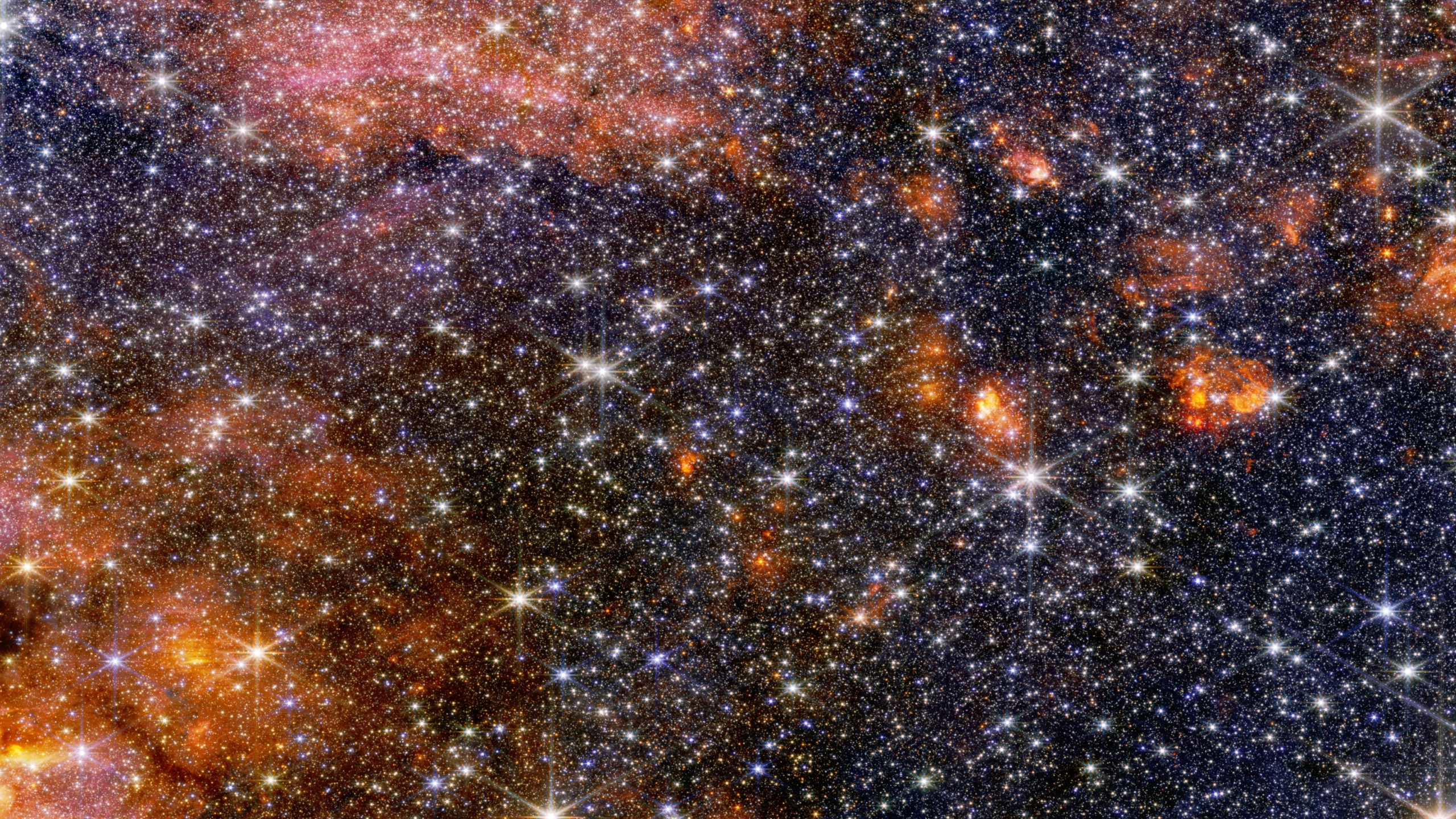
Stars within the Milky Way galaxy are primarily born in colossal molecular clouds. The most massive of these is Sagittarius B2, situated merely a few hundred light-years from the supermassive black hole at the galaxy’s center, known as Sagittarius A*. Despite containing only 10% of the galactic center’s total gas, Sagittarius B2 is remarkably responsible for approximately half of the region’s ongoing star formation. The precise reasons for this disproportionate star-birthing activity within the galactic center remain a significant puzzle for scientists.
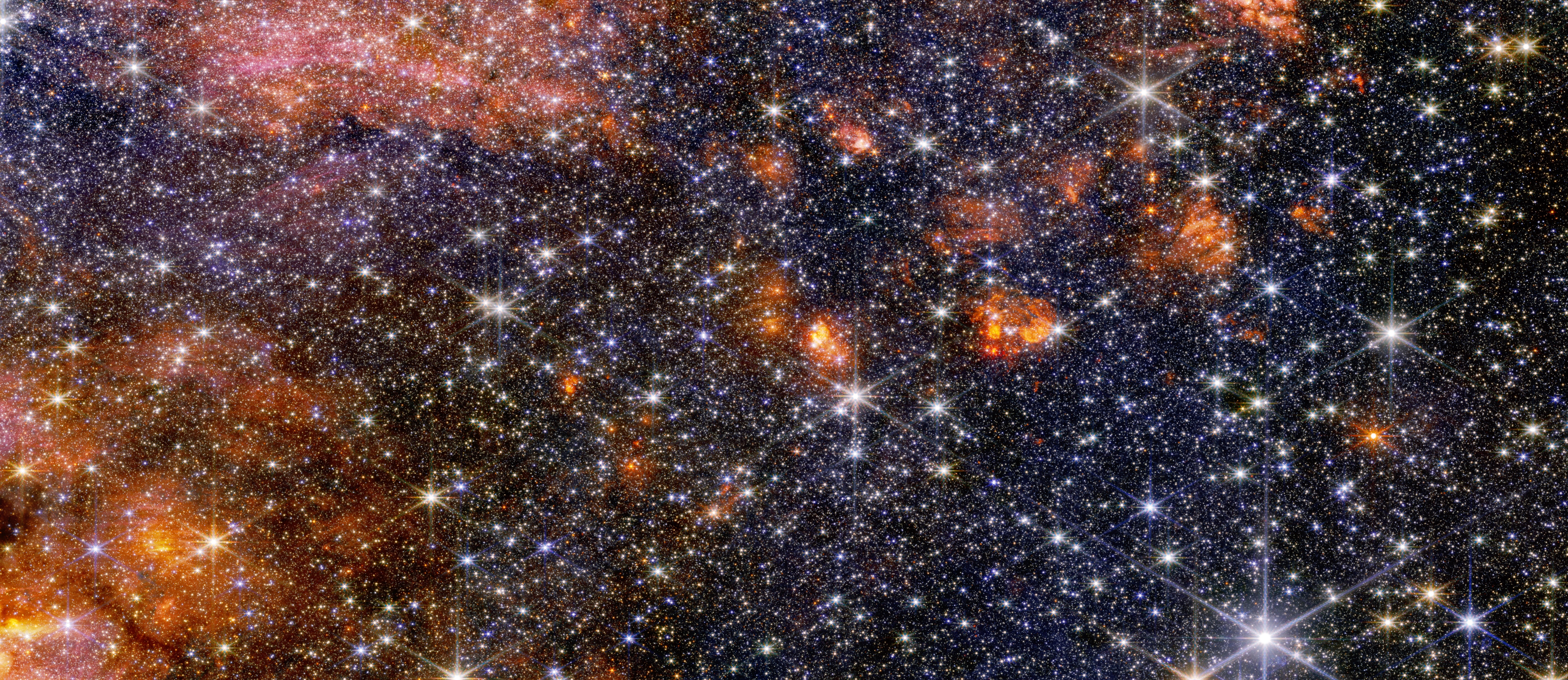
The James Webb Space Telescope (JWST) recently focused its advanced instruments on Sagittarius B2, conducting observations across two distinct wavelengths of light to investigate an astronomical phenomenon. A remarkable new image of this molecular cloud, captured by the JWST’s Near-Infrared Camera (NIRCam), offers a dramatic view. It reveals a brilliant display of stars shining brightly amidst sprawling orange clouds of gas and dust, all illuminated by near-infrared light.
A separate image of the cloud, captured by the JWST’s Mid-Infrared Instrument (MIRI), provided compelling evidence of the profound variations in observable details that exist even within the infrared spectrum itself.
The MIRI instrument has provided a profoundly distinct view of the region, illuminating its vast dust clouds through the light of its own stars. The image portrays expansive swathes of pink and purple nebulae, strikingly contrasted by intensely dark, star-studded pockets. Yet, even the advanced infrared vision of the James Webb Space Telescope (JWST) faces limitations. It cannot pierce the densest concentrations of these clouds, which appear as opaque, dark voids within the MIRI data. These very hidden regions, precisely because they are obscured, are understood to harbor the raw ingredients essential for star formation.
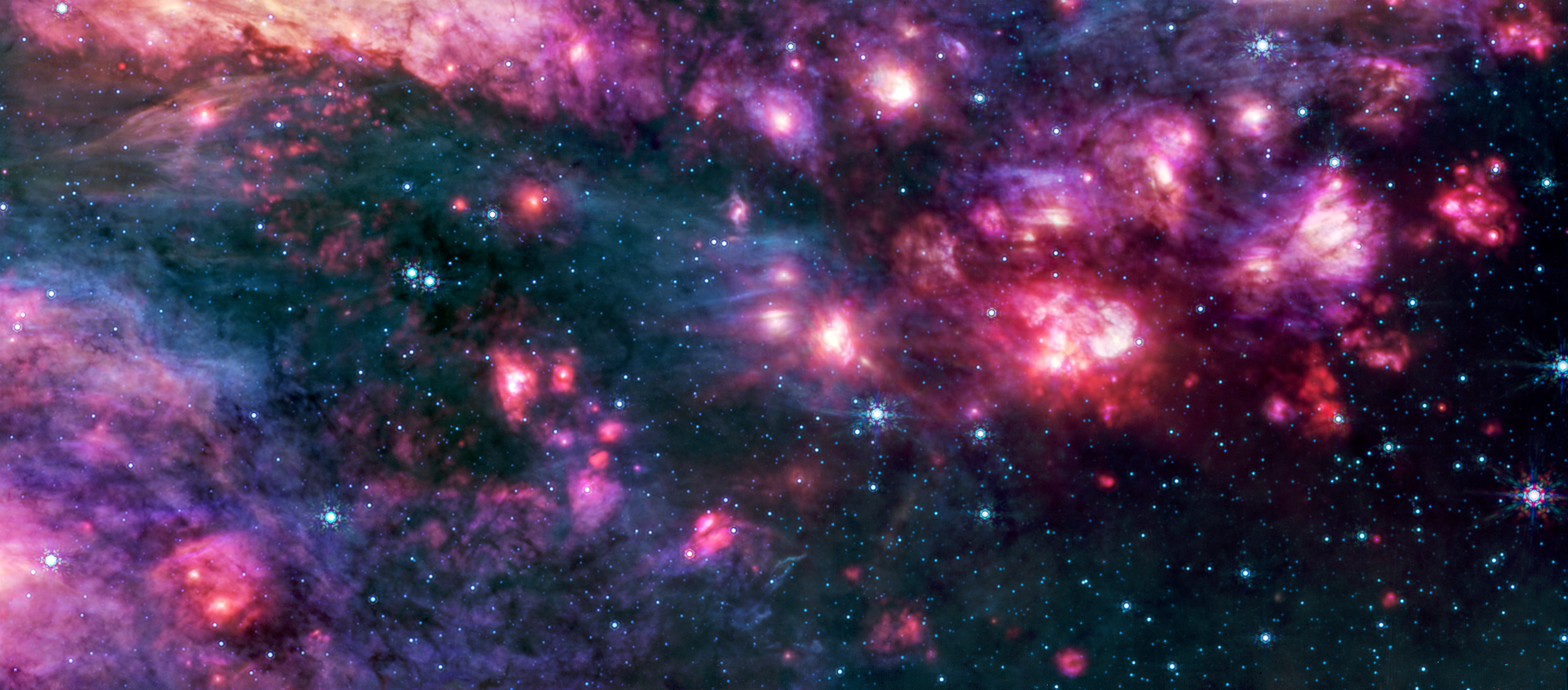
The exceptionally high rate of star formation within Sagittarius B2, which significantly outpaces the rest of the galactic center, continues to puzzle scientists, though potential explanations are beginning to emerge. Key among these clues is a remarkably bright, red region on the right-hand side of the MIRI image, known to be abundant in molecular material. This area could be central to understanding why Sagittarius B2’s star production exceeds that of the entire galactic center, a revelation that might reshape theories on how galaxies grow and evolve. Researchers are now planning to utilize new data from the Webb telescope to pinpoint the duration of Sagittarius B2’s star-forming phase and to investigate whether a particular event triggered its prolific activity.
For more sublime space images, check out our Space Photo of the Week archives.





