The potential discovery of a biosignature on Mars by NASA has sparked speculation: could China be the first to return vital samples to Earth, enabling a definitive analysis?
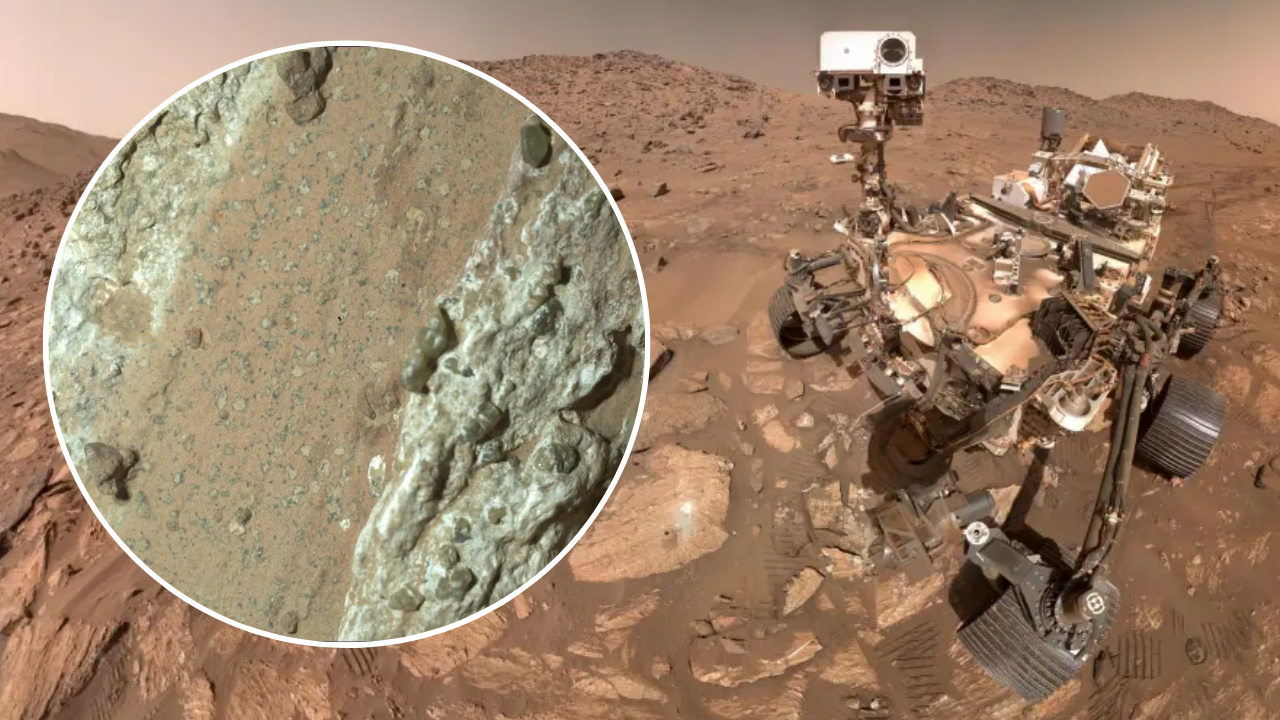
On September 10, NASA’s Perseverance rover team announced the discovery of potential biosignatures within fragments of a Martian rock, named “Cheyava Falls,” located in Jezero Crater. However, researchers emphasize that this initial finding is not conclusive. To definitively determine if these intriguing minerals were formed by microbial metabolism or an abiotic geological process, samples collected by the rover must be delivered to Earth for comprehensive analysis.
The Perseverance rover successfully gathered a rock core sample, designated “Sapphire Canyon,” encapsulating it within a cigar-sized tube. These precious samples were intended for return to Earth as part of NASA’s ambitious Mars Sample Return (MSR) mission campaign. However, the MSR initiative now faces significant challenges, including substantial delays and escalating costs, placing its future in jeopardy. The project’s continuation is further threatened by President Donald Trump’s proposed 2026 federal budget, which suggests deep cuts to NASA spending and could lead to MSR’s cancellation. With the American mission stalled and uncertain, China is now reportedly poised to make the inaugural attempt at a historic mission to bring Martian samples back to Earth.

China’s Tianwen 3 mission is slated for a late 2028 launch, with the ambitious objective of returning Martian samples to Earth by 2031. While the precise landing site for this endeavor remains under consideration, an intriguing question has surfaced: could the mission target Jezero Crater? This specific location is currently the operational area for NASA’s Perseverance rover, and a Tianwen 3 landing there would raise the prospect of collecting samples similar to those already being gathered by its American counterpart.
The Tianwen 3 mission plans to collect approximately 500 grams (1.1 pounds) of Martian samples through a combination of a drill, a scoop, and a small drone. However, the mission’s landing location will be strictly determined by a range of engineering constraints.
The potential landing zone for the Tianwen 3 mission has been narrowed to an area spanning 17 to 30 degrees North latitude. While Jezero Crater, located at 18 degrees North, falls within this latitudinal range, its high altitude renders it unsuitable as a target site.
While Jezero Crater’s floor is situated approximately 8,350 feet (2,600 meters) below Mars’ designated “sea level,” the Tianwen 3 mission necessitates a significantly lower landing point. Scientists involved with the mission, according to a paper in the journal Nature, stipulate that the spacecraft must touch down at least 9,840 feet (3,000 meters) below this notional planetary datum. This deeper elevation is crucial as it provides a denser atmosphere, essential for effectively decelerating the lander to ensure a safe descent onto the Martian surface.
Over decades, NASA has meticulously refined its precision landing technologies for Mars. This sustained development now enables the agency to successfully target and explore scientifically rich yet high-altitude and more hazardous locations, such as Jezero Crater.
A fundamental consideration for space missions is landing accuracy, a parameter frequently characterized by the “landing ellipse.” This refers to the elliptical area on a planetary or celestial surface that delineates the spectrum of all possible touchdown locations for a spacecraft.
Landing on Mars demands extreme precision, a feat exemplified by NASA’s Curiosity and Perseverance missions, which utilized landing ellipses of approximately 4.3 by 3.7 miles (7 by 6 kilometers). China also demonstrated its landing prowess on the Red Planet in 2021, successfully deploying its Zhurong rover in southern Utopia Planitia on its inaugural attempt as part of the Tianwen 1 mission. However, China’s forthcoming Tianwen 3 mission, while leveraging similar technology, anticipates a significantly wider landing zone, spanning 31 by 12.4 miles (50 by 20 kilometers). This substantially larger target area will make it more challenging to pinpoint and access small, crucial scientific locations, such as the Sapphire Canyon site in Jezero where Perseverance meticulously collected samples.
China’s forthcoming Tianwen 3 mission, though not targeting the precise landing sites explored by NASA’s Perseverance rover, could nevertheless benefit from Perseverance’s recent discoveries. The Chinese mission may seek out similar clay-rich regions and potential ancient riverbeds, such as the area where the Sapphire Canyon sample was retrieved, to inform its own landing site selection. Concurrently, NASA may need to explore alternative strategies for returning the Perseverance samples, a prospect that hinges on securing sufficient political will and funding.