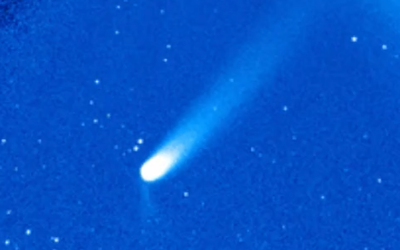
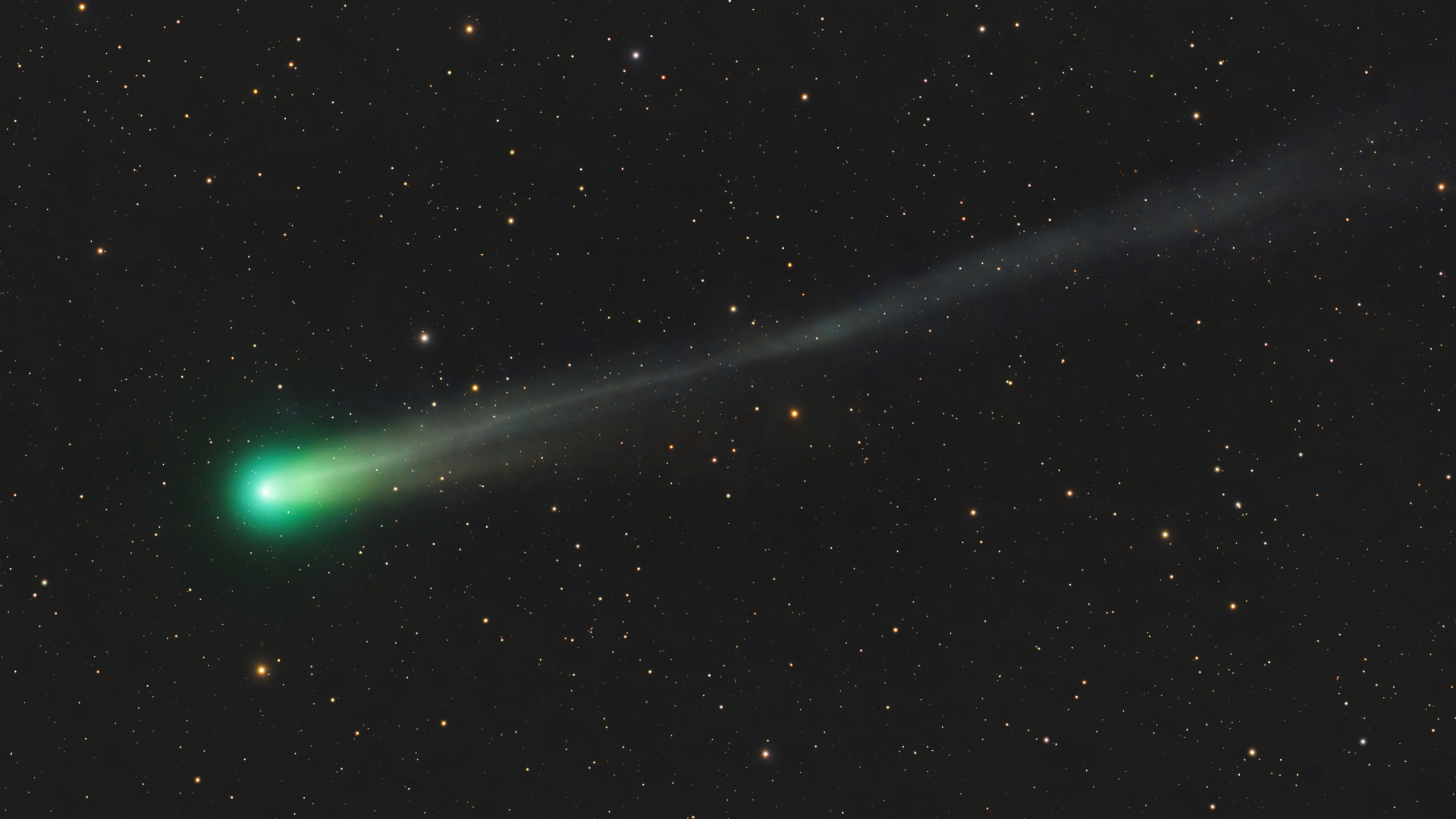
Comet C/2025 A6 (Lemmon) has undergone a rapid and significant increase in brightness over the last month. This swift intensification, occurring as the celestial body makes its close approach to the sun, is fueling anticipation that it could achieve naked-eye visibility by mid-to-late October.
Comets within our solar system, such as Comet Lemmon, predictably intensify their activity and brightness as they near perihelion—the closest point in their orbit to the sun. This escalation is driven by the sun’s heat and energy, which vaporize the comet’s icy constituents. The sublimation process creates a gaseous central coma and an elongated tail that carries along dusty particles. These particles, reflecting sunlight, are what produce the spectacular celestial displays visible through telescopes and to the naked eye.
Skywatchers can find details regarding the optimal times and locations to observe Comet Lemmon, specifically concerning its approach to Earth on October 21.
Comet Lemmon has notably brightened since its discovery in January, evolving from a faint magnitude of +21.5 to an estimated +5.7. This significant increase, according to the Comet Observation Database (COBS) managed by Slovenia’s Crni Vrh Observatory, technically places the comet within the threshold of naked-eye visibility for observers under perfect dark sky conditions. However, stargazers hoping to spot it in the coming week will face a considerable challenge due to the obstructing light from the waning gibbous moon.
Should Comet Lemmon sustain its current brightening trend, it is poised to become a visible, albeit hazy, naked-eye target in the coming weeks. For a more defined view, its light will be more readily apparent through binoculars or a backyard telescope.
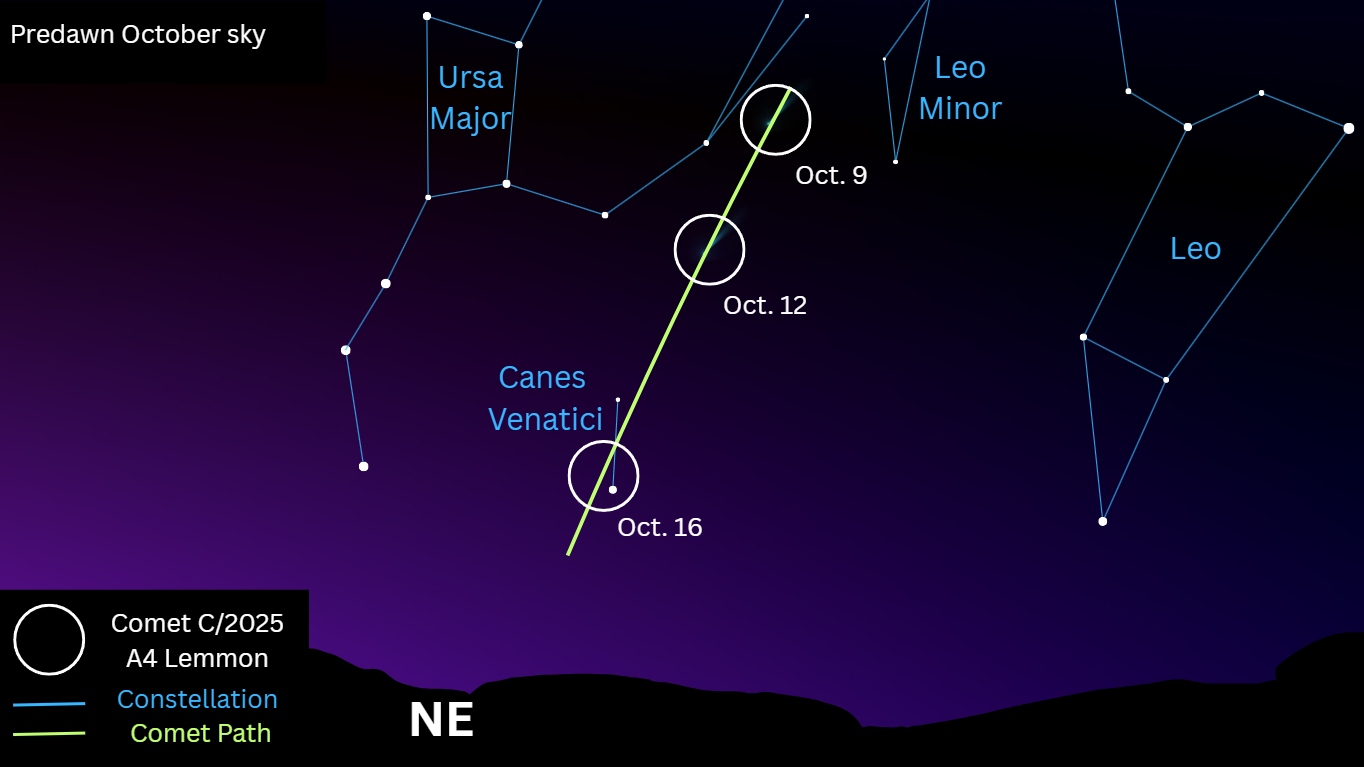
Comet Lemmon continues its celestial journey, dynamically shifting its position against the backdrop of distant stars, much like other bodies in our solar system. Observers can anticipate a notable event in mid-October when the comet will make a close approach to the star Alkaphrah, also known as Chi Ursae Majoris. This star is located within the constellation Ursa Major, specifically positioned just beneath the familiar ‘dipper’ formation of the Big Dipper asterism. Following this rendezvous, Comet Lemmon is projected to traverse the night sky, charting a course toward Cor Caroli, a prominent star situated in the constellation Canes Venatici.
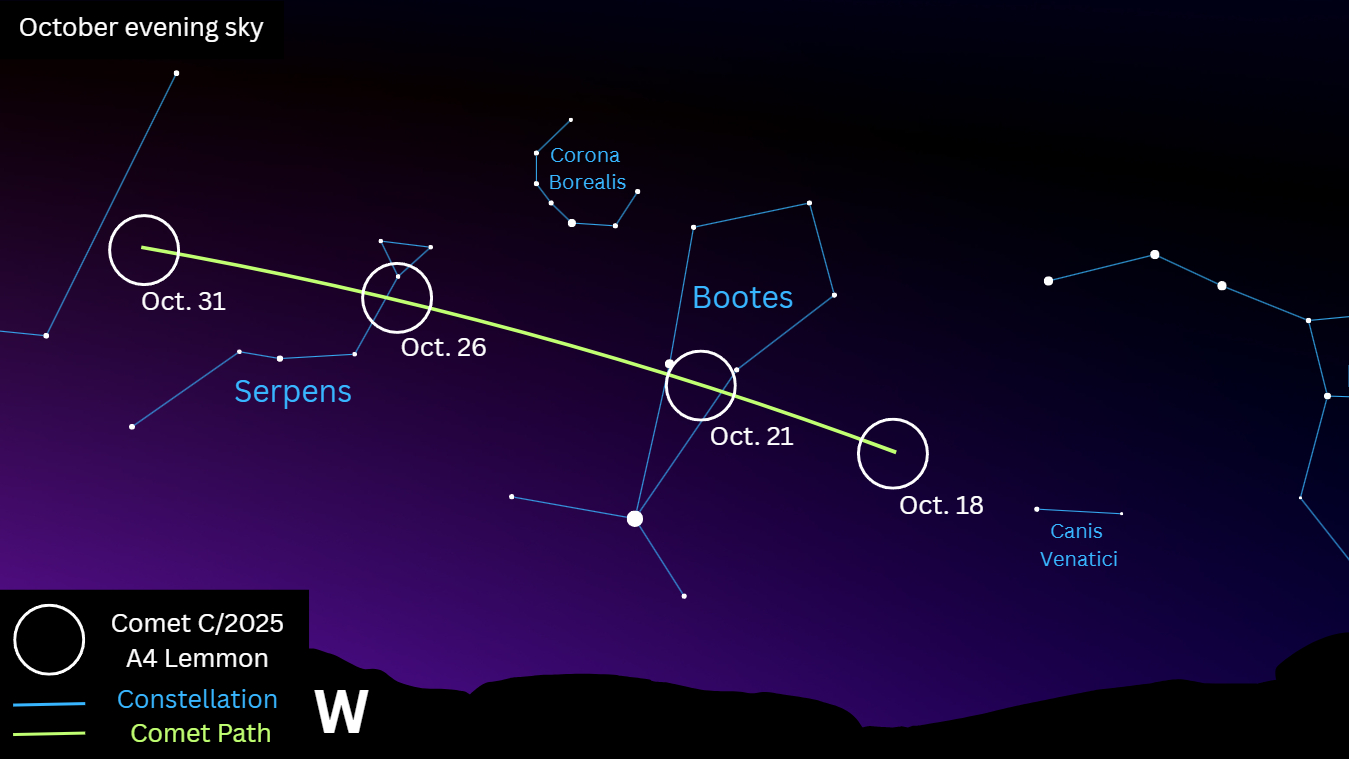
Comet Lemon is poised to make its closest approach to Earth on October 21, a celestial event that will place it prominently within the constellation Boötes, the Herdsman. Its trajectory will then carry it onward, passing beneath the head of the great serpent represented in the constellation Serpens during October 26 and 27.
The ideal time to observe Comet Lemmon will change throughout October. Early in the month, the comet will be visible high above the northeastern horizon in the pre-dawn hours. However, as it approaches its closest point to Earth on October 21, its position will shift to the evening sky, where it will appear low on the northwestern horizon.
A guide to imaging comets is available for those interested in celestial photography. This resource also includes recommendations for top cameras and lenses suitable for astrophotography. Additionally, amateur astronomers can find comprehensive reviews of leading telescopes and binoculars for observing the night sky.

Space.com welcomes reader submissions of astrophotography. To have your celestial images, accompanying comments, name, and location considered for publication, please email them to spacephotos@space.com.