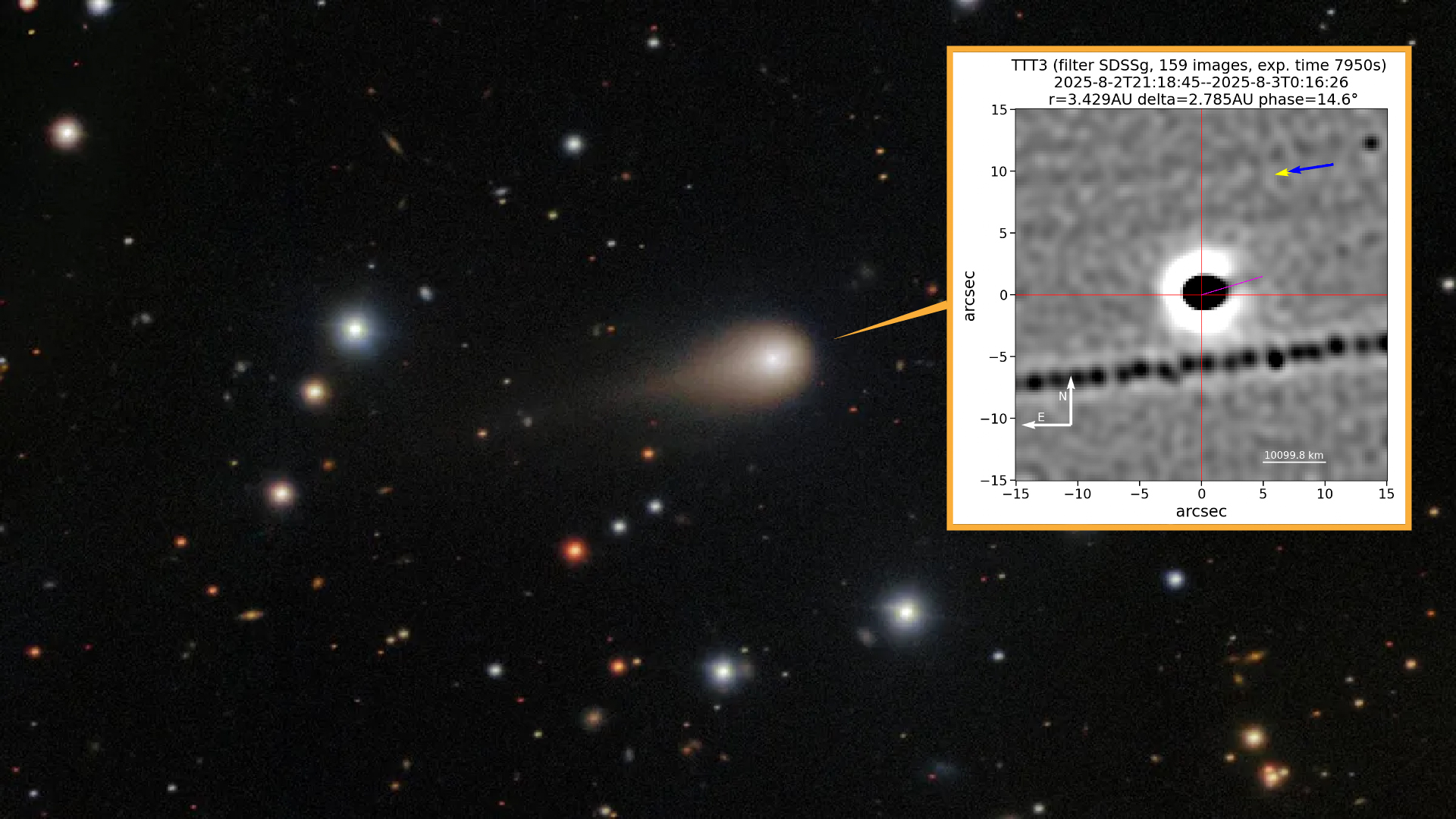
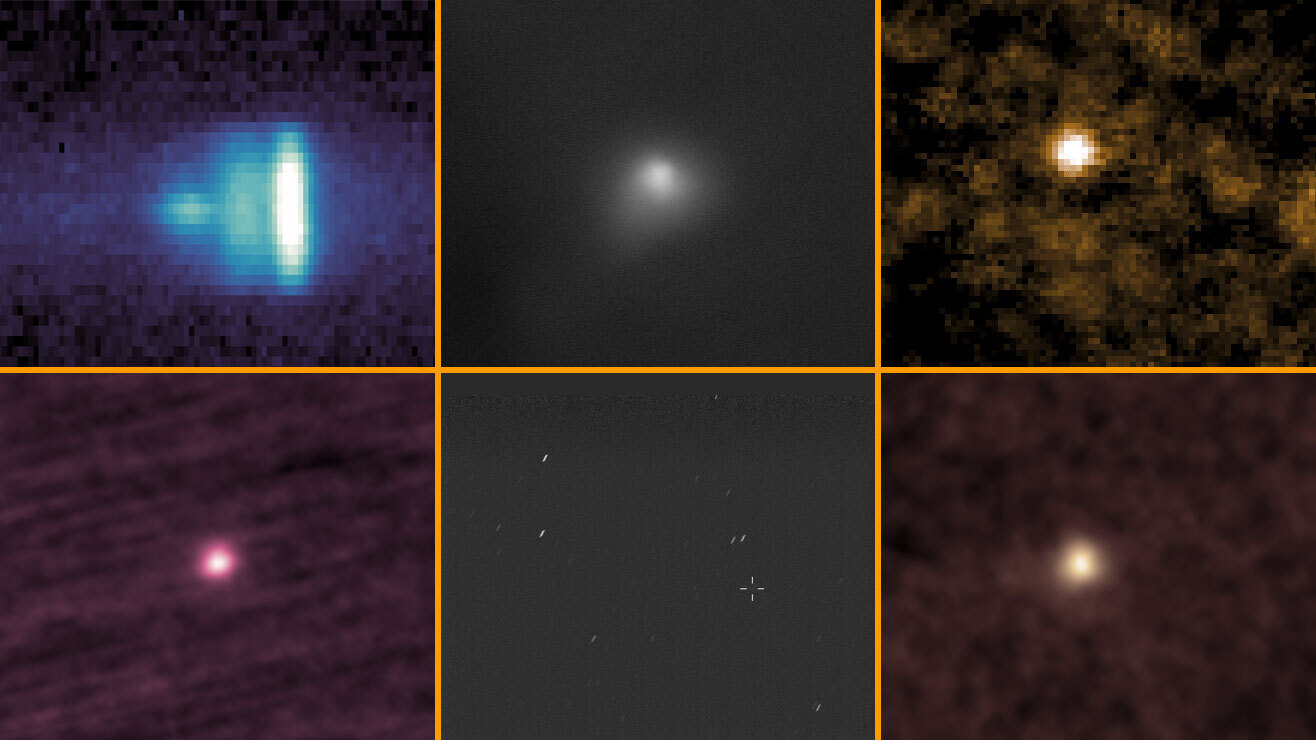
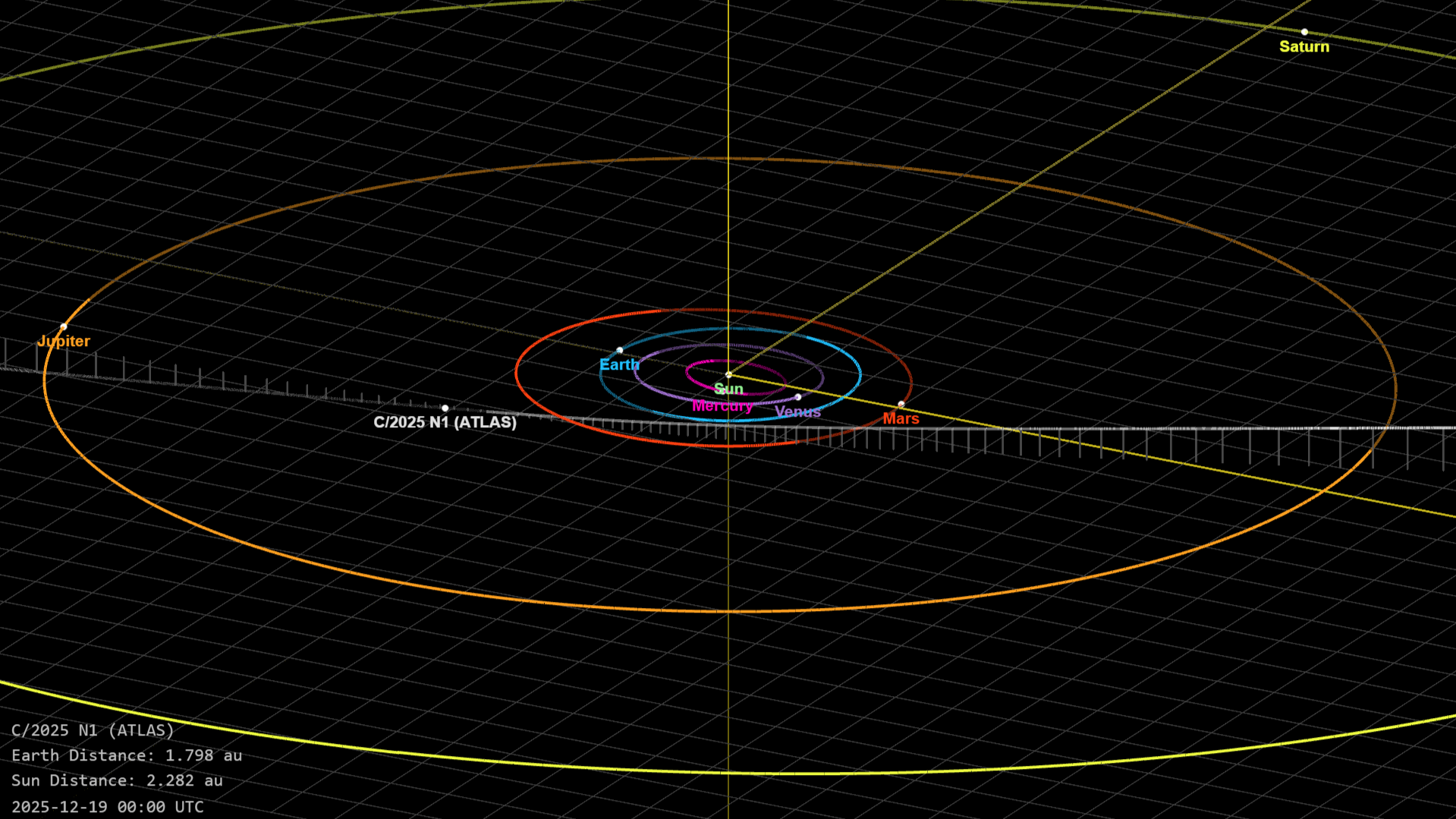
We’ve watched it speed through the solar system using the most powerful telescopes in human history. We’ve studied its light with probes whipping around the sun and robots marooned on Mars. Countless eyes watched it make its closest approach to Earth on Dec. 19 — and yet, for all of this, the interstellar comet 3I/ATLAS remains little more than a blur of gas, shrouded in mystery.
Since its discovery in early July, 3I/ATLAS has been studied more enthusiastically than practically any other celestial object in recent memory. Still, for all its fame, much remains unknown about it. The comet’s origins, from somewhere far across our galaxy, may never be known. Its true age, size, composition, and shape are also poorly constrained.
But how can we learn more about this alien interloper — or indeed, the next one — when we’re already studying it with everything we’ve got?
Some scientists are proposing a bold solution: We have to “intercept” it with a spacecraft.
Doing so would not only help us to better understand its key characteristics but also photograph its surface and potentially collect our first-ever interstellar samples, which could help reveal how alien exoplanets form, how common our type of solar system is and maybe even help answer the question of whether or not we are alone in the universe.
“We only have one shot at this object and then it’s gone forever,” Darryl Seligman, an astronomer at Michigan State University and the lead author of the first paper published about 3I/ATLAS, previously told Live Science. “So we want as much information from all of our observatories as we can possibly get.”
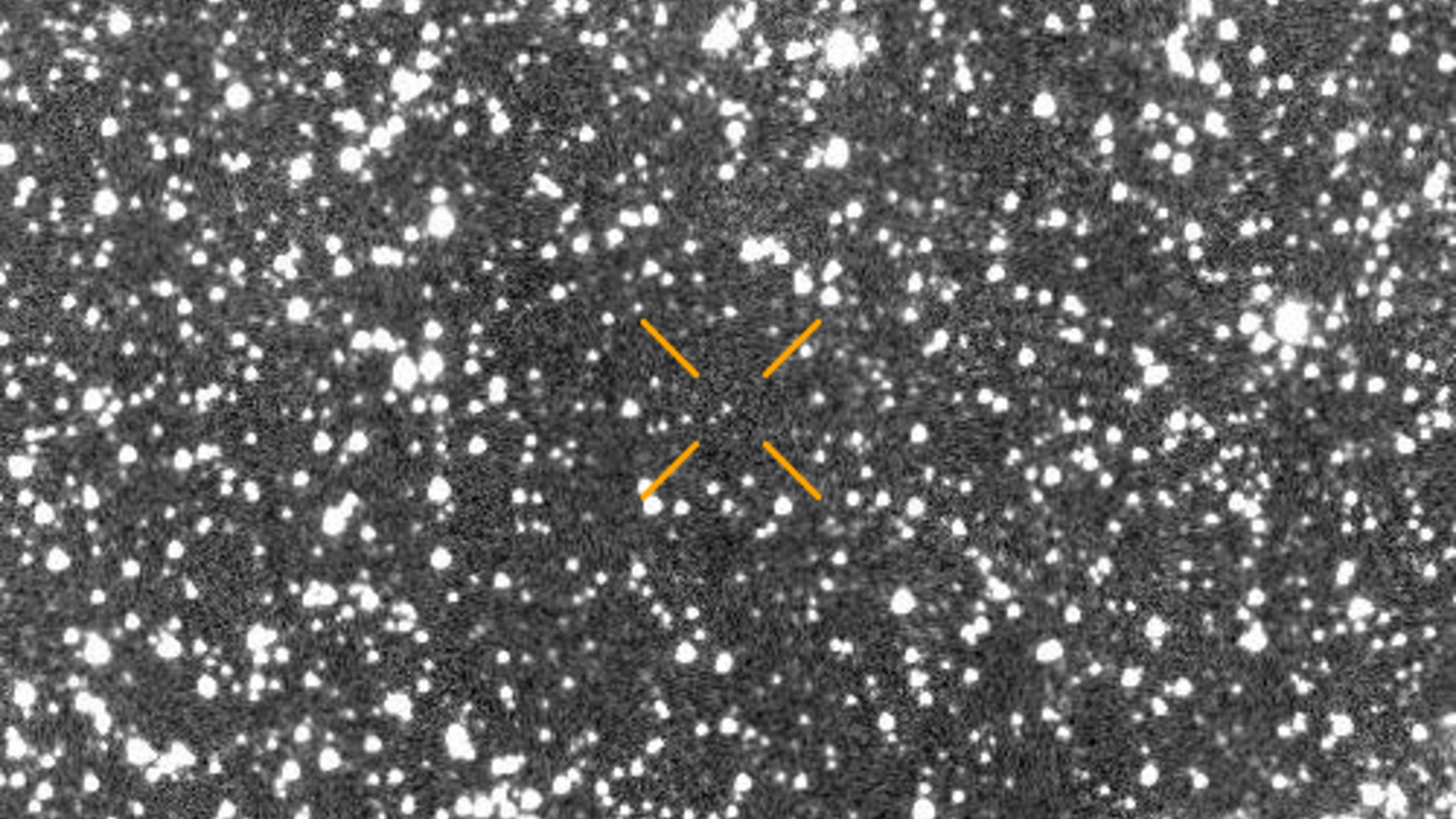
On July 1, astronomers at the Asteroid Terrestrial-impact Last Alert System (ATLAS) revealed they had spotted a mysterious object traveling toward us from beyond Jupiter, at more than 130,000 mph (210,000 km/h). ATLAS, which automatically scans the skies using telescopes in Hawaii, Chile and South Africa, was hunting for potential threats to Earth. It found something else entirely.